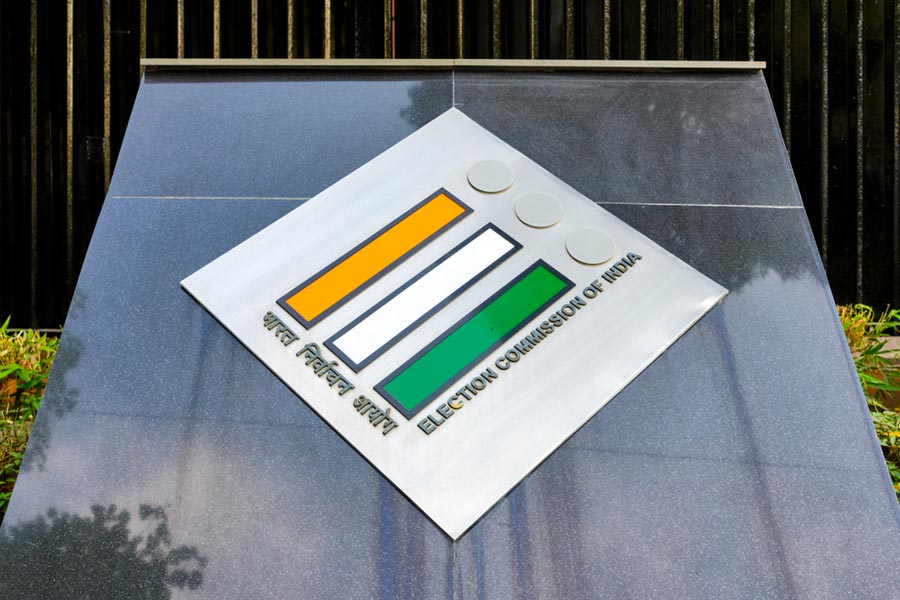
Speaking at a conference earlier this week, Kevin Casas-Zamora, the secretary-general of the International Institute for Democracy and Electoral Assistance (International IDEA), an intergovernmental organisation of 35 nations, sounded an alarm that the world must not ignore. Mr Casas-Zamora warned of a series of challenges that confront democracies around the globe, and that the concept of democracy itself needs new champions. India’s leadership as a democracy, he said, was welcome. Incidentally, Gyanesh Kumar, India’s chief election commissioner, takes over as chair of International IDEA this year, underscoring the central role the country will play in how democracy as an approach to modern governance is perceived around the world. A populous country with a well-oiled, tried-and-tested electoral machinery, India, indeed, has much to be proud of when it comes to its evolution as a democracy. But worrying global currents coupled with questions that Indian democracy itself confronts also point to a more complicated fact: democratic gains cannot be taken for granted, and their reversal is far easier than many had previously imagined.
Examples of established and fledgling democracies alike struggling to maintain the credibility of elections abound. The United States of America, which has long proclaimed itself as a beacon of democracy, is today ruled by a leader who still refuses to accept that he lost the 2020 presidential election. In Pakistan in 2024, Bangladesh and Venezuela in 2025, and Uganda earlier this month, Opposition parties and leaders were effectively barred from contesting in a manner that would be free and fair. Now, with Bangladesh banning the Awami League, the party of the former prime minister, Sheikh Hasina, from the national elections scheduled for February 12, India’s neighbour appears poised to repeat what the Awami League itself did to its opponents when it was in power. West Africa, which many advocates of democracy had in the 2010s cited as a model region that had embraced peaceful transitions of power, has slipped back dramatically. Mali had coups in 2020 and 2021; Guinea in 2021; Burkina Faso twice in 2022; Niger and Gabon in 2023; and Guinea-Bissau in November 2025.
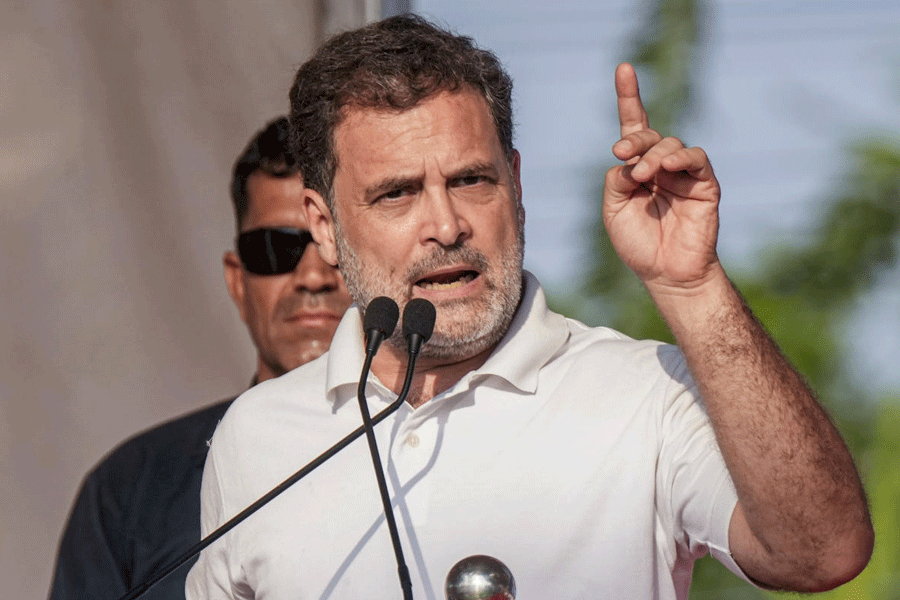
Amid this global pattern of democratic backsliding, it is tempting for India to bask in the relative stability of electoral systems. That would be an act of complacency. The legitimate questions around the manner in which the Special Intensive Revision of electoral rolls is being implemented around the country deserve credible answers. The Supreme Court has had to intervene repeatedly to allay public concerns about the SIR and make the process less cumbersome. Questions raised by Opposition parties about electoral irregularities also need a better response than whataboutery. The larger question — concern — pertains to another crucial point that was made by Mr Casas-Zamora. The future of democracy is, indeed, contingent upon new nation-states taking up the mantle of this form of governance. Whether the future stakeholders of democracy succeed in reviving the rule of the people would depend on whether they can learn from the mistakes committed by their predecessors.