Play it safe
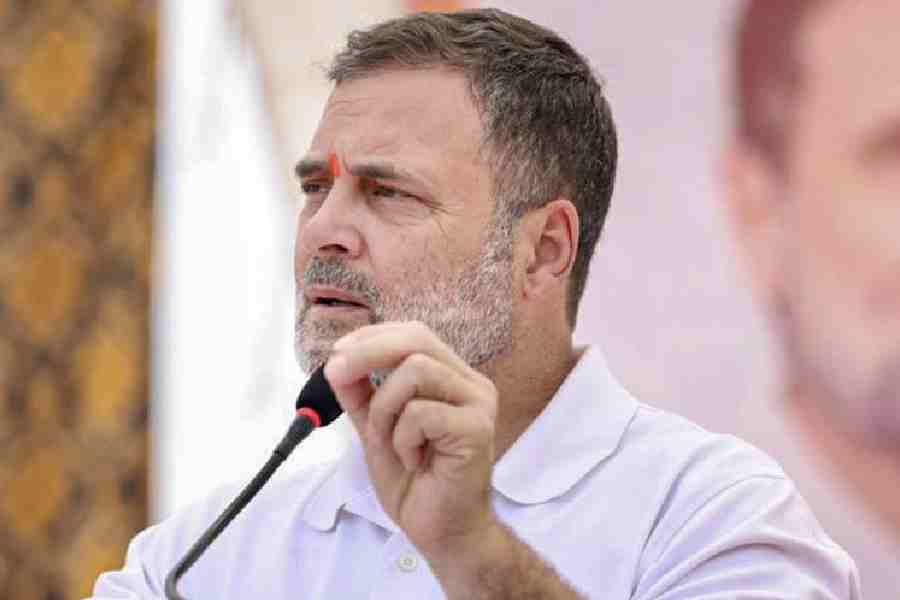
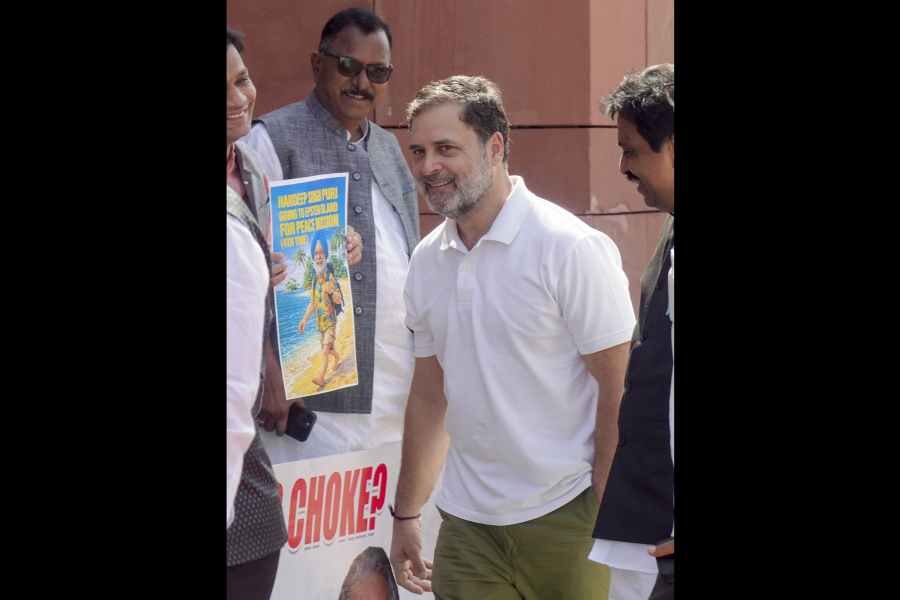
In a healthy parliamentary democracy, rivals are not enemies. But in the current climate, that line appears increasingly blurred. Rahul Gandhi, the leader of the Opposition in the Lok Sabha, seems to have become a figure many on the treasury benches would rather avoid than engage with. Bharatiya Janata Party parliamentarians are learnt to tread cautiously around him — in the corridors of Parliament and beyond. The unease is not unfounded. Last week, Rahul Gandhi was visibly buoyant after a blistering speech in the House in which he accused Prime Minister Narendra Modi of “wholesale surrender” in the Indo-US trade deal. Moments later, spotting the Union ministers, Pralhad Joshi and Ashwini Vaishnaw, briefing the media to counter what they termed his “wild allegations”, Rahul Gandhi strode up, tried to clasp Joshi’s hand and quipped, “Come, let’s do it together.” The startled ministers beat a quick retreat as Priyanka Gandhi Vadra looked on amused. It was not an isolated incident. Earlier, Rahul Gandhi had publicly invited the parliamentary affairs minister, Kiren Rijiju, for a workout after Rijiju inquired about his fitness routine. With Rahul Gandhi sharpening his attacks on Modi, BJP members now appear wary of being seen in any friendly exchange with him, fearing such optics could harm their career prospects.
Mister Congeniality
The Union education minister, Dharmendra Pradhan, was at his persuasive best when interacting with the media in Bhubaneswar recently. Unperturbed by the barrage of questions from the mediapersons on the Union budget, Pradhan presented himself as a friend who, like the scribes, wanted Odisha to secure the maximum benefit from the budget.
Refusing to get into the technical nitty-gritty of the budget, he sought to highlight the fact that Nirmala Sitharaman’s package was the best Odisha could have received from any government. This appeared to soften the mediapersons, with the presser evolving into a conversational session. Pradhan, once the poster boy of the BJP in Odisha, exchanged pleasantries with the journalists and inquired about their well-being. If the purpose was to make friends in the media, he achieved it rather easily.
Stay put
The Kerala BJP leadership is in a fix following the non-cooperation of one of its women councillors, R Sreelekha. The 65-year-old Sreelekha, who is the first woman IPS officer as well as the first woman director general of police from Kerala, was persuaded by the BJP state president, Rajeev Chandrasekhar, to contest in the election to the local bodies allegedly with the assurance that she would be given the mayor’s post if the party came to power. Chandrasekhar’s strategy did not work out as the dissident faction, led by the former Union minister of state, V Muraleedharan, wanted to bring his loyalist, VV Rajesh, as the mayor.
The BJP managed to end the 45-year-old rule by the Communist Party of India (Marxist) in the Thiruvananthapuram Corporation which saw Rajesh emerging as the mayor. With the mayoral and the deputy-mayoral posts earmarked for a male and female councillor, respectively, Sreelekha’s prospects of helming the corporation were effectively curtailed. A leader of her stature would not settle for the deputy-mayoral post. Her absence from a recent BJP councillors’ visit to New Delhi to meet the PM, despite requests, has only deepened the perception of discord.
Discordant notes
The Congress’s efforts to stitch up a pre-poll alliance in Assam seem to be floundering. This is not because of the potential allies, who are as keen as the Congress to fight unitedly to take on the ruling BJP. The problem is within the party, Congress insiders say. The unity talks were initiated by the former Assam Pradesh Congress Committee president, Bhupen Kumar Borah, before Gaurav Gogoi succeeded him last year. Then the Congress Legislative Party leader, Debabrata Saikia, helped iron out roadblocks. A few days ago, Borah was asked by the AICC’s Jitendra Singh to take the talks forward. The decision was welcomed by the likely allies. However, a meeting convened on Friday by Borah was a non-starter.
Congress insiders said the drafting of another senior leader, Rakibul Hussain, to assist Borah was not welcomed by like-minded parties. Even Borah felt insulted because it raised questions over his ability, insiders said, conveying the turmoil within the state unit. Other parties have publicly said that the alliance finalisation is getting delayed since the polls will be held in March-April. But insiders claim that the PCC and the AICC brass seem confused and are not on the same page over a number of issues related to the polls. The process of pre-poll alliance, they assert, has been one step forward and two steps backwards, which is neither helping the Congress nor its bid to bolster Oppositional unity.