India versus Pakistan never needs extra drama, but rarely has a group-stage encounter carried this much tension.
Yes, purists will point to World Cup knockouts and Sharjah classics from cricket’s most treasured archive of rivalry. But even the old guard will concede: Rarely has the build-up been so combustible before a ball is bowled.
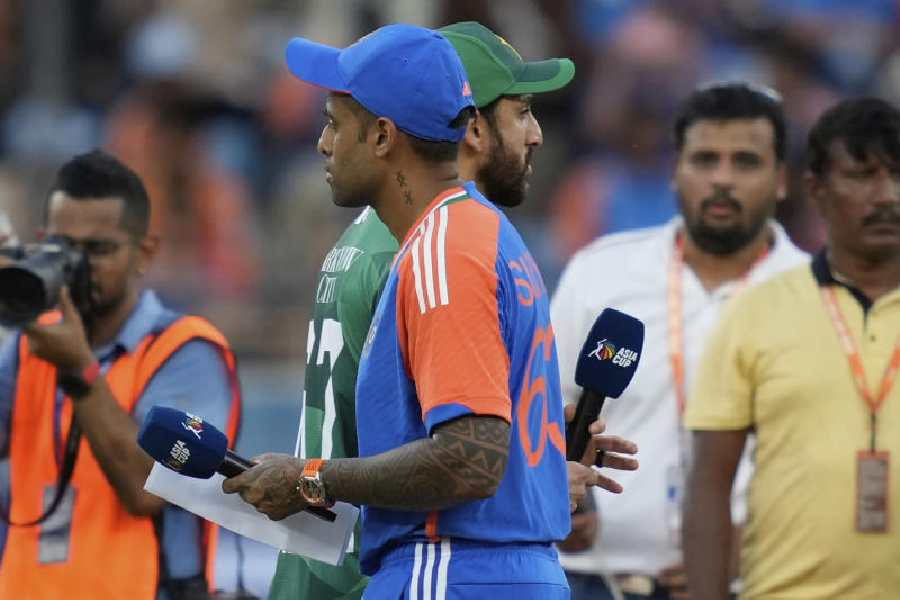
On paper, it is a league match in the ICC Men’s T20 World Cup 2026, scheduled for Sunday, February 15. In reality, it is the release valve for weeks of political signalling, boardroom brinkmanship, public outrage and diplomatic back-channels that threatened to rip a global tournament apart.
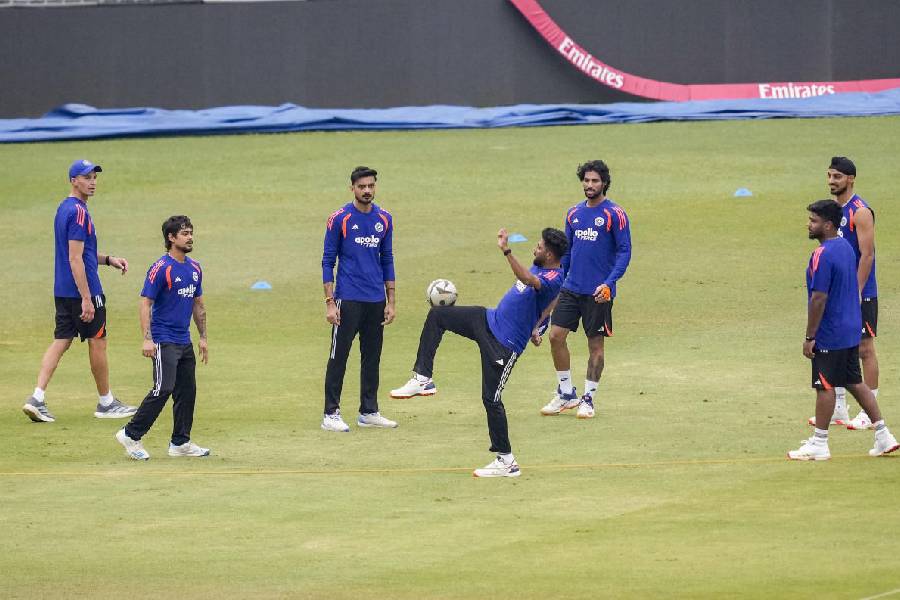
Clockwise from second left, India's Ishan Kishan, Axar Patel, Tilak Varma, Arshdeep Singh, Sanju Samson and Mohammed Siraj during a practice session ahead of an ICC Men's T20 World Cup 2026 cricket match between India and Pakistan, at R Premadasa Stadium/ PTI
The commercial thermometer tells its own story. According to reports, ten-second television spots have climbed to Rs 35-40 lakh. Connected TV inventory is priced at roughly Rs 1,000 per CPM (cost per thousand views), with mobile advertising hovering around Rs 350-400. Broadcaster JioStar is targeting close to Rs 2,000 crore in tournament revenue, much of it riding on this fixture. The grey market is buzzing. Timelines are flooded. For advertisers and administrators alike, this is the centrepiece.
But until six days ago, it seemed the match might not happen.
The chain reaction began in early January when Bangladesh stunned the cricketing world by refusing to travel to India for their scheduled World Cup matches after Mustafizur Rahman was denied IPL participation.
Dhaka demanded relocation of their fixtures to Sri Lanka. The ICC commissioned independent security reviews and concluded there was no credible or verifiable threat. On January 24, Bangladesh were expelled and replaced by Scotland.
The ICC assured that there would be no long-term harm to Bangladesh cricket and even guaranteed a future hosting opportunity before 2031.
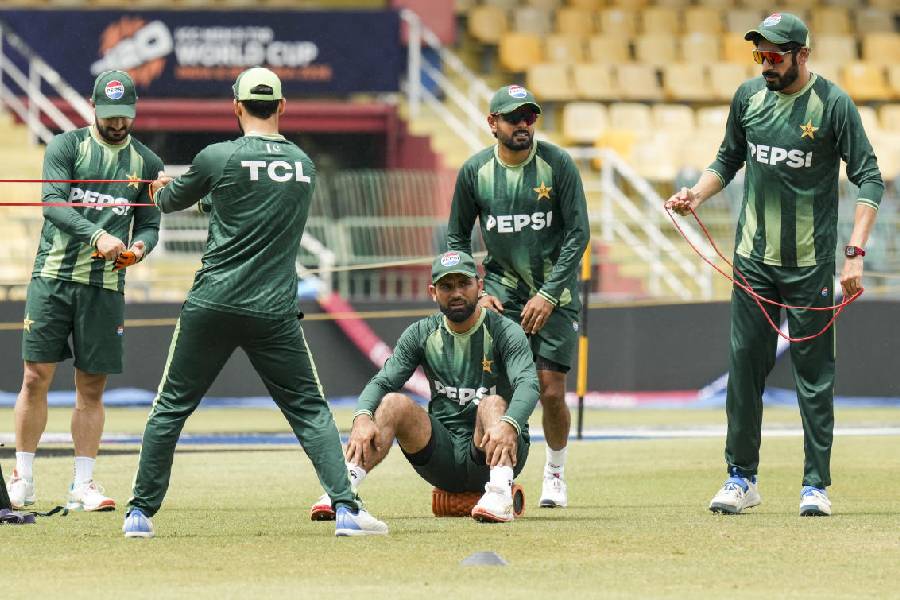
Pakistan's Fakhar Zaman, center, Babar Azam, Usman Tariq and others during a practice session ahead of an ICC Men's T20 World Cup 2026 cricket match between India and Pakistan, at R Premadasa Stadium, in Colombo/ PTI
Pakistan’s cricket board immediately aligned itself with Bangladesh. PCB chairman Mohsin Naqvi accused the ICC of double standards and injustice.
Early this month, Islamabad announced that Pakistan would forfeit the February 15 fixture against India in solidarity.
The move was framed against the backdrop of regional tensions, with officials linking the decision to security incidents in Balochistan. The ICC responded sharply, stating that a boycott was not in the interest of the global game.
What followed was a frantic stretch of diplomacy. Between February 7 and 9, marathon discussions were held in Lahore involving PCB officials, ICC directors and visiting representatives from Bangladesh.
Friendly governments reportedly urged restraint. Bangladesh’s board president personally requested Pakistan to honour the India fixture for the benefit of the broader cricket ecosystem. Face-saving language was crafted, and at last the positions softened.
On February 9, the ICC and the Pakistan government jointly confirmed that Pakistan would take the field in Colombo.
Handshakes in focus
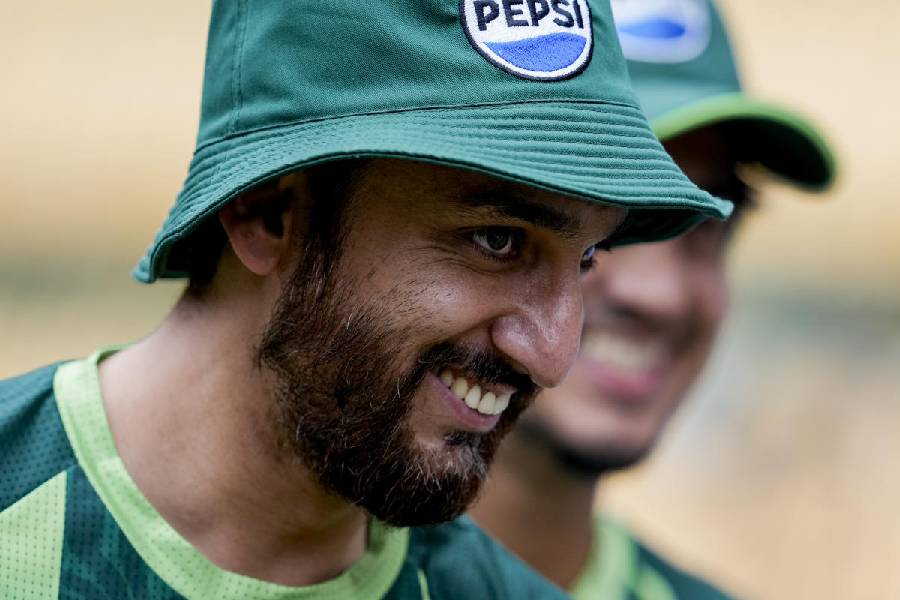
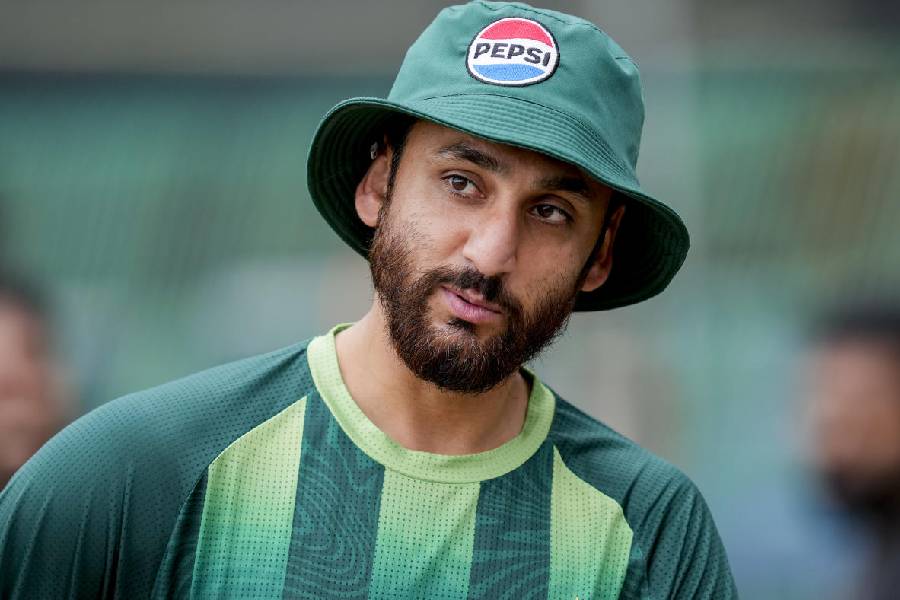
Pakistan's captain Salman Ali Agha during a practice session/ PTI
The friction did not start this year.
The rivalry’s temperature had already risen during the 2025 Asia Cup. Before a Super Four clash, India informed match referee Andy Pycroft that there would be no handshakes. Pakistan protested, calling the act unsportsmanlike.
The ICC found no rule breach but the episode deepened mistrust. Weeks later, after defeating Pakistan in the Asia Cup final, the Indian players refused to accept the trophy from Mohsin Naqvi, who was scheduled to present it.
The ceremony descended into chaos. The BCCI condemned the episode and announced a Rs 21-crore bonus for the team. Naqvi hit back, accusing the Indian media of propaganda.
India ahead, by a long shot
On the field, the numbers have been emphatic. India defeated Pakistan in all three meetings during that Asia Cup, chasing down targets with authority.
They have now won nine out of nine T20 internationals in which they have chased Pakistan’s total — the longest such streak by any side against Pakistan.
Across ICC World Cups, India has won 15 of 16 encounters. Emotionally charged, yes. Statistically close, not quite.
Yet this Indian side arrives in Colombo in transition.
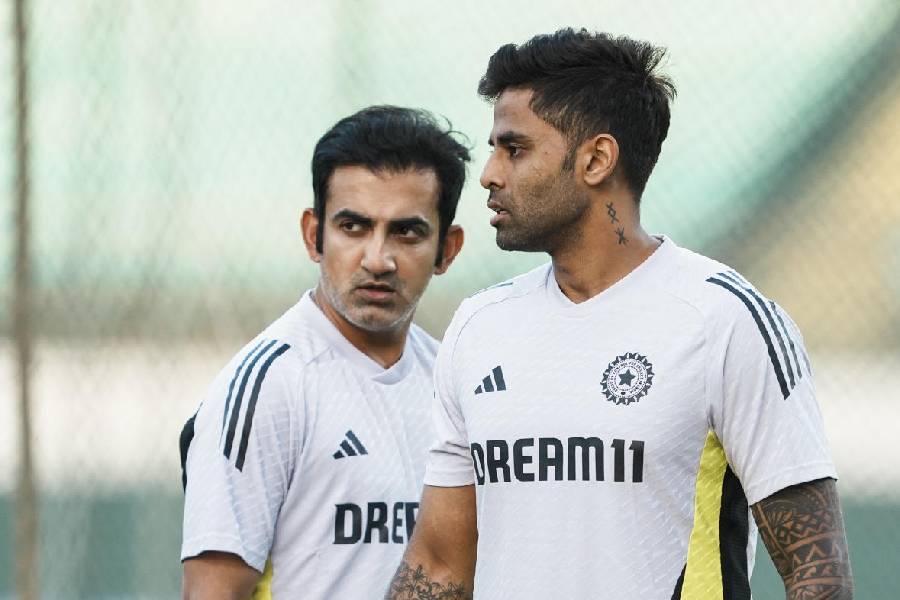
Suryakumar Yadav with head coach Gautam Gambhir during a training session/ PTI
Rohit Sharma and Virat Kohli stepped away from T20 internationals after the 2024 triumph, ushering in a younger core under coach Gautam Gambhir. The early months were uneven. India lost a home T20 series to South Africa and dropped ODI series to Australia and New Zealand.
But the response was decisive. India lifted the 2025 Asia Cup and began this World Cup campaign with wins over the USA and Namibia.
Suryakumar Yadav now anchors the batting order, having amassed more than 3,100 T20I runs at a strike rate near 165.
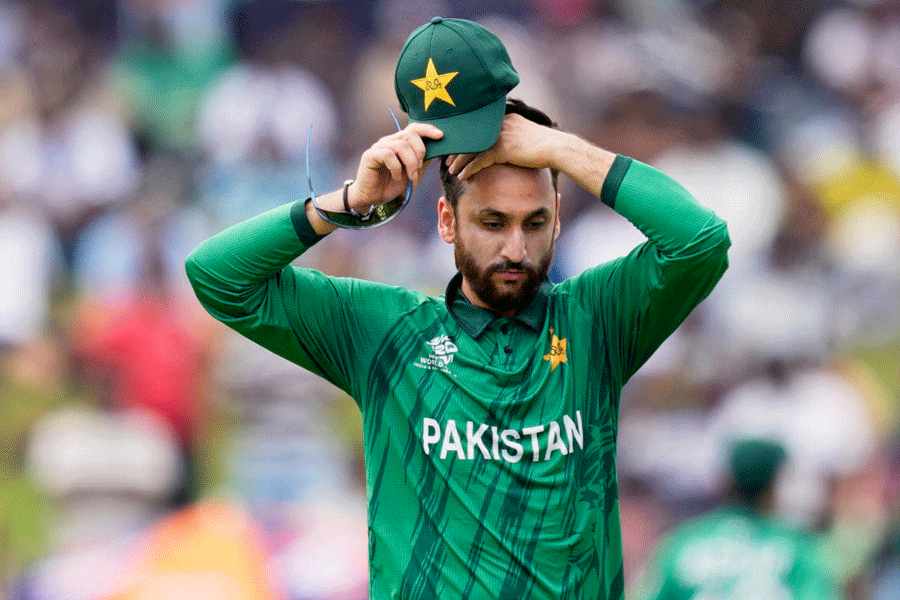
Jasprit Bumrah remains the attack’s fulcrum with 108 T20I wickets at an average under 19.
Abhishek Sharma’s recovery from illness is being monitored closely, while Hardik Pandya and Axar Patel provide balance across departments. The squad blends youth with big-match temperament, though fitness and clarity in selection remain key.
Pakistan, meanwhile, continue to wrestle with churn. In the past two years they have cycled through multiple coaches, chairmen and captains.
Senior figures have publicly questioned governance standards. The absence of Babar Azam and Mohammad Rizwan from the T20 side underlines a period of reshaping.
Captain Salman Ali Agha leads a side eager to prove itself. Shaheen Afridi, if fully fit, brings 130 T20I wickets and the ability to strike early. Haris Rauf and Naseem Shah add pace.
Usman Tariq, X factor?
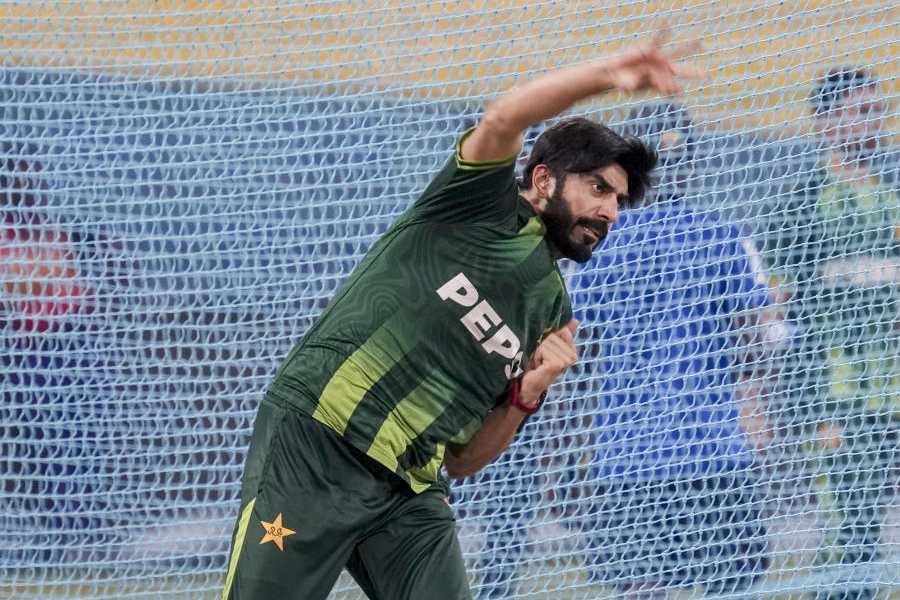
Pakistan's Usman Tariq bowls a delivery during a practice session ahead of an ICC Men's T20 World Cup 2026 cricket match between India and Pakistan/ PTI
But the X-factor is the left-arm mystery spinner Usman Tariq. In just four T20Is he has claimed 11 wickets, including a hat-trick, and his unconventional action has already generated intrigue.
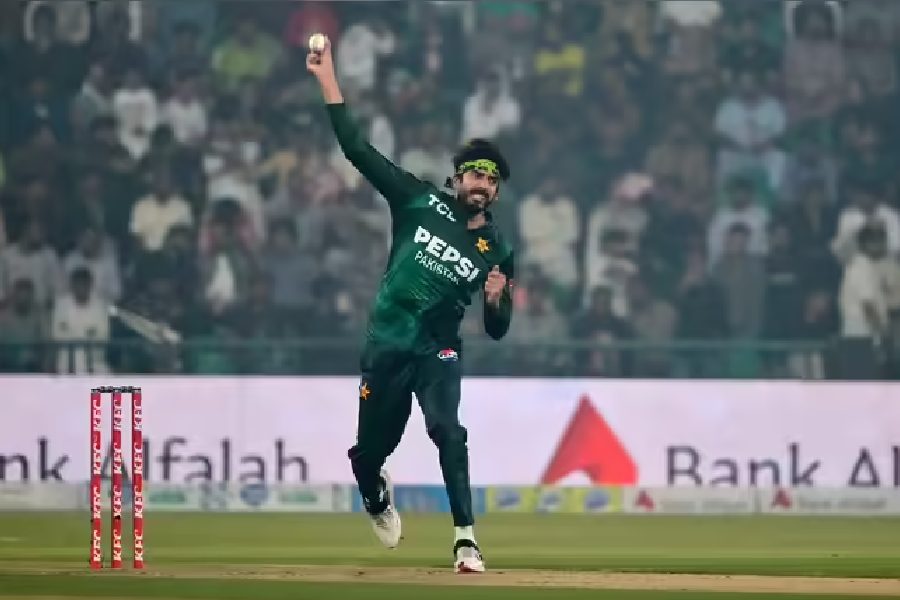
Alongside him, spinners Abrar Ahmed and Saim Ayub offer variety that could test India’s middle order on a Colombo surface that traditionally rewards skill.
Pakistan have shown resilience in this tournament, surviving a scare against the Netherlands and defeating the USA. Yet inconsistency lingers. Fitness concerns around key quicks and the pressure of leadership transition remain live issues.