Iran is ready to consider compromises to reach a nuclear deal with the United States if Washington is willing to discuss lifting sanctions, Iran's Deputy Foreign Minister Majid Takht-Ravanchi told the BBC in an interview published on Sunday.
Iran has said it is prepared to discuss curbs on its nuclear programme in return for the lifting of sanctions, but has repeatedly ruled out linking the issue to other questions including missiles.
Takht-Ravanchi confirmed that a second round of nuclear talks would take place on Tuesday in Geneva, after Tehran and Washington resumed discussions in Oman earlier this month.
"(Initial talks went) more or less in a positive direction, but it is too early to judge," Takht-Ravanchi told the BBC.
A US delegation, including envoys Steve Witkoff and Jared Kushner, will meet with the Iranians on Tuesday morning, a source had told Reuters on Friday, with Omani representatives mediating the US-Iran contacts.
After the first discussions, US President Donald Trump warned Tehran that failure to reach an agreement with his administration would be "very traumatic".
Similar talks last year broke down in June as Israel launched what became a 12-day war on Iran that included the US bombing Iranian nuclear sites.
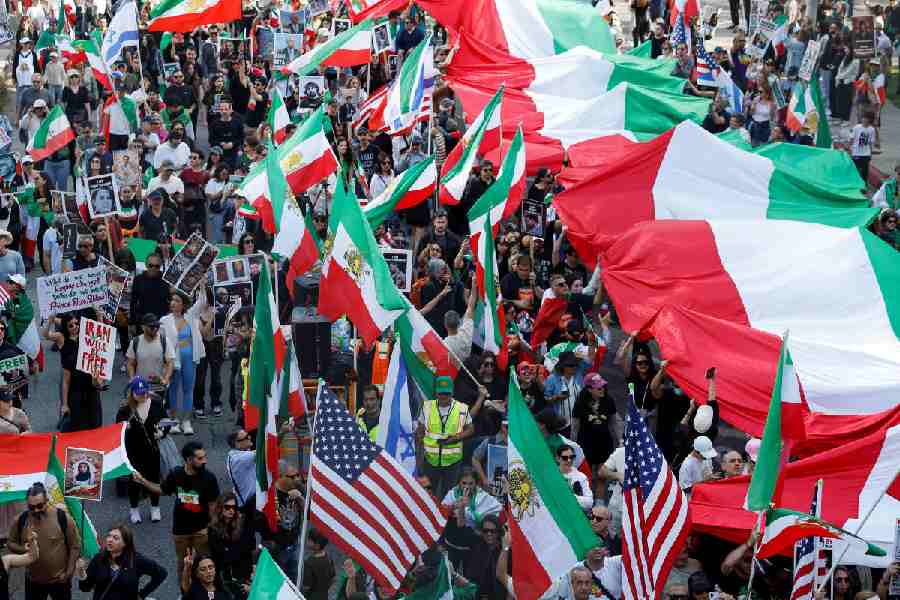
Trump has repeatedly threatened to use force to compel Iran to agree to constrain its nuclear programme. Iran has said it would respond with an attack of its own. Trump also has threatened Iran over its deadly crackdown on recent nationwide protests there.
Gulf Arab nations have warned any attack could spiral into another regional conflict.
Trump said Friday the USS Gerald R. Ford, the world's largest aircraft carrier, was being sent from the Caribbean to the Mideast to join other military assets the US has built up in the region. He also said a change in power in Iran "would be the best thing that could happen".
The indirect talks on February 6 were between Iranian Foreign Minister Abbas Araghchi and US Mideast envoy Steve Witkoff. The top military commander in the Middle East was also present for the first time.
The Trump administration has maintained that Iran can have no uranium enrichment under any deal. Tehran says it won't agree to that.
Iran has insisted its nuclear programme is for peaceful purposes. However, its officials increasingly threaten to pursue a nuclear weapon. Before the June war, Iran had been enriching uranium up to 60 per cent purity, a short, technical step away from weapons-grade levels.
Iranian President Masoud Pezeshkian has said his nation is "ready for any kind of verification". However, the United Nations' nuclear watchdog, the International Atomic Energy Agency, has been unable for months to inspect and verify Iran's nuclear stockpile.
Trump has suggested in recent weeks that his top priority is for Iran to scale back its nuclear programme. Iran has said it wants talks to focus solely on the nuclear programme.
But Israeli Prime Minister Benjamin Netanyahu, who met with Trump in Washington this week, has pressed for any deal to include steps to neutralise Iran's ballistic missile programme and end its funding for proxy groups such as Hamas and Hezbollah.