Delectable bite
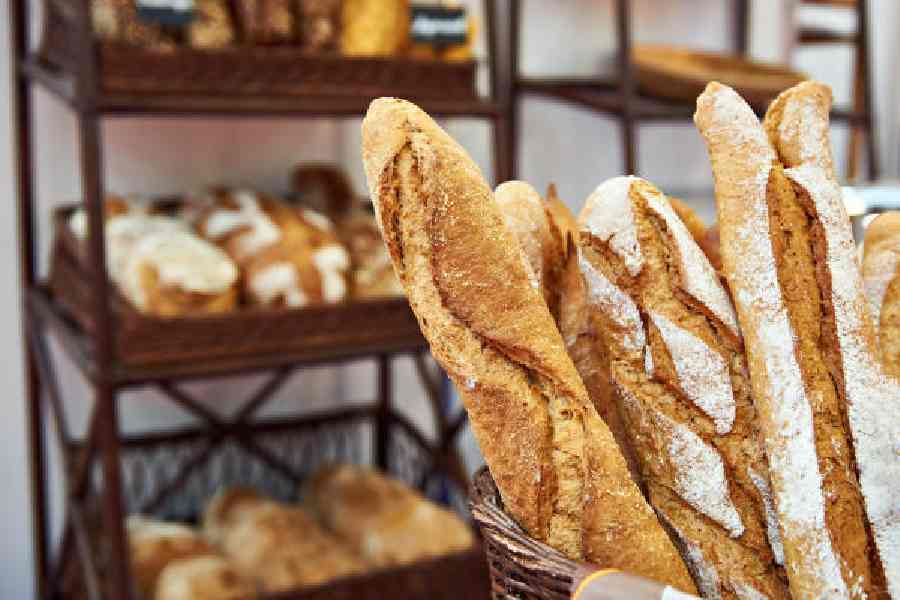
Sir — Last week, a Sri Lankan man won the 33rd Grand Prix de la Baguette de Tradition Française with his delectable baguette recipe. While none can deny that a freshly baked baguette with some soft French butter spread on it indeed sounds like a luxurious bite, the hype around such kinds of bread — sourdough and focaccia are some other examples — are threatening to lead to the extinction of the mind-boggling variety of breads that are available around the world. Sri Lanka itself, for example, used to be known for paan and pol rotis, which can give baguette a run for its money.
Roshni Sen,
Calcutta
Disrupted peace
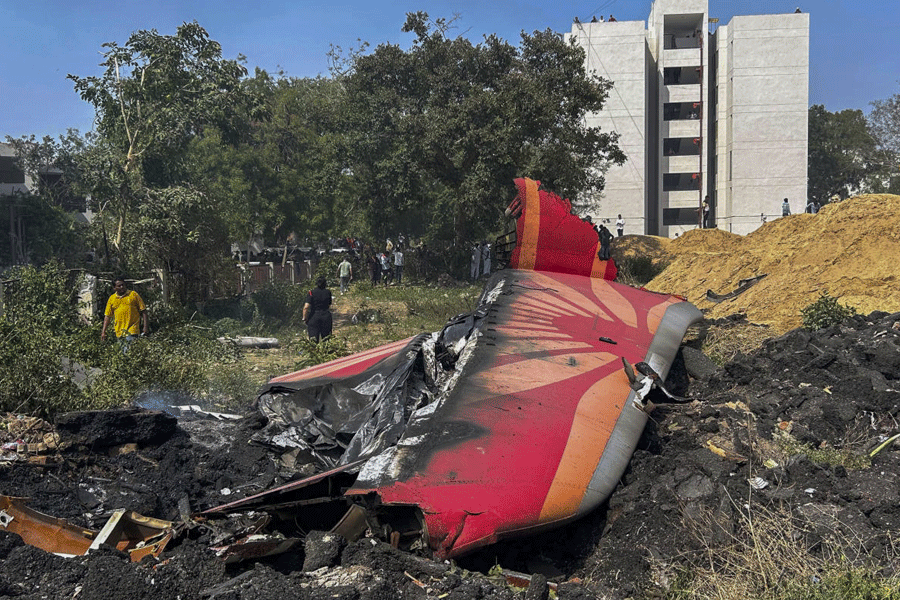
Sir — The strikes on Iran by the United States of America and Israel raise serious concerns about legality and purpose. Military force has been used without clear authorisation from the United Nations or a formal declaration of war by the US Congress. Citizens are left guessing about the objectives of the government, especially one that came to power on the promise of ending needless wars. When governments commit to open-ended conflicts without defined goals, instability follows. Civilians pay the price first. International law exists precisely to prevent this pattern of unilateral escalation and retaliation.
Harsha Pawaria,
Calcutta
Sir — It is troubling to see another major US intervention being launched on contested claims about nuclear threats. Public evidence that Iran intends to build a nuclear weapon has not been produced by United Nations inspectors or by Washington. Claims about imminent danger require solid proof. Without that, public trust collapses. The memory of the 2003 invasion of Iraq under the then president, George W. Bush, is something that Americans have not yet forgotten. That conflict was based on faulty intelligence. Repeating such errors would be reckless.
A. Bandyopadhyay,
Calcutta
Sir — President Donald Trump has spoken of destroying nuclear facilities in Iran, dismantling missile programmes, eliminating the Islamic Revolutionary Guards Corps, and encouraging regime change. These are expansive goals. Each would require long-term commitment and regional consensus. Air strikes alone cannot remake a political system. Afghanistan and Iraq show that military victories do not guarantee political stability. Clarity about limits and timelines is urgently needed.
Ishika Mukherjee,
Calcutta
Sir — The humanitarian implications of the air strikes on Iran deserve attention. Urban strikes in and around Tehran will have inevitably harmed civilians — the death toll is already well above 100. Citizens who have no influence over State policy and who have already been bearing the brunt of Iran’s repressive regime will bear the immediate consequences of the air strikes. Retaliatory missile attacks have already targeted US bases in Bahrain and elsewhere. Oil markets have reacted nervously. Escalation across the Gulf would affect global energy supplies. Policymakers must consider the human and economic costs before widening this conflict further.
M. Pradyu,
Chennai
Sir — Supporters of the US-Israeli strikes on Iran argue that sustained pressure is the only language Tehran understands. They cite the killing of Major General Qassim Soleimani in 2020 as proof that decisive action deters aggression. That view deserves scrutiny. Deterrence can limit behaviour, yet it can also entrench hostility. Iran retains asymmetric options, including disruption of shipping in the Strait of Hormuz. A cycle of pressure and retaliation risks miscalculation. Prudence should guide strategy.
Md. Alam,
Calcutta
Sir — The rhetoric of regime change in Iran carries grave implications. Encouraging Iranians to overthrow their government while ruling out ground deployment creates a dangerous vacuum. History shows that power vacuums invite chaos. After the 1991 Gulf War, uprisings in Iraq were brutally suppressed. External calls for insurrection did not guarantee protection. Iran is a diverse society with complex ethnic and religious dynamics. External shock could ignite prolonged internal conflict.
Annesha Ghosh,
Calcutta
Sir — Regional reactions to the crisis in Iran will shape what happens next. Saudi Arabia, the United Arab Emirates, Bahrain and Qatar have issued varying statements of concern. None wishes to see shipping lanes threatened or cities targeted. The Strait of Hormuz remains vital for global energy flows. Even limited mining operations could send prices sharply higher. Consumers in countries far removed from the Gulf would feel the impact quickly. Economic stability depends on restraint.
Nibedita Das,
Calcutta
Sir — Donald Trump campaigned to reduce foreign entanglements. Instead, he has attacked countries on a whim. Expanding military operations across multiple countries risks deepening discontent at home.
Aranya Sanyal,
Calcutta