
There is a growing perception that the vigilance wing is not after big fish but busy catching small ones…
That might be the public perception, but the ground reality is different. One must remember that there are few senior officers vis-à-vis other categories of government employees. The lower-level officials interact more with the public. One has to go by the records. During the last five years, vigilance has arrested and forwarded to the court- 90 Class-I, 86 class-II and 783 Class-III officers. But, I do agree that there is a feeling in the public that we are not acting tough against bigger ones. We are trying our best to erase that kind of perception from the public mind.
But, it seems the vigilance is not going after IAS and IPS officers. It is scared to touch them.
No. Recently, we have lodged cases against two IAS officers, including Balangir collector Debraj Mishra (in the recruitment scam).
Mishra is not a direct recruit. He has been promoted to the IAS from the state civil services.
He may have been promoted, but the fact is that he belongs to the IAS. Whenever we receive allegations against IAS and IPS officers, we do register cases against them.
Again, the public perception is that there is rampant corruption in the state. What are the steps the vigilance is taking to curb corruption everywhere?
Corruption is a social disease. To curb it, we adopt preventive and punitive measures. However we are yet to achieve our goals. People think laws are meant for others and not for them. We have introduced a Facebook page and already have more than 6,000 likes. We continue to post important announcements on Facebook. People have appreciated the move. We have started a help line number (1064) and anyone can lodge a complaint there. The complainant’s identity will be protected. We will be on Whatsapp shortly. This will strengthen our interaction with the public.
The state has already witnessed a storm on the issue of allotment of plots and houses under the discretionary quota. The state government has asked the vigilance to investigate the cases. What has been the progress so far?
We are verifying records and contents of the affidavits of all beneficiaries. We are examining the transfer of such properties. We are also trying to find out the complicity of officials in illegal allotments. Apart from this, the vigilance is also trying to ascertain whether the beneficiaries have suppressed facts to enable them to get plots and houses. We will verify all the records and take action by the merits of the cases. It will take some time.
You are the recipient of the Presidents’ Police Medal for both meritorious service and distinguished service. Don’t you feel hurt when people say something ill about you?
(Pauses) This is the part of the job. Everyone has the liberty of expression and have their own views. I do my job sincerely and honestly. We all believe in the Gita — and there is a saying —Karmanye badhikarastu, maa phalesu kadachana (Do your job sincerely and don’t worry about the result).
Don’t you think that the decision to file a case under the Prevention of Corruption Act against former DGP Prakash Mishra (currently, the DG, CRPF) was a bad one? It was a setback to Odisha Police. The courts struck down the proceedings and have even passed severe strictures against you in the case. (The charge was that Mishra, while handling the Police Housing Corporation, gave advance payment of Rs 59 crore to some steel and cement suppliers in 2009).
We have also moved Supreme Court. The observation of the court is under review. But I have a strong belief that there are evidences in the case. But we will abide by the court’s direction. Whatever the courts say, we will place it before the government along with our observations. Then the government will take a final call.
Do you still feel you did the right thing in this case?
Yes, I did the right thing.
Be honest and tell us. Was the case filed against Mishra on the direction of the government or after suo-moto inquiry by the vigilance wing?
A petition came to us and we started the inquiry.
“Preventive vigilance as a tool of good governance” is the focus of the vigilance awareness campaign this year. Could you please elaborate more on the theme?
Preventive vigilance is far more effective than taking punitive measures that are both expensive and time-consuming. In order to achieve it, we have to look at certain things that are integral part of good governance. These are - transparency, accountability, adhering to rules, being effective and efficient. Transparency and accountability are compatible to each other. As ours is a growing economy, there is always temptation (to be corrupt). Money plays an important role. Under preventive vigilance, we can desist from being tempted. We are trying to give the people a feeling that they are under constant watch.
How are you going to adopt this concept in the state PSUs and other government departments?
There are certain characteristics of good governance, which is all about maintaining transparency and accountability. For the PSUs, the Santhanam Committee has recommended various measures and we are going ahead accordingly. It has recommended appointment of chief vigilance officers for PSUs. He or she should be a man of probity, integrity and honesty. In order to maintain transparency, we should upload all our documents on the website and make it available for public scrutiny. The desk at the office is susceptible to corruption and that’s why it should be kept under a constant watch. CCTV cameras should be installed there. Besides, surprise checks and frequent inspections should be made so that the seniors know what is going on at the desk level.
Odisha vigilance has found admirers in many states, the latest one is the anti-corruption bureau of Gujarat. What has made them to admire you?
(Smiles) Not just Gujarat, Haryana, Uttarakhand and Jharkhand have visited our vigilance office in the past one-and-a-half years and studied the functioning as well as the model of the Odisha vigilance, particularly special laws such as Odisha Special Courts Act. Here, confiscations of properties of corrupt officials take place more often. Besides, we have a special wing for commercial tax and forest. In Odisha, certain basic powers are with the director, which is not there in other states (the director here enjoys the power of special secretary to the general administration department). Our chief minister is honest and this remains a driving force.
There is a staff crunch in the government. What is the scenario with the vigilance department?
We have around 40 per cent vacancies. It affects the investigation process. Right now, our attempt is to fill up the vacancies. As the number of cases has increased, we have urged the government to open more courts.
Have you experienced any pressure in discharging your duty?
It’s a government job and the agenda of government is to maintain transparency and fight against corruption. Everyone co-operates. So far I have not faced any pressure from any quarter.
It is said that when the government finds itself in a crisis, your department springs into action to divert attention from major issues. What would you say about it?
Our job is not that of crisis management.
You have an MSc in botany. Do you ever find your academic background helping you in your job?
(Smiles) I am a student of science and it helps me plan things systematically and scientifically.
The present DGP is going to retire next month. Your name is being mentioned in the media as the next DGP…
These are all media speculations. I have five years to go. I am not in a hurry.
VETERAN COP
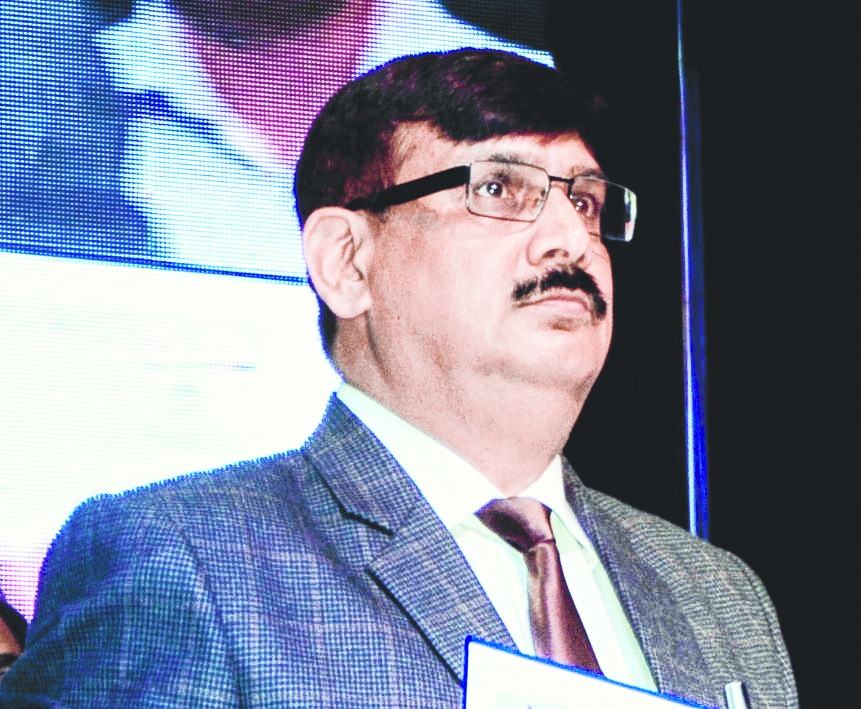
A 1985-batch IPS officer, Singh is the recipient of the President’s medal for his outstanding career
After completing his MSc from Gorakhpur University, he joined the IPS cadre
Known for taking up challenges, he has served Odisha Police in a number of sensitive posts, including SP of four districts
He served at the Indo-Tibetan Border Police force during his central deputation
WHAT WOULD YOU HAVE BEEN, IF NOT A POLICE OFFICER?
My father, who was a police officer, wanted me to become a doctor. But, I was destined to be a police officer. My father is also quite happy with my achievement.