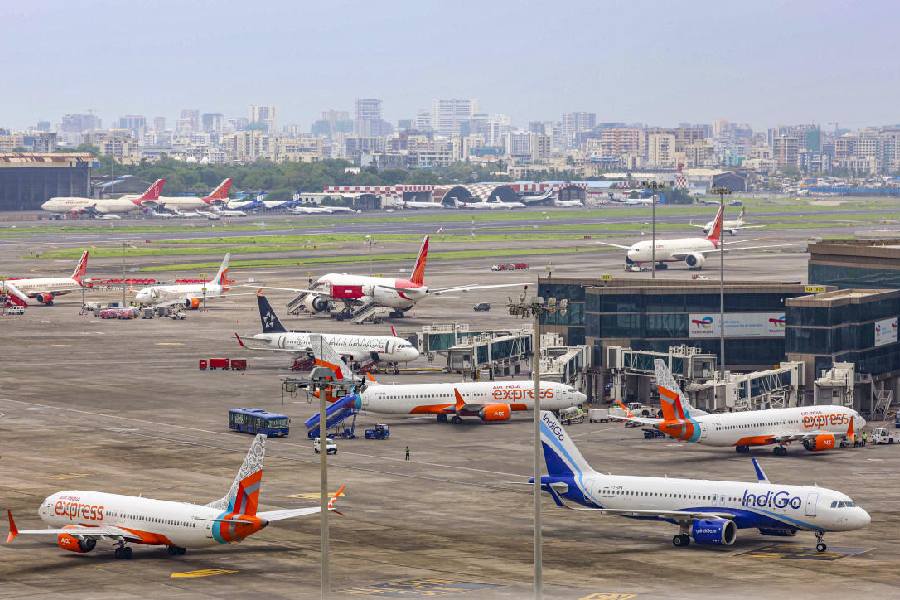
India’s largest carriers — IndiGo, Air India and SpiceJet — have pushed back against proposed cabin crew rest regulations, calling the draft norms “more restrictive” than global standards and warning they could limit operational flexibility.
The Directorate General of Civil Aviation (DGCA) released its draft Civil Aviation Requirements (CAR) on Cabin Crew Flight Duty Time Limitations (FDTL) in October 2025, triggering industry-wide consultations.
The Federation of Indian Airlines (FIA), which represents the three carriers, has written to the aviation watchdog urging “globally-harmonised, evidence-based and operationally practical provisions”.
One of the grouping’s principal arguments is that flight duty period — rather than flight time — should serve as the primary metric for managing cabin crew fatigue on a day-to-day basis.
"Duty and rest limits may focus on Flight Duty Period and minimum rest periods, avoiding right cumulative caps or direct linkage to number of landings," FIA said in a letter dated January 12.
The debate reflects broader tensions between safety safeguards and airline operational models in one of the world’s fastest-growing aviation markets.
Generally, flight duty period starts when a cabin crew member is required by an operator to report for, or to commence a duty and ends when that person is free from all duties.
Flight Time is broadly the duration of a flight.
Also, FIA said the duty and rest limits should focus on the flight duty period and minimum rest periods, avoiding cumulative caps or direct linkage to the number of landings.
"The proposed CAR framework appears more restrictive compared to global standards, offering limited operational flexibility, and not adequately addressing all fatigue concerns with the nuance required for diverse types of operations," the letter said.
With respect to proposed norms for rooms for the cabin crew, FIA said accommodation standards should be focused on rest quality, with twin-sharing permitted under operator-defined guidelines.
Among other aspects, the three airlines have pointed out that international frameworks recognise that effective fatigue recovery is driven by adequate rest opportunity and circadian alignment (local night) rather than the physical location of rest.
Meanwhile, the implementation of the revised FDTL norms for pilots is still to be fully implemented despite legal battles, and non-compliance with the changed provisions was also one of the reasons that led to the massive operational disruptions at IndiGo in early December 2025.