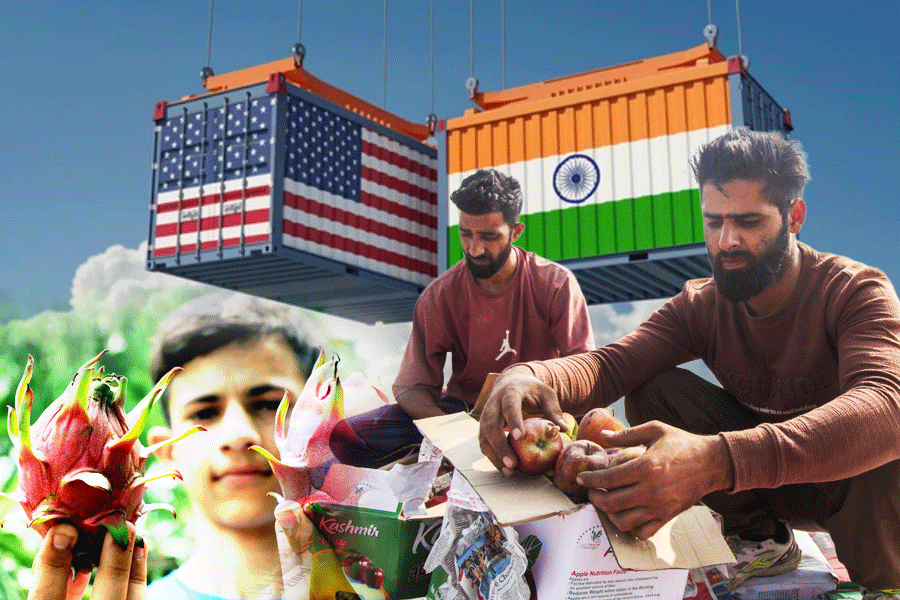
Most growers and dealers of fruits in Jammu and Kashmir feel that the India-US trade deal will be a severe blow to the local economy which significantly depends on horticulture, even though the Narendra Modi government insists the agreement with Washington protects the interests of Indian farmers and the agriculture sector.
Bashir Ahmad Bashir, president of Kashmir’s fruit growers and dealers union, has written to Prime Minister Modi, highlighting that the reduced tariffs on imported apples will put the apples from Kashmir and Himachal Pradesh at a huge disadvantage.
"The marginal farmers have been badly affected by the import of apples from Iran, the US, New Zealand,” Bashir was quoted as saying by PTI.
“Rising input costs, sudden changes in weather and outbreak pests have put the entire horticulture sector under financial stress. The reduction in duties will be the proverbial final nail in the coffin," he added.
He said the need of the hour was to impose 100 per cent import duty on foreign apples.
"If imported apples get a free run in India, the horticulture economy will plunge into crisis," he said.
Nearly 20 lakh people earn their livelihood directly or indirectly from horticulture activity in Jammu and Kashmir, according to horticulture department officials.
Jammu and Kashmir chief minister Omar Abdullah on Tuesday raised serious concerns over the interim trade deal with Washington, saying it could adversely impact the Union Territory's dry fruit and horticulture economy.
Abdullah said duty-free imports of tree nuts such as walnuts and almonds could hurt the local farmers.
"Tree nuts, walnuts and almonds originate from Jammu and Kashmir. Allowing them duty-free imports raises questions about the sympathy for our farmers," Abdullah said, adding that apples should also have been protected.
Opposition PDP also said the trade deal would spell doom for the economy of Jammu and Kashmir if no tariff is imposed on the import of agricultural and horticultural goods from the US.
"They have not thought of the impact of the India-US trade deal on the horticulture sector of Jammu and Kashmir. There will be zero tariff on agriculture products imported from the US. What will happen to the apple and walnut produced in Jammu and Kashmir?" PDP spokesman Mohammad Iqbal Trumboo said.
There are voices – few and far between – within the fraternity who feel the agreement will stabilise prices and improve the quality of the local produce.
"Protectionism is not good for the farmers all the time. They become complacent as they have a captive market,” Javaid Ahmad Lone, a walnut farmer and dealer from south Kashmir’s Shopian district, told PTI.
“For example, the rates of local almonds and walnuts in Kashmir fluctuate like the share market. No one is sure what is happening.”
He said with a steady flow of walnuts and almonds from the US, the prices of local produce will also stabilise.
"The imported walnuts and almonds have better quality and were already very competitive with tariffs. The local farmers will have to improve their quality as well,” he said. “That's the benefit of competition.”