
Jorhat, April 8: Assam Chah Mazdoor Sangha (ACMS) has alleged a conspiracy in the wave of protests by several student and workers' organisations against the union over the recent tea wage agreement.
The Sangha, the largest and oldest tea workers' union in the state, has decided to stage a protest rally on April 23 in support of various demands, including provincialisation of lower primary schools in tea gardens, bringing workers engaged in small tea plantations under the Plantation Labour Act 1951, providing individual electricity meters and clearing the dues of the workers of the 15 gardens under the Assam Tea Corporation Limited.
All the 22 branches spread across the state along with the central office will organise protest rallies.
ACMS general secretary Dileshwar Tanti told The Telegraph this afternoon that the emergency working committee meeting of the Sangha held at its central office in Dibrugarh today took stock of the situation in view of the largescale protests across Assam against the union over the bilateral wage agreement of workers between the ACMS and Consultative Committee of Plantations Associations (CCPA) on February 26.
Sangha president Bhimananda Tanti, who is the Deputy Speaker of Assam Assembly, and former Union minister Paban Singh Ghatowar, who is the chief adviser of the ACMS, participated in the meeting.
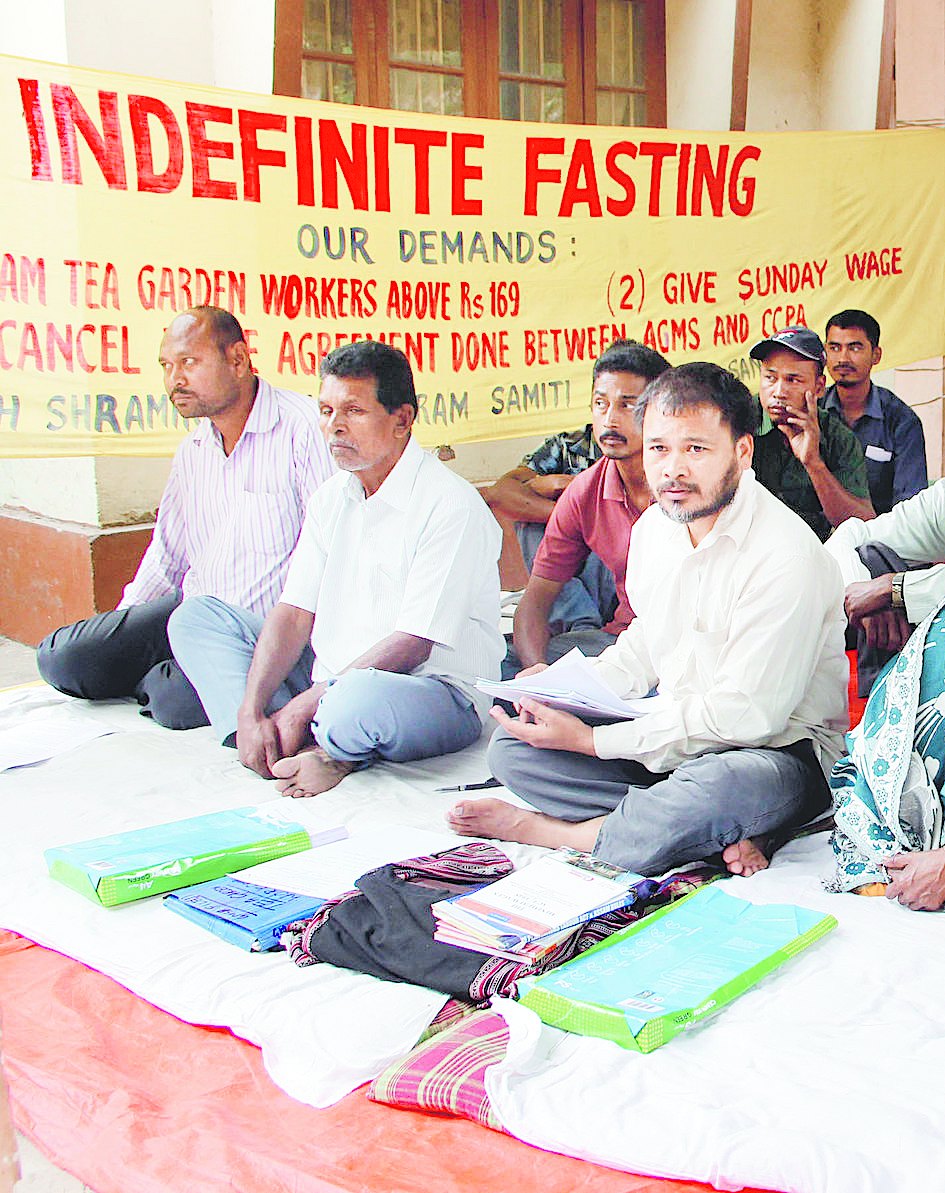
Following the three-year agreement (with effect from January 1, 2015), which envisages an increase in the daily wages of tea workers by Rs 43 in three phases, there have been protests in front of ACMS central office and at its branch offices by organisations like Assam Tea Tribes Students, Association (ATTSA), All Adivasi Students' Association (AASA) and Krishak Mukti Sangram Samiti (KMSS).
In the earlier three-year wage agreement, the workers were getting Rs 94 till December 31, 2014.
Accusing the Sangha of taking the management's side by depriving the workers of their "legitimate dues", the organisations have demanded scrapping of the wage pact as the hike was "much lower" than the minimum wage recommended by the state government in January at Rs 169.
"We see a conspiracy as not only there have been large-scale protests against the ACMS but our offices also have been gheraoed, illegally locked up and vandalised by protesters, which is a dangerous sign," Dileshwar said.
"We smell a rat. Damaging ACMS office furniture in the name of protests by organisations is not recognised by the tea industry and spreading canards against our leaders in a concerted manner seems to be done at the behest of some vested interest."
Suspecting political interest behind the protests, the Sangha leader cautioned the organisations to refrain from defaming the Sangha and stop the "false propaganda".
He said the meeting decided if such protests continued then the Sangha would be force to carry out counter-protests against such organisations.
Defending the deal, Tanti said the overall hike was more than that of the workers in Bengal, where recently a three-year agreement was signed between both workers and the management under which a hike of Rs 37.50 in three phases was initiated.
On December, Dispur had constituted a Minimum Wages Advisory Board comprising members from the tea companies' management and representatives of several unions under the chairmanship of chief secretary J. Khosla to advise on tea wage revision. The committee since last month has met for three times to discuss the wage agreement and is scheduled to meet again on April 20.