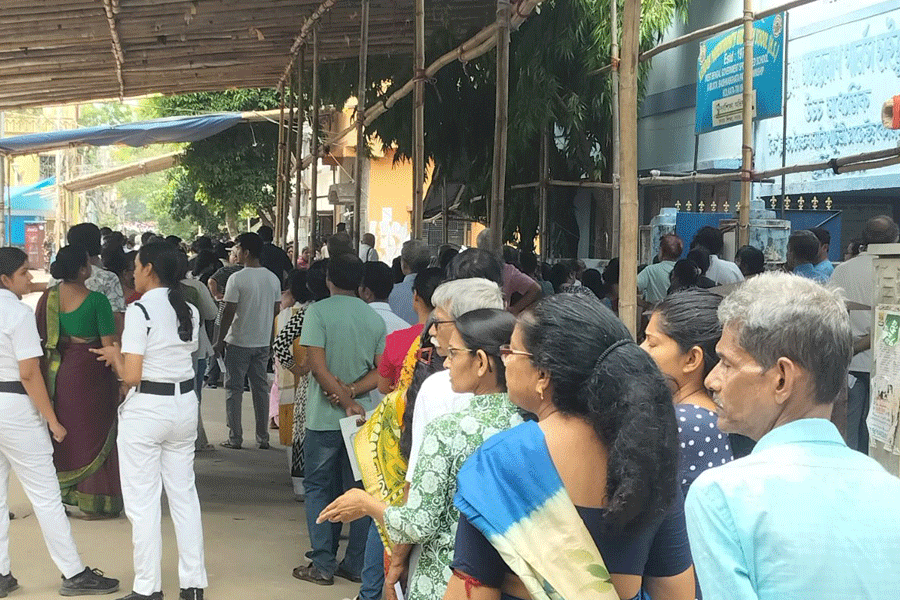
Sixteen years ago, a gunshot shattered the stillness of a summer afternoon outside Kendua Mahendranath Girls’ High School in Kolkata’s Jadavpur Assembly constituency, turning a routine day of municipal polling into one of panic, bloodshed and rage.
On Wednesday, as Bengal voted again, the same school wore the look of an ordinary polling station — perhaps the most remarkable transformation of all.
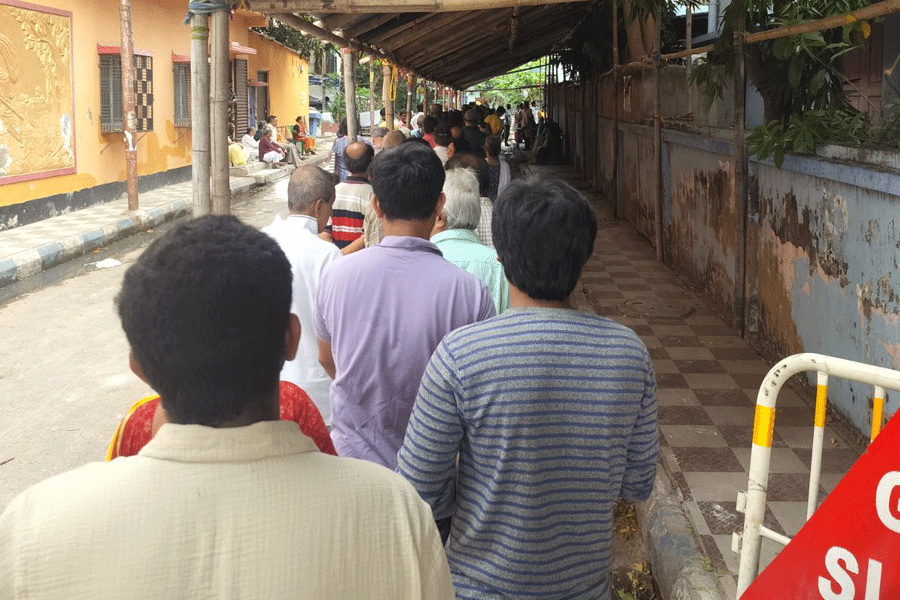
By 9am, long but orderly queues curled along the boundary wall of the school. Voters slowly edged forward. A few checked slips of paper with serial numbers; others peered toward the gate to estimate how much longer it might take.
Three booth level officers (BLOs) sat outside, helping residents locate their part numbers and directing them to the right queue.
The men who once dominated Bengal polling days — huddled party workers — were largely missing. A local Trinamool worker stood at the end of the line smoking a cigarette.
From a nearby balcony, a resident called out to him in jest: “Go home, else the cops will come and pick you up..”
They have known each other for three decades.
Inside the school compound, polling agents of the Trinamool, the CPM and the BJP sat behind desks and watched voters enter. In neighbourhood booths such as these, party workers can guess political loyalties because of Form 20, which gives the booth-wise results.
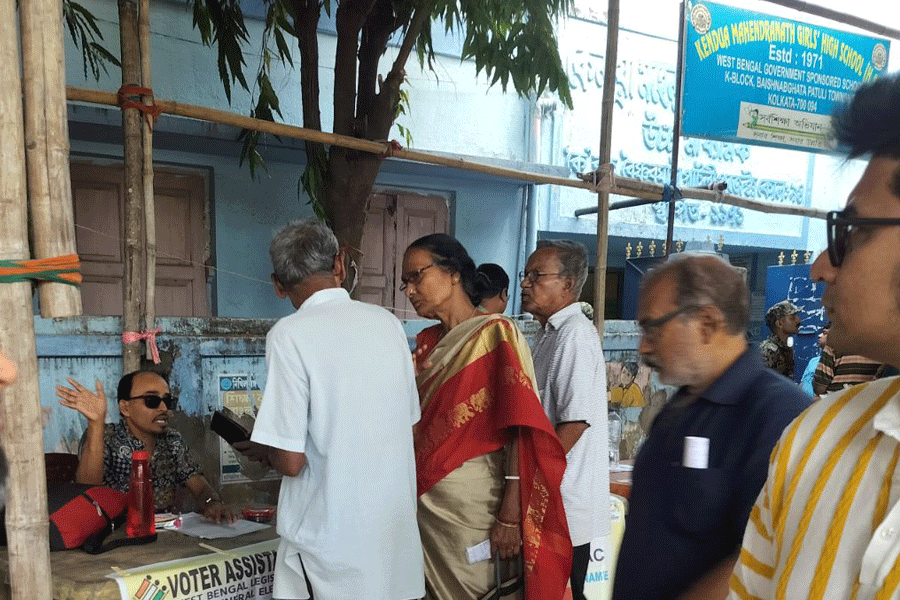
Outside Kendua Mahendranath Girls’ High School in Kolkata’s Jadavpur Assembly constituency.
The only moment of urgency came when a polling officer hurried out through the gate asking loudly: “Do we have a doctor here?” Someone inside had fallen ill in the humidity.
For many residents, however, the school remains inseparable from what happened here in May 2010.
On that fateful day of May 2010, the queues had thinned around 4pm. Some local youths were gathered in the field opposite the school. Then came a sharp sound — “phaatt” — like a firecracker bursting inside a room.
A man ran toward the lane leading to another gate of the school and then came back shouting that shots had been fired.
When people approached, they found Bapi Dhar lying in blood. Dhar, a soft-drink distributor and a CPM worker, had been shot by a Tripura police jawan posted on election duty. Dhar later died in hospital.
The spot where Bapi Dhar was found lying in a pool of blood in 2010.
What followed was chaos. A furious crowd swelled outside the school. EVMs were hurled out. A local Trinamool worker’s home was vandalised despite his having no role in the shooting. Senior CPM leaders, Sujan Chakraborty, Bikash Ranjan Bhattacharya had to climb atop a vehicle and appeal to the crowd before order was gradually restored.
Governments changed, parties changed, methods changed. Though every election brought heavier deployment, the memory lingered in the locality.
But on Wednesday, Kendua Mahendranath Girls’ High School seemed to offer a different picture: A booth where the state’s fierce electoral past had given way, at least for a day. Perhaps symbolic of the change in the voting atmosphere.
The loudest complaint by noon was not of intimidation or violence, but impatience.
One voter grumbled to another that his line was moving too slow. At a school once remembered for gunfire, the only niggle was now about waiting too long to vote.