Is it the greatest crisis to hit urban Indian homes in recent times? Or does it just feel that way to hassled householders who are discovering how dependent they are on a vast army of helpers who keep their homes and cities humming, and who have suddenly vanished?
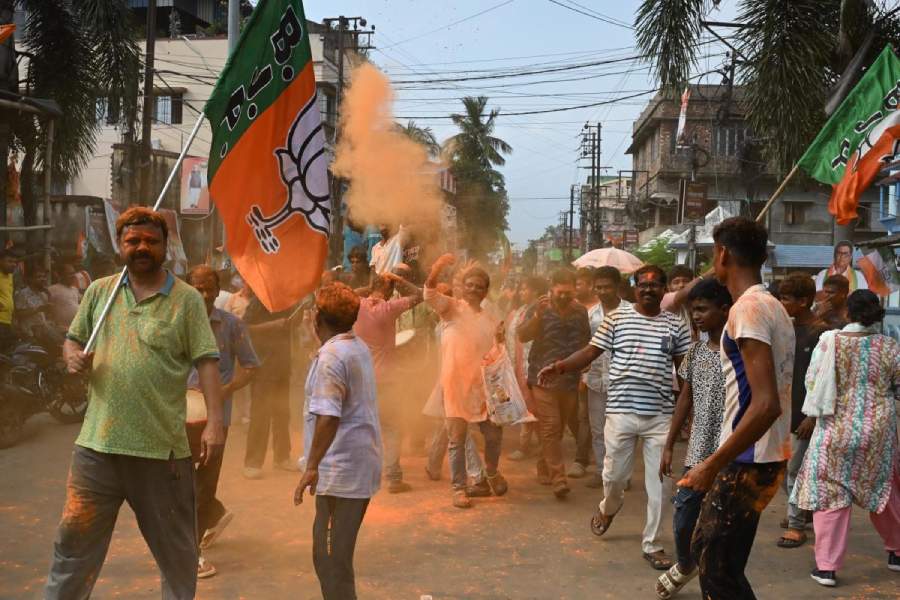
As the West Bengal elections have escalated into a fierce, high-stakes battle with the BJP seeking to unseat the TMC, the effects of the “Missing Maids” are being felt far beyond the state’s borders.
From Mumbai, Bengaluru and Chennai to Hyderabad, Gurugram, Noida and Lutyens’ Delhi, the impact has been immediate and personal. “It’s not the cooking that I hate, it’s the dishwashing,” one Gurugram woman whose maid has taken leave posted on social media. “I’m in the same boat,” responded another.
If it had been a book, it would be titled: Where Have All The Maids And Cooks Gone? with a subtitle that includes the cleaners, the drivers, the waiters in restaurants and many, many others.
The answer, of course, is that they’ve gone home to vote. But the scale and duration of this migration have taken employers by surprise.

representational
Says Noida-based communications specialist Anjali Prasad Sharma: “Huge numbers of people seem to have left for the elections and they’ve gone away for long stretches. Because of that, Noida has started to feel like an empty-nester space.”
The sudden absence of migrant workers from West Bengal has quickly been turned into social media fodder. Memes abound, with one post shared by former election commissioner Dr SY Quraishi joking: “Gurugram wishes smooth elections in West Bengal. We want our maids back safe and soon.”
But the humour has landed badly, not least because it exposes how many across the country view West Bengal. “A state that once shaped India’s intellect, industry and moral imagination has been pushed into such economic decline that migration for survival is now treated as normal,” says senior lawyer Mahesh Jethmalani.
“That is not a joke. That is not a meme. That is not harmless class humour. It is the visible evidence of a long collapse… It is a civilisational tragedy that the land of Vivekananda, Netaji and Tagore is today seen in large parts of India merely as a source of household help,” he says.
Adds one social media user: “Once upon a time West Bengal… was known for intellectual luminaries and business houses. Today its only export is maids.” Another declared: “Mamata Banerjee has turned Bengal into India’s maid’s capital.”
But the debate over how the state is perceived by India’s affluent classes is largely irrelevant for lower income Bengalis. It has been overtaken by a far more immediate concern that is sending many streaming back home: ensuring their names are on the electoral rolls.
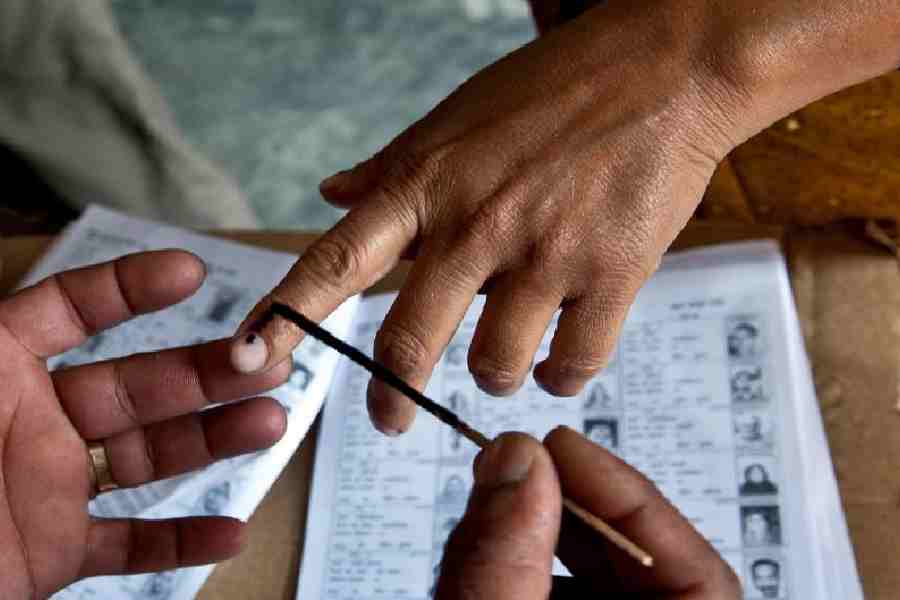
The ongoing Special Intensive Revision (SIR) exercise has made it especially urgent for many to return home and check that their names are on the voting list. Those who can afford it have even bought their own air tickets.
The queues of people seeking to verify or restore their names have been widely reported in the print media, on TV and across social media. Many fear that their names may have been removed, requiring them to return in person to ensure they remain on the rolls.
“Voters have been unfairly removed from the lists despite having proper documentation,” said TMC leader Abhishek Banerjee. Opposition leaders have alleged that large numbers of names have been struck off, a charge that election authorities and the BJP have disputed.
What looks like a domestic inconvenience in India’s cities is, in Bengal, being framed by some political voices as a question of identity, citizenship and access to welfare. “This is a deeply problematic issue for all India and we should wake up to it,” said TMC MP Mahua Moitra, warning of wider implications.
Some voters worry that failing to resolve discrepancies in their documentation could create serious complications in accessing services or proving identity. As a result, many are heading back to their home districts carrying every scrap of documentation they believe might be required.
Those who aren’t on the voters list may need to endure long queues and bureaucratic processes that could stretch out for weeks. Sharma notes that her maid isn’t taking any chances and left on the 12th and said she hoped to return by the end of the month.
Who’s to blame for turning West Bengal, in national eyes, into a domestic service labour pool is being fiercely debated in the elections. Prime Minister Narendra Modi has said “fear has ruled Bengal,” framing the exodus as a symptom of governance failure rather than voter anxiety.
Jethmalani goes further, alleging that migrant workers have been pulled back through pressure: threats tied to ration cards, land rights and administrative penalties. These claims are contested by the ruling party.
Meanwhile, the same scenario of domestic disarray – dishes piling up, floors going unswept and dinner increasingly a takeaway – is being played out across urban India. In Bengaluru, Akhila Srinivasan runs a large household and is struggling because her maid and driver left for West Bengal days ago without giving her any indication of when they plan to return.
In Gurugram, a recently retired man has found himself taking on an unfamiliar role. After seeing his wife off to work each morning, he tackles the housework. “I’m now the head cook and bottle washer,” he adds grimly: “Literally and figuratively, Gurugram is a mess.”
Similarly, in some Noida gated housing societies, the disruption has been acute. Says Sharma: “A lot of society groups have women pinging and asking: ‘Is anyone available for jhaadu pocha’.” She adds: “Everyone is looking for someone.”
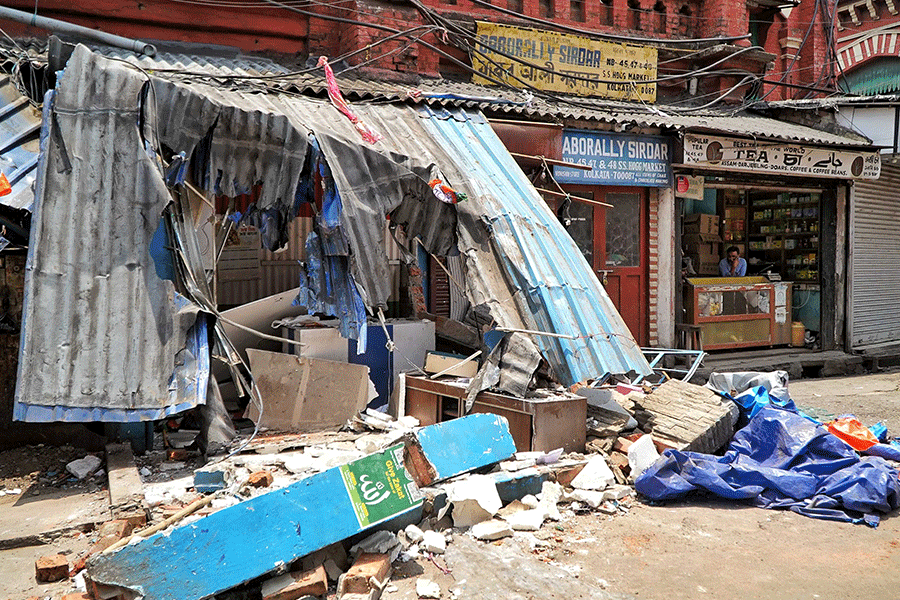
The exodus is visible also in Noida neighbourhoods like Gejha and Bhangel, where many lower-income Bengalis live and the usually bustling streets are less crowded than usual.
The fallback for affluent Indians has been to turn to apps to summon hire-by-the-hour help from firms like Urban Company. “Every day now, it’s ‘the fastest finger first’. Everybody is on the app. Also people are turning to cloud kitchens and there are home cooks who give you thalis and customise your meals. And wise people who invested in vacuum cleaners and other appliances are making full use of them now,” says Sharma.
But with domestic workers travelling back to Bengal in large numbers, demand has surged so sharply that peak-hour booking slots are much harder to secure, with companies facing the problem of having no one available to send.
There’s no question also that parties are forking out money to make it possible for less affluent voters to make long journeys. The Trinamool Congress has accused the BJP of bringing trainloads of voters back home to the state, while the BJP has made similar claims against the TMC. Both sides have also rolled out welfare promises as part of their campaign.
For India’s urban middle class, all this may add up to a few weeks without help. But for many in Bengal, it comes down to being counted or potentially slipping through the cracks.