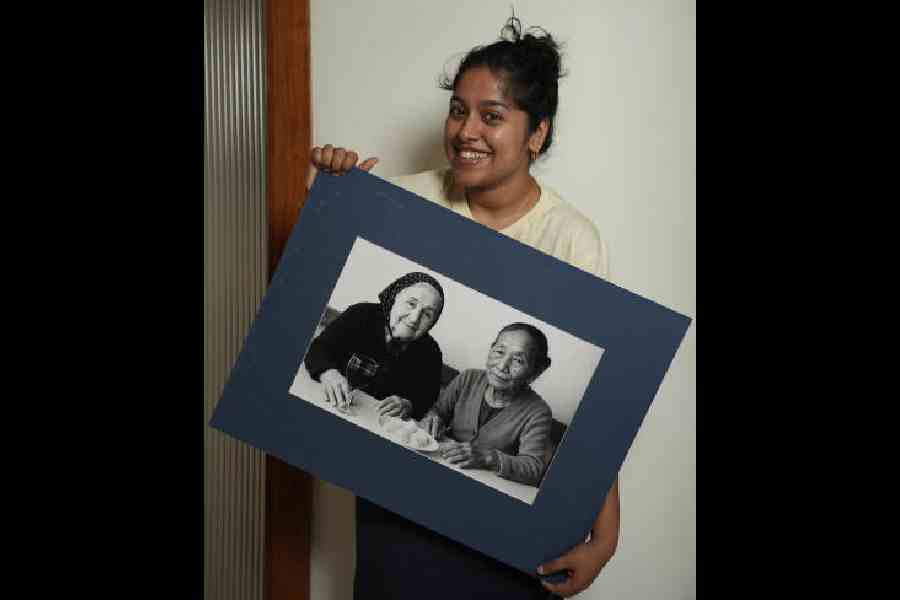
On May 9, for a one-night-only dinner service, Niyati Rao — one of India’s most exciting young culinary talents — will present ‘Nonna Mei: A Tale of Two Hills at Souk’, in collaboration with Gormei at Taj Bengal’s Souk. The pop-up brings together the warmth of Italian home-style cooking and the bold, terroir-driven ingredients of Meghalaya and India’s North-East, weaving a narrative through food. Guests can expect dishes such as a reimagined caprese with roasted carrots, pickled red chillies and candied walnuts; four-year-old sourdough pizzas topped with blood sausage or confit potato; and Meghalaya pineapple paired with house-made mozzarella, alongside Ekaa’s signature 100 per cent hydration bread.
Trained at The Taj Mahal Palace and having honed her craft at Copenhagen’s celebrated Noma, Niyati is the co-founder of Mumbai’s critically acclaimed Ekaa, which has featured on Asia’s 50 Best Restaurants list. Her accolades include being named in Forbes India 30 Under 30, FoodSuperstars: India’s Top 30 Chefs, and winning the Excellent Chef Award at The Best Chef Awards 2024. Known for her ingredient-forward philosophy and deep respect for seasonal, locally sourced produce, this pop-up reflects her signature style — intimate, inventive, and rooted in storytelling that comes allive in Nonna Mei, her Shillong outpost.
Excerpts from a t2 chat with Niyati...
Calcutta has such a deeply rooted culinary identity. How did you approach designing a menu that both respects and contrasts the city’s palate?
Calcutta is a city that understands soul in food. To respect it, I leaned into the nonna philosophy — the idea of grandmother-style warmth and time-honoured techniques. The contrast comes from the Nonna Mei lens, taking those familiar, nostalgic textures and applying our specific brand of global precision and bold, punchy profiles that might surprise even the most seasoned Calcutta palate.
What inspired the menu for your Calcutta showcase, and are there any dishes that feel especially personal to you?
The inspiration was the idea of a “traveling kitchen”. Every dish on the Nonna Mei menu for Taj is personal because it represents a fragment of my journey at the restaurant, sort of coming back to home ground as I am ex-Taj. If I had to pick one, it’s our signature caprese salad — the architecture of this dish represents the elements and textures being so different but the ingredients being classic with our spin on it.
When you cook in a new city, do you adapt your flavours to the local audience, or do you prefer to present your cuisine as is?
I believe in “contextual cooking”. I won’t change the soul of a Nonna Mei dish, but I will listen to the local produce. If the local greens in Bengal are singing louder than what I have in Mumbai or Shillong, I’ll pivot to highlight them. The flavour remains ours, but the ingredients should belong to the land we are standing on as well in some aspect.
You’ve built a strong narrative around modern Indian cooking. How do you define “modern” in today’s context?
“Modern” isn’t about molecular gastronomy any more. Today, modern means intent. It’s about the traceability of the ingredient, the equity in the kitchen, and the bravery to strip a dish down to its three most essential components rather than hiding behind a dozen garnishes. Also I think trying fearless bold combos of different produce seasonaly.
What role does storytelling play in your menus, especially in a curated experience like this pop-up?
Storytelling is EVERYTHING! The bridge between the kitchen and the table. In a pop-up, I’m not just serving food, I’m serving my emotion, my thoughts. I’m inviting Calcutta into the world of Nonna Mei. Every course tells a chapter from our heritage roots in Meghalaya to our current obsessions of what happens when a grandmother from Meghalaya meets an Italian grandmother.
Are there any local ingredients from Calcutta or West Bengal that you were excited to work with for this collaboration?
The gondhoraj lemon. The fragrance is unparalleled. But beyond that, I’ve been fascinated by the local varieties of saag and the incredible mustard oils that have a much sharper, more tectonic pungency than what we find elsewhere. Integrating that “bite” into our flavour profiles might be thrilling.
Fine-dining in India is evolving rapidly. Where do you see it heading in the next few years?
We are moving toward hyper-regionalism. Chefs are no longer trying to represent “India” as a monolith. We are seeing deep dives into specific sub-cultures, pop cultures and everything around it and more importantly, a shift toward casual fine dining where the food is world-class but the atmosphere is accessible, which places like Ekaa, Nonna Mei, and Bombay Daak stand for.
Your journey has been closely associated with pushing boundaries. What has been the most defining moment in your culinary career so far?
Opening Ekaa was monumental, but honestly, every time we successfully launch a new concept like Nonna Mei or Ringo, it’s a defining moment. It proves that our philosophy of ingredient first is scalable and resonates with people. And the concepts have to be strong to the core. Plus all I have truly wanted to do was to make India very proud.
How has your time at Ekaa shaped your identity as a chef?
Ekaa gave me everything. Ekaa taught me silence. Ekaa wrapped me around its philosophy of being honest with ingredients, and letting them carry the process forward, really paying attention to seasons, and to bring emotion every time I think of a dish, to really think of micro cuisines from regions that weren’t popular. It taught me that you don’t need to shout to be heard. It gave me the confidence to trust my palate and the discipline to manage the chaos of a growing business group.
Your dishes often highlight ingredients in unexpected ways. How do you approach ingredient-first cooking?
We don’t start with a recipe; we start with a product. If we have a great carrot, we ask: “What is the most ‘carrot’ version of this carrot?” We use the peel, the juice, the top. We work around the ingredient rather than forcing it into a preconceived idea.
There’s a strong sense of restraint in your cooking. How do you decide when a dish is complete?
I ask myself: “If I take one more thing off this plate, does it fall apart?” If the answer is no, then I take it off. A dish is finished when there is nothing left to remove.
How do you balance global techniques with Indian flavours without one overpowering the other?
By treating them as equals. Technique is just a tool, it shouldn’t be the star. If I’m using a French technique on an Indian ingredient, the goal is to make the Indian flavour shine brighter, not to make the dish taste French. I am very proud of who I am, but very fond of techniques and ingredients around the world.
What role does sustainability play in your kitchen and sourcing decisions?
It’s a core pillar, not a marketing buzzword. It’s about zero-waste prep, sourcing from local farmers, and ensuring our team has a sustainable work-life balance. A sustainable kitchen starts with the people in it.
As a young chef leading the charge in India’s fine-dining scene, what advice would you give to aspiring chefs today?
Be a sponge. Don’t rush to be a head chef. Spend time peeling onions, understanding the heat, and learning the business side. You can’t lead a kitchen if you don’t know how every corner of it breathes. That grind is going to make you once it breaks you.
How do you see the role of women evolving in professional kitchens in India?
We are moving past the “female chef” label and just being recognised as chefs and owners. The kitchens are becoming more empathetic and organised, which is a shift I’m proud to be part of. I am a chef just like someone is a pilot or a doctor, not female or male there.
If you had to create a dish inspired purely by Calcutta, what would it look or taste like?
It would be me exploring varieties of rice, working with the brown ghee, just something new I guess.