Stopped at heaven’s door
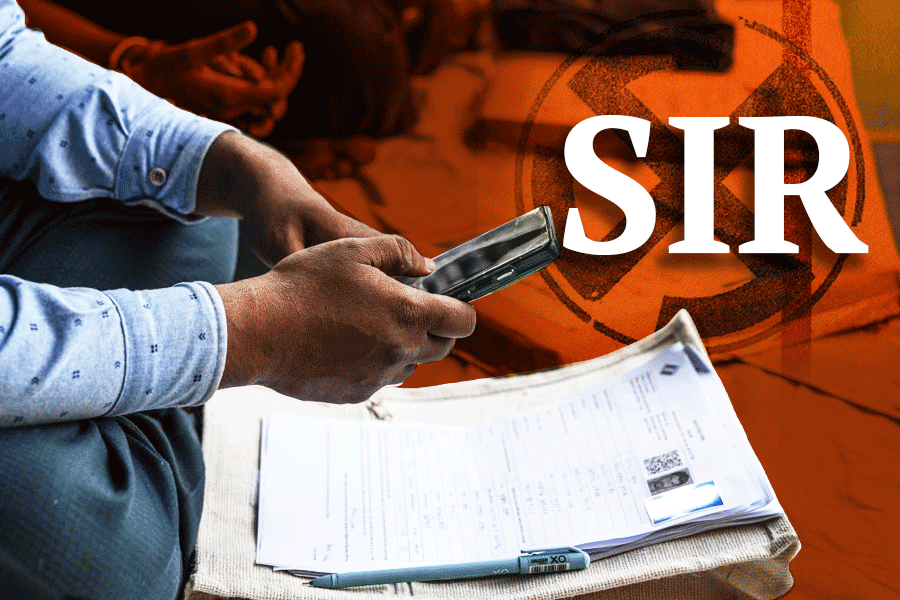
Sir — Much of India is scrambling to dig out important documents owing to the ongoing Special Intensive Revision of the electoral rolls. But a man who placed an advertisement in the classified section of a newspaper recently seems to be in a rather unique crisis: he claims to have lost his death certificate. His ad, clearly a miscommunication of some kind, led to jokes about paranormal activity. But given the bureaucracy surrounding even death these days — Aadhaar cards are often demanded before issuing a death certificate — one cannot dismiss the possibility that the man had been stopped at heaven’s door for lack of paperwork.
Pranjal Sinha,
Calcutta
Select few
Sir — Rahul Gandhi and Mallikarjun Kharge, leaders of the Opposition in the two Houses of Parliament, were not invited to the dinner hosted for the Russian president, Vladimir Putin, at the Rashtrapati Bhavan bu the Congress member of Parliament, Shashi Tharoor, was. This decision raises obvious questions about the health of democratic protocol. An invitation list at a constitutional residence ought to reflect institutional positions, not selective preferences. The government’s silence on the matter creates unease, and the Congress’s internal rift adds another layer of confusion. A straightforward explanation from the authorities would redeem public trust. A consistent standard for such events would also help avoid needless speculation.
Sushmit Das,
Calcutta
Sir — The absence of Mallikarjun Kharge and Rahul Gandhi from the presidential banquet for Vladimir Putin sends a peculiar message about respect for constitutional roles. The leader of the Opposition holds a recognised position in parliamentary life, and side-stepping it weakens expectations of fairness. The government may prefer particular faces in the room. Yet democratic institutions deserve respect that should trump the government’s political preference. The Congress has its own troubles but selective invitations only deepen suspicion of the Grand Old Party being a divided house. Shashi Tharoor should have declined the invitation.
Rituparna Dey,
Calcutta
Reel change
Sir — Netflix’s proposed purchase of Warner Brothers for 82.7 billion dollars marks a turning point for global entertainment. The deal reflects a shift from cinema-led culture to streaming dominance. Netflix gains a century of film-making expertise and a vast library that strengthen its position. Theatre owners fear deeper marginalisation as the new owner may prioritise online releases over the big screen. Regulators in the United States of America and Europe have valid concerns about a market with shrinking competition. A merger of this scale requires vigorous scrutiny before approval.
Mahua Mazumder,
Calcutta
Sir — Warner Brothers helped define Hollywood; its sale signals fading confidence in traditional studios. Netflix views the deal as a shortcut to prestige given its struggle to win a best picture Oscar or produce a genuine blockbuster. This ambition is fair, although it arrives with serious consequences. Cinema United, a trade organisation of cinema hall owners, has warned that theatres may lose the little leverage they still possess. The exhibition sector already faces shrinking margins, and control by a streaming giant could accelerate decline. The industry deserves firmer safeguards before momentum becomes irreversible.
A.K. Sen,
Calcutta
Lost wings
Sir — With the arrival of winter in Calcutta, one hopes to see the migratory birds that flock to the city. Each year one sees fewer birds coming to the city. This is a great loss for birdwatchers.
Sourish Misra,
Calcutta