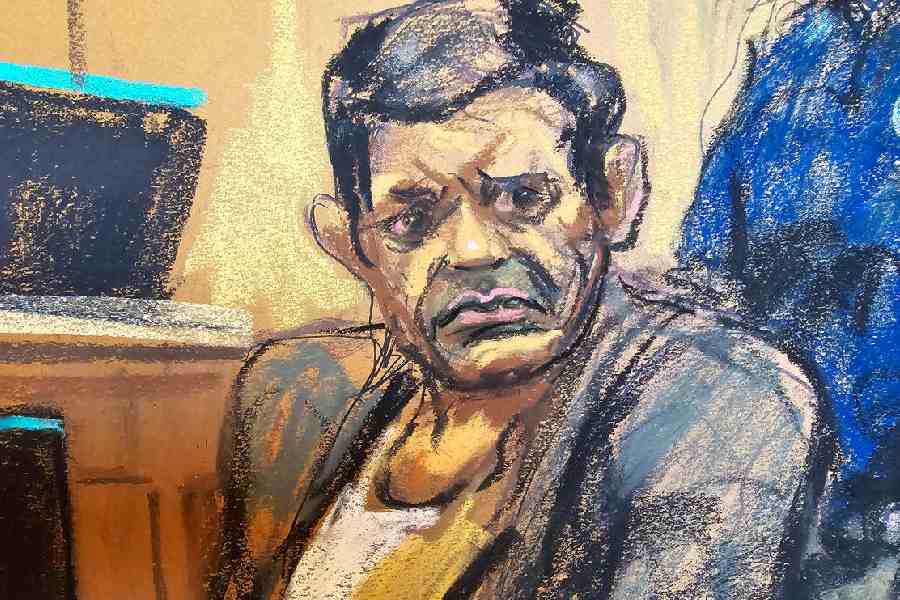
Nikhil Gupta’s admission in a US federal court that he took part in a failed murder-for-hire plot to assassinate a Sikh separatist leader on American soil has averted a lengthy trial.
But Gupta’s guilty plea to three charges – murder for hire, conspiracy to commit murder for hire, and conspiracy to commit money laundering – has not brought the story to an end. On the contrary, there are scores of other questions also that have now burst back into the open with Gupta’s admission of guilt.
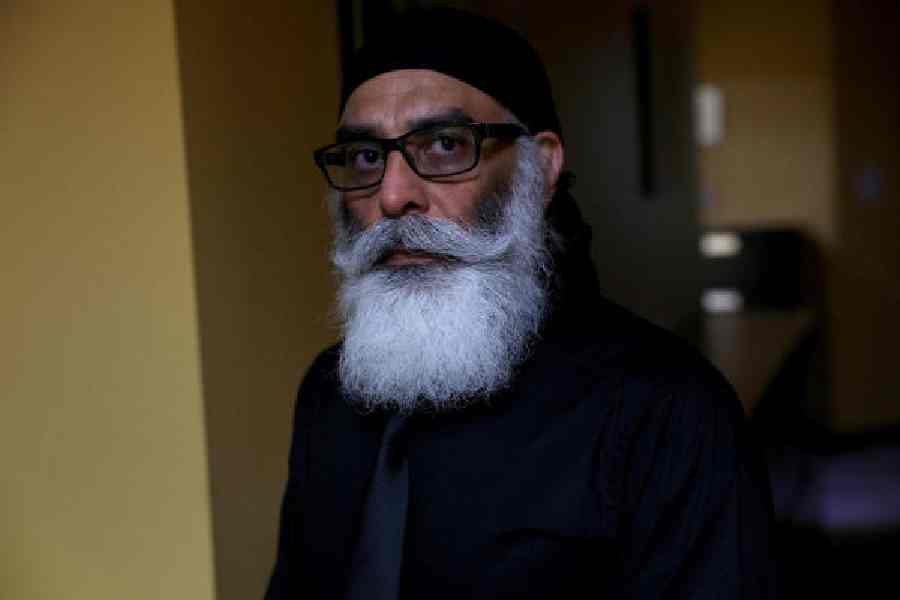
Firstly, what has Gupta told the Americans and could it put our intelligence agencies on the backfoot in their dealings with their US counterparts?
And who precisely is Gupta? According to prosecutors, he described himself as an “international narcotics and weapons trafficker” and he acted “at the direction and coordination of an Indian government employee… (to) plot to assassinate a United States citizen on American soil.”
The government has repeatedly denied allegations of involvement in a plot against Gurpatwant Singh Pannun, calling them “unwarranted”, “unsubstantiated” and “contrary to government policy.”
It’s not clear why Gupta would allegedly have been chosen to target a prominent Khalistan activist – a figure India has designated as a terrorist and who was constantly surrounded by armed guards. The court filings do not explain whether prosecutors believe he was selected because of prior connections, specific skills, or other factors.
Early in the alleged plot, Gupta made a catastrophic error. He approached a man he believed to be a “criminal associate” to help him find “a hitman to murder the victim,” the court filings say. That individual was, in fact, a confidential source working with the US Drug Enforcement Administration. The source introduced Gupta to a supposed hitman who was actually a DEA undercover officer.
But if Gupta was already known to the DEA, how could he have allegedly been picked by Indian intelligence to target a prominent Khalistan activist?
Prosecutors allege Gupta provided the “hitman” with personal information about the target, including a home address, phone numbers, surveillance photographs and details of his daily routine. Court filings further state that “Gupta arranged for an associate to deliver $15,000 in cash to the UC (undercover operative) as an advance payment for the murder.”
The only stipulation Gupta made about the planned killing was that it should not take place during a scheduled state visit by Prime Minister Narendra Modi. After the gangland-style assassination of Hardeep Singh Nijjar, a Sikh separatist leader in Canada in June 2023, Gupta allegedly said Nijjar “was also the target… we have so many targets” and that there was “now no need to wait” to kill Pannun.
Now that Gupta has pleaded guilty, key aspects of what he did, who he believed he was working with, and how events evolved remain unclear. A full trial would have meant aggressive cross-examination, scrutiny of evidence, and potentially uncomfortable disclosures. It’s expected that the guilty plea will get him a lighter sentence of about 20 years and a few years might be knocked off for good behaviour.
Former R&AW chief A.S.Dulat points to the similarities between Gupta and David Headley who played the role of a scout for the 2008 26/11 terrorist attacks in Mumbai. Dulat told interviewer Karan Thapar: “Mr Nikhil Gupta is identical to David Headley.” He adds: “He has exactly the same background and he was a DEA operative.”
After a 1997 heroin smuggling conviction, Headley worked with the DEA as an informant in return for a lower sentence but it says he did not have a long-term intelligence assignment. The DEA says it was unaware of his terrorist ties during his time as an agency informant.
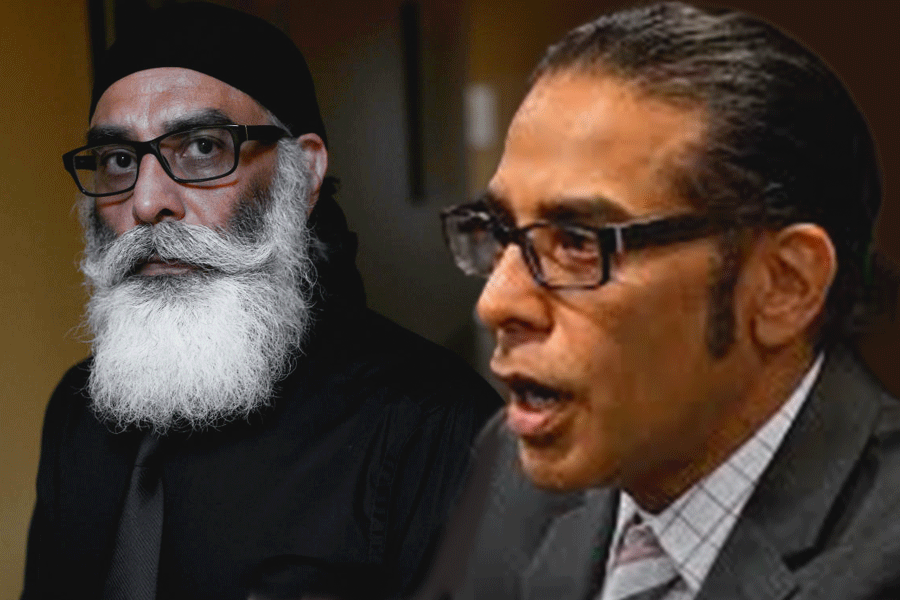
Now turn from Nikhil Gupta to Vikash Yadav, the alleged operative in Delhi who was supposed to be masterminding and organising the assassination. There must be an even bigger collection of question marks over his head.
Yadav had joined the CRPF as an assistant commander and had been inducted into the intelligence agencies at a later stage. He may have spent time at R&AW but he served much more time in the ARC (the Aviation Research Centre) which is a specialised aerial reconnaissance unit. It is almost certain that he hadn’t been inducted full-time into the intelligence services.
The question here is why was a man with such a different background put in charge of a major operation like conducting a high-profile assassination in the US? Yadav appears to have been supremely unqualified for carrying out such a task.
And he is said to have blotted his copybook right from the get-go by holding a video conference with Gupta and panning the camera around the table to reveal the other people sitting with him. The most basic rule in intelligence operations is that such exposure should be minimal and only allowed when absolutely required. If there were other intelligence operatives at the table with him they couldn’t have been happy about having their faces on camera.
Yadav, in fact, was part of a short-lived scheme to induct junior officers from the paramilitary forces like the CRPF, the BSF and the ITBP, into the intelligence services. The argument for bringing them into intelligence services was that officers from such services had extensive experience in the border areas. R&AW now has a large number of IPS officers in its ranks but such operatives almost never serve on the borders.
There is, of course, the ultimate question of whether Yadav could have undertaken such an operation on his own initiative.
The government has confirmed that Yadav is no longer in its employ. He has been indicted in the United States but remains in India. In US filings, he is described as having allegedly provided information about the target and agreed to a payment plan for the killing. His lawyers have denied the allegations and say he is being made a “scapegoat.”
This leads to the ultimate unresolved question: could an individual such as Yadav, if the US allegations are accurate, have acted on his own initiative or beyond his authorised brief?
The courtroom, which might have provided clarity, may instead just leave behind a trail of unanswered questions stretching from New York to New Delhi.