March celebrates International Women’s Day, highlighting their achievements and, inevitably, devoting time and space to the ones who have made a name for themselves.
This year, more than one publication focused on women achievers from India’s Northeast, because the eight sister states have added laurels through their female celebrities in the realms of athletics, art, politics (rarely) and activism, whose accomplishments challenge stereotypes.
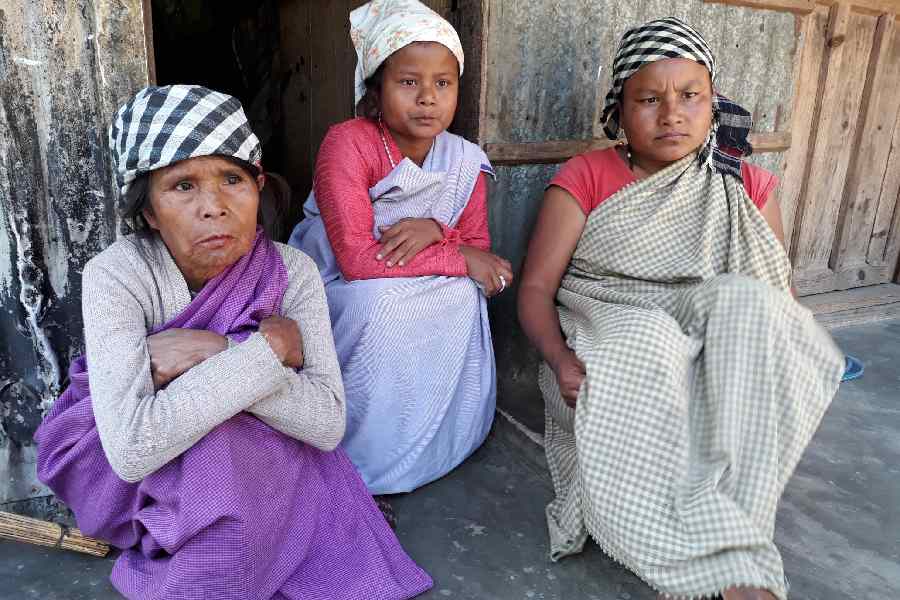
While such recognition is important, it narrows the understanding of empowerment to a handful of exceptions. In contrast, the matrilineal system of Meghalaya, practised primarily by the Khasi, Garo and Jaintia communities, offers a more grounded illustration of women’s empowerment embedded in everyday life.
When we first moved to Shillong, it took a while to differentiate between matriliny and matriarchy. The learning process was enriching. Matrilineal meant that lineage, inheritance and family identity passed through the mother’s line. Among the Khasi community, for instance, the youngest daughter, khatduh, inherits the ancestral property and assumes responsibility for the welfare of ageing parents and the extended household.
Our Khasi landlady, Winnie Kharkongor, explained that the system possibly originated because the youngest daughter is the last to get married. When she does marry, her husband comes to live with her in her parental home. But not all khatduhs are ecstatic about it, because “it is a position envied, but not enviable,” says Madeline Tham, a heritage consultant. As the youngest daughter, Tham faced sibling antagonism and had to handle the responsibility of catering to not only her parents but also the needy clan members.
In matriliny, children take their mother’s clan name and family heritage is traced through maternal ancestry. These practices shift the traditional axis of authority, challenging the patriarchal norms prevalent across our country and much of South Asia.
The significance of this system lies not merely in property rights but in how it reshapes social power. When women inherit land and serve as custodians of family assets, they occupy a central place in economic decision-making. Ownership of property, an issue that continues to be a major barrier to women’s empowerment across India, is normal in Meghalaya’s matrilineal communities. A woman’s authority is thus woven into the fabric of kinship, economy and identity.
The matrilineal structure also produces a distinctive form of social security. Since daughters remain integral to their natal homes and inherit family assets, elderly parents and younger siblings depend on them for stability. Women’s role as household anchors thus carries symbolic as well as material significance. Women are recognised as the backbone of the family structure rather than peripheral dependents.
So every March, in celebrating prominent women from the Northeast, the media highlights individual success stories that risk reinforcing the idea that empowerment must be earned only through achievement. Contrast this with Meghalaya’s matrilineal framework where empowerment is institutionalised within community norms. This is not to suggest that matrilineal societies are free from gender tensions. Men do voice resentment at being marginalised in matters of property; political institutions in Meghalaya remain male-dominated.
Meghalaya’s matrilineal system shows that gender equality is most transformative when it is embedded in cultural roots. By recognising such systems, the discourse on women’s empowerment can move beyond isolated success stories toward appreciating deeper social paradigms that sustain women’s authority and dignity. In the Khasi, Jaintia and Garo hills, empowerment is a social inheritance. It is certainly worth a thought, if not emulation as yet.