Revolutions are rarely clean. In Bengal, famous for its revolutionary fervour that runs across class divides, they are now called Poriborton (literally, change). And in the first 12 hours since the latest Poriborton, Kolkata has remained mostly peaceful in contrast to 2011, when the last change of power was marked by massive turbulence.
Yes, there have been reports of Trinamool offices vandalised and some localities near Kolkata like Shibpur have witnessed tense moments, but given Bengal’s history of violence it is nothing to write home about.
For instance, 12 CPM leaders and one RSP leader, and supporters were killed in the first week of the results being announced in 2011, when the last parivartan took place.
Around 9.15pm on Monday, the stretch from Rabindra Sadan Metro Station to Lord Sinha Road in the heart of Kolkata was choked with cars and motorbikes. Vehicles spilled onto AJC Bose Road with some, including convertibles, circling in search of parking.
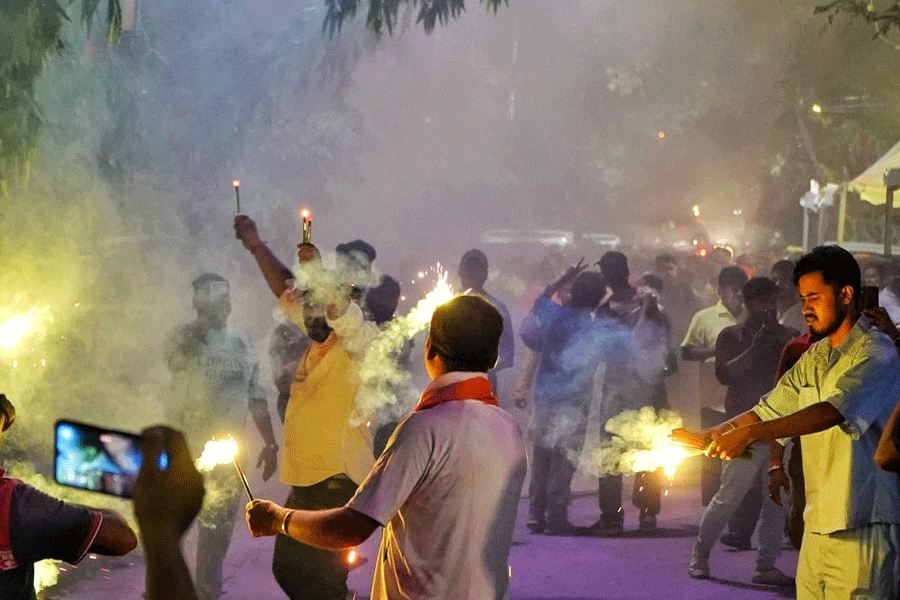
Loud music blared from car stereos, Punjabi tracks mixing with chants of “chahe jitna zor laga lo, sabse aage honge Hindustani”. People danced atop cars, waved BJP flags from their convertibles and distributed sweets.
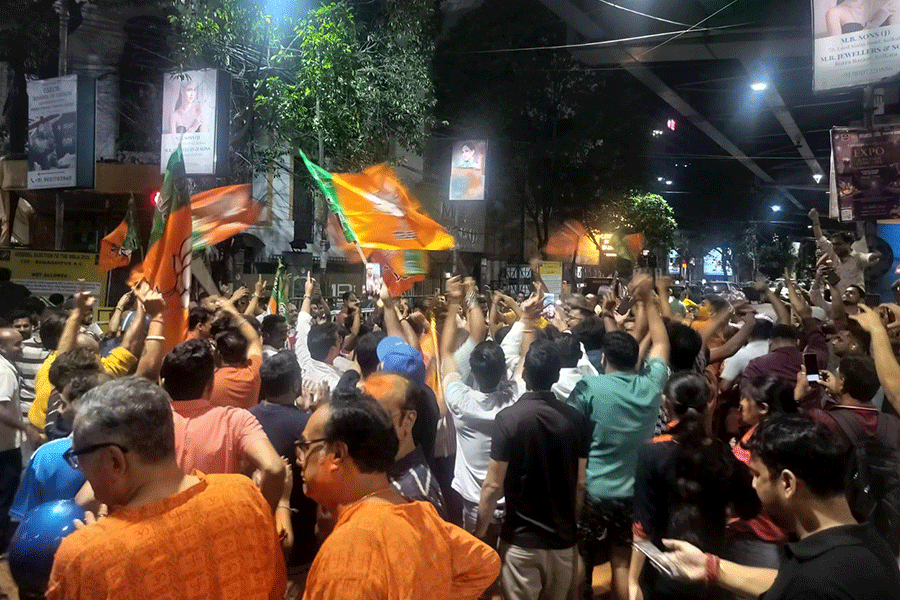
BJP workers gathered outside Abhishek Banerjee’s office. (Pictures: Sourjya Bhowmick)
Near Kathleen at the Lord Sinha Road junction, where a barricade had been put up restricting entry to the path to the vote counting centre Sakhawat Memorial Girls’ High School, crowds raised slogans of “Modi, Modi” and “Jai Shri Ram.”
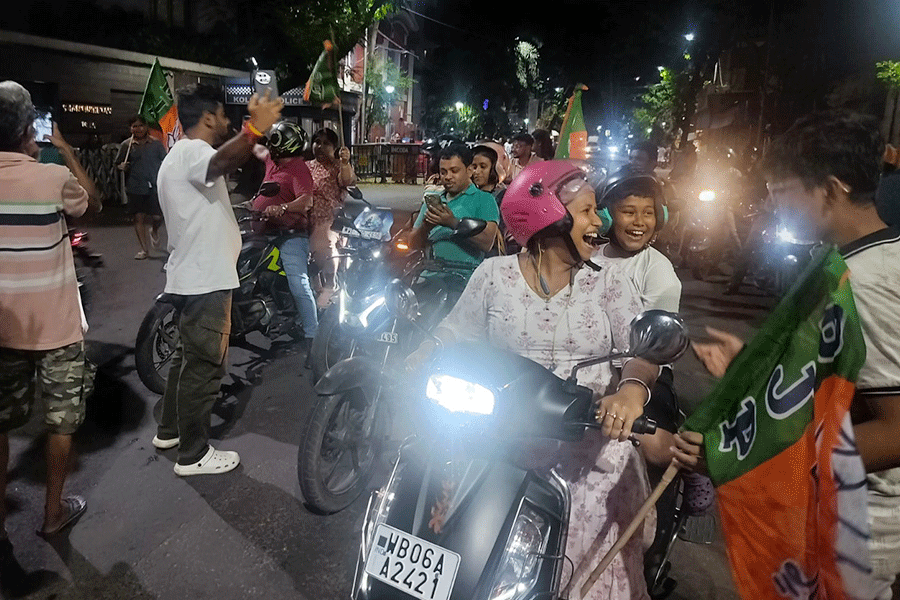
Many were on video calls, sharing the moment with friends and family. The crowd was diverse: office-goers still in formal wear, couples, families with children, and a significant number of women, many joining in the celebrations.
For a moment, it seemed as though the entire Bhabanipur constituency, Bengalis, Punjabis, and other non-Bengali-speakers alike, had poured onto AJC Bose Road, celebrating Suvendu Adhikari’s victory over Mamata Banerjee once again.
The crowd parted to let an ambulance pass. Otherwise, the stretch leading towards Belle Vue and Beckbagan remained blocked.
People burst out in cheers when a Mahadevi Birla School bus, carrying a dozen or so central force personnel, drove by. The men inside remained unperturbed, almost like a football team too tired to notice the fan frenzy outside.
Opposite Kathleen, near the petrol pump, a party worker waved a BJP flag while playing “Jai Shri Ram” on his mobile phone. Hours earlier, Trinamool leader Subrata Bakshi, who had gathered at the same spot with a handful of supporters, had been dispersed by the police.
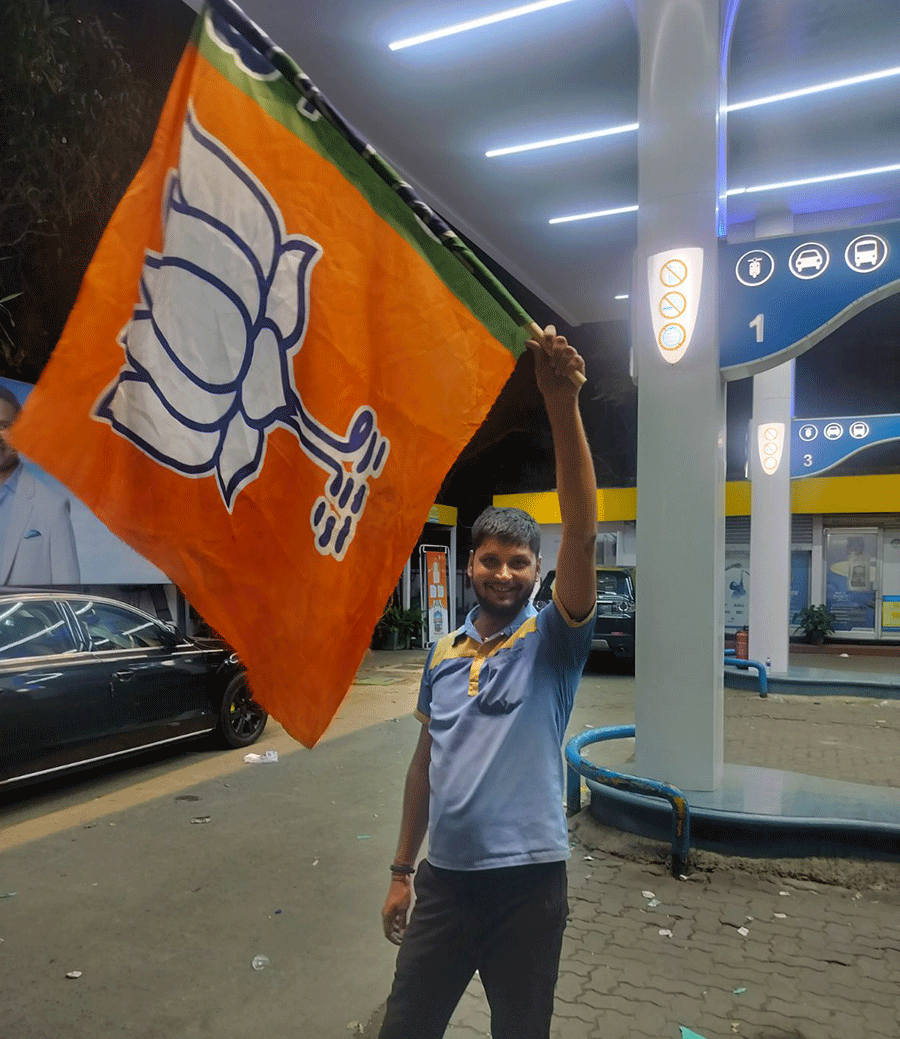
Petrol pump worker holding a BJP flag in AJC Bose Road.
On Ashutosh Mukherjee Road, named after Jana Sangh ideologue Shyama Prasad Mukherjee’s father, motorbikes and cars sped past, their riders shouting “Jai Shri Ram.” Some made their way towards Lord Sinha Road, hoping to catch a glimpse of the man of the moment, expected to emerge with his winning certificate.
The turn towards Balwant Singh Dhaba on Harish Mukherjee Road — an area lined with late-night tea stalls popular among young people — offered a different scene.
Around 10pm, groups gathered there, sipping tea and watching the steady stream of vehicles pass by. In recent years, such small eateries and cafés have proliferated across Kolkata, which some say is due to the lack of employment opportunities.
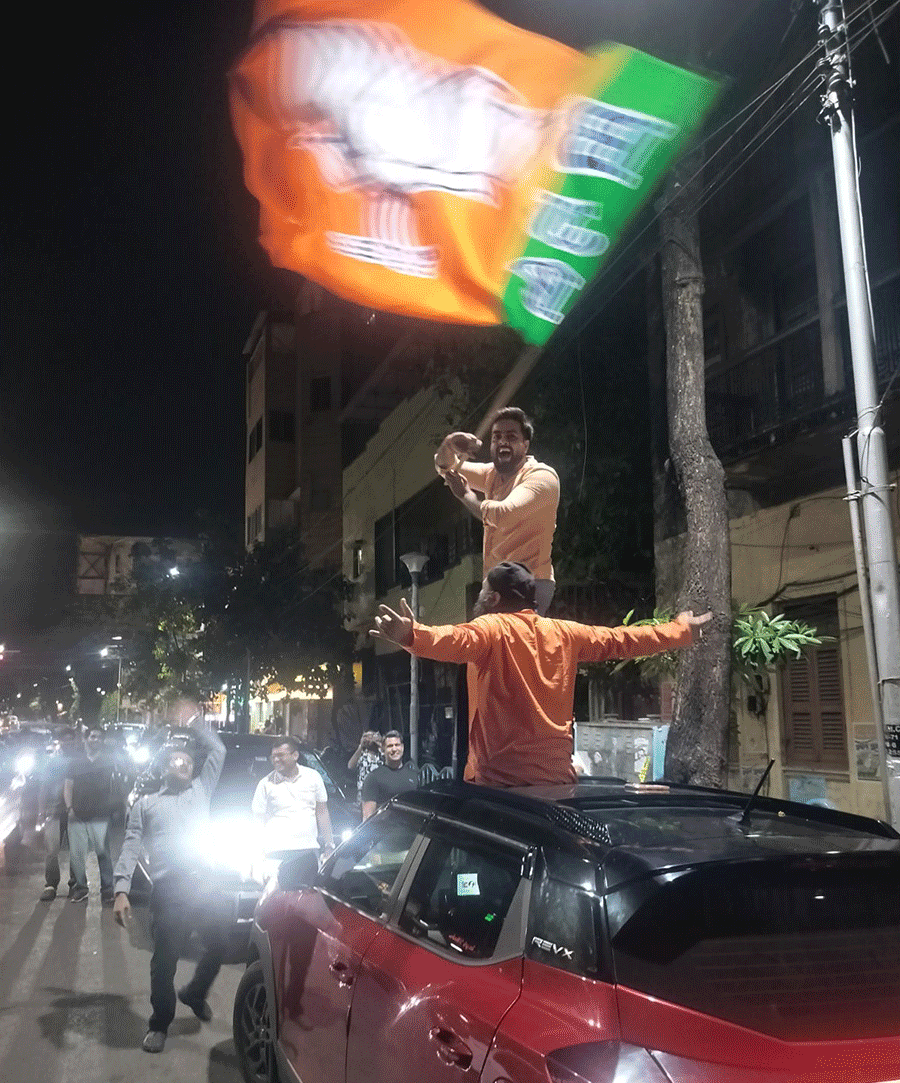
BJP supporters at Harish Mukherjee Road.
The 1.5-km stretch from Balwant Singh Dhaba to Shantiniketan building, the residence of Trinamool general secretary Abhishek Banerjee, captured the shifting mood. The celebratory energy of AJC Bose Road gave way to slogans pointed at Abhishek Banerjee.
Two-wheelers and cars converged outside the residence, their riders raising slogans: “Goru chor, koyla chor [cattle thief, coal thief].” The chants were directed at Abhishek, who had earlier promised celebratory DJ music on May 4 in a war cry meant to energise TMC workers.
“Ayi Pushpa, push out hoye geli toh,” shouted a young woman astride a scooty, (presumably) her son seated behind her. She paused for a few minutes, yelling towards the darkened, silent building before riding off.
A small security presence, two police personnel and a few central forces, stood guard, disengaged and glancing at their phones as the slogans continued.
At one point, a saffron flag slipped off a speeding motorbike. The rider halted ahead, but before he could return, a cyclist who had inadvertently run over it stopped, picked it up, and cycled forward to hand it back. The rider said, “Jai Shri Ram.” The cyclist replied: “Jai Shri Ram.”
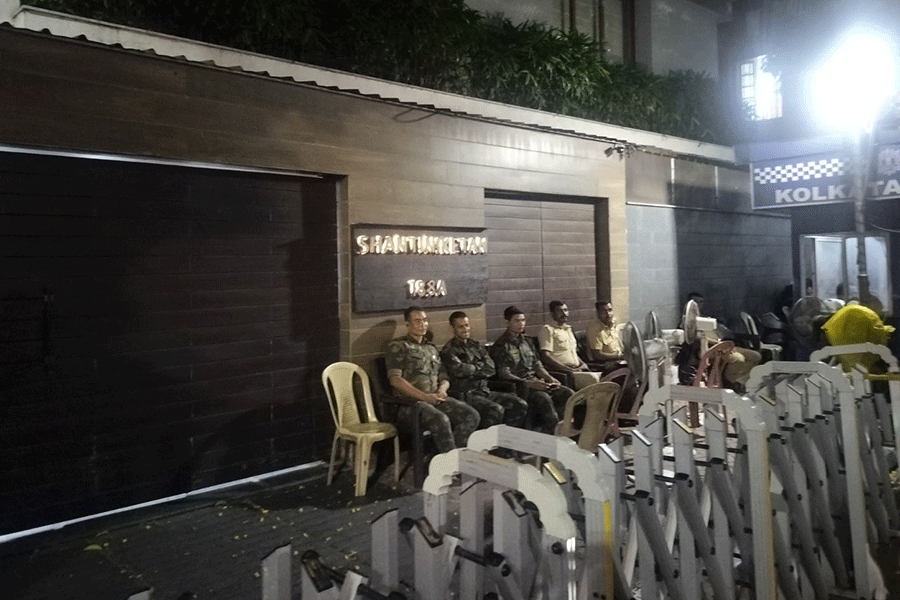
Outside Abhishek Banerjee's residence.
About 750 metres ahead, the barricade near Patuapara Lane had been removed. Mamata Banerjee, who rose from the bylanes of Kalighat and built her politics as a champion of the masses, had long faced criticism after access to the lane leading to her residence was heavily fortified with public movement restricted.
These barricades were installed after she became chief minister, reflecting heightened security concerns seemingly at odds with her oft-repeated remark that she was “a less important person.”
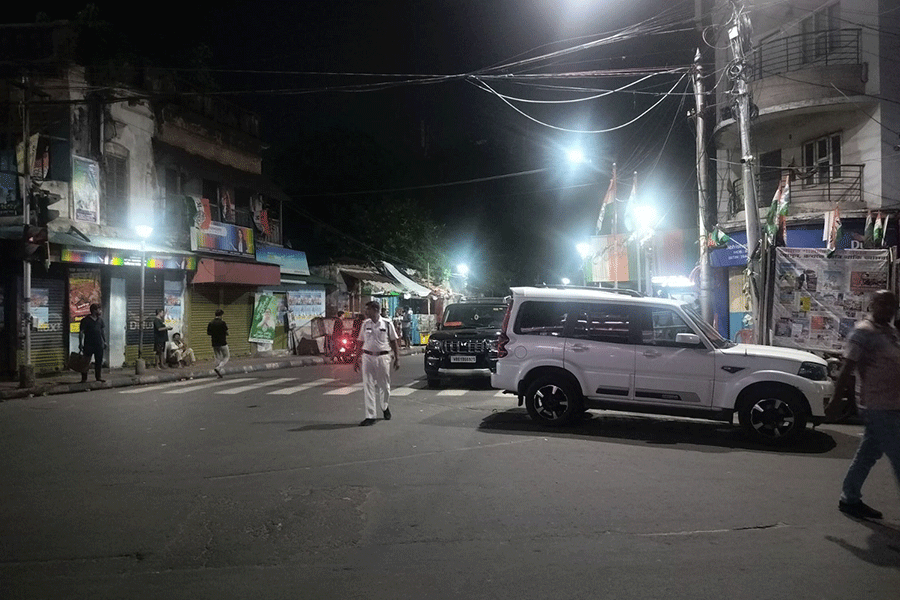
Barricade removed near Patuapara Lane.
Yet, on Monday night, the anger appeared directed elsewhere. There were no chants of “chor” near Kalighat. By around 10.30pm, with the barricades gone, she didn’t matter anymore; Bengal had rejected her.
Nearly 10 km away, BJP workers had gathered outside Patuli police station after one of their own was picked up for allegedly vandalising a TMC office long seen as the stronghold of a local leader.
That leader, from ward 101, had faced public resentment for years and was even listed by the Election Commission among “troublemakers.”
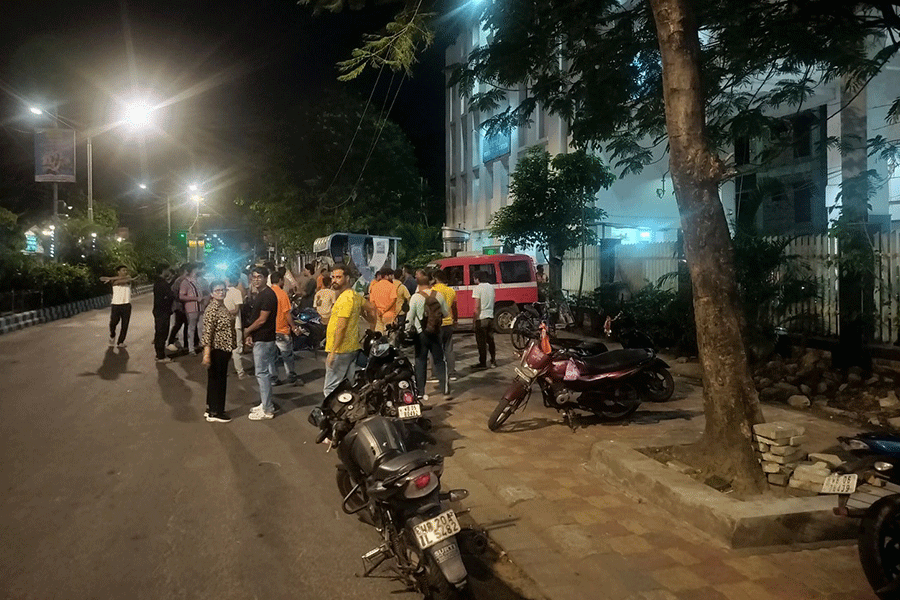
BJP workers gather near Patuli police station.
The BJP’s decisive win in the Jadavpur Assembly seat, by a margin of 27,716 votes, marked a shift in what was once a Left bastion before turning a TMC one. Yet, outside the police station, local BJP workers appeared uncertain about their next move because of a leadership vacuum.
“Let’s go inside,” some suggested. Others held back: “No, the cops said they will release him; some paperwork is pending.”
A woman who had come with her husband to secure the worker’s release ranted aloud: “Just imagine their confidence; they had set up a stage and arranged for a DJ. Can you imagine what they would have done if they had won?”.
During the CPM’s rule a local committee leader might have marched into the police station, exerted pressure and ensured a swift release. Under the TMC such an arrest may not have happened at all.
Further up north, in Beleghata, bikers were carrying BJP flags and shouting Jai Shri Ram. Inside an app cab, a driver was speaking to a friend. “Say Jai Shri Ram,” the voice on the phone said. The app cab driver smiled and said: “Won’t. Do what you want to do.”
Then the cabbie disconnected the phone and turned to his passenger. “I support the BJP,” the cabbie said. “The one who was on the phone is a friend, hardcore Trinamool supporter. Now he is changing his colours.”
The morning after Poriborton also arrived with signs of change. Many young men, always on the periphery of politics rather than at its centre, still bore the shades of saffron gulal on their faces.
“You have become BJP?” one was asked.
“You know how it works. But BJP is a professional party. Leaders and ‘stamped’ people won’t be taken,” came the reply.
In ward 110 in Jadavpur, a large banner featuring Narendra Modi, Amit Shah and Suvendu Adhikari had been put up beside a Trinamool office. A former DYFI (Left Front’s youth wing) member who is now with the BJP was coordinating where flags should be placed.
“Are you taking over the TMC office,” he was asked.
“No, we won’t touch it. But many things in the locality will stop now,” he said.
Auto-rickshaws on the Golpark route in south Kolkata had already put up BJP flags. Ditto for hand-pulled and cycle rickshaws.
Have all of them become BJP supporters overnight? Has the union changed its colours already?
“Not yet. The party will decide that. But the TMC president has been missing since yesterday afternoon. I was with the CPM earlier. My brother was beaten up. We came back to Kolkata to drive rickshaws. We had to attend union meetings forcibly. We voted everytime. I voted too, though I don’t know where it went. We stayed quiet all these years,” answered the auto driver, a saffron tilak on his forehead.
Asked where he lives, he replied: “Rekha Patra.”
Rekha Patra — the face of the Sandeshkhali movement against the local (now former) Trinamool strongman Sheikh Shahjahan — won the Hingalganj seat for the BJP on Monday with a margin of 5,421 votes.