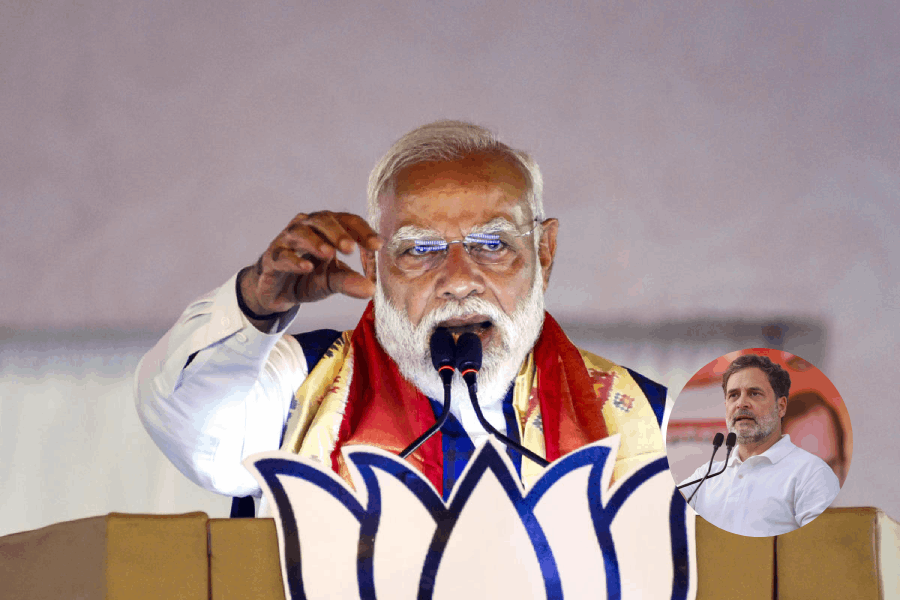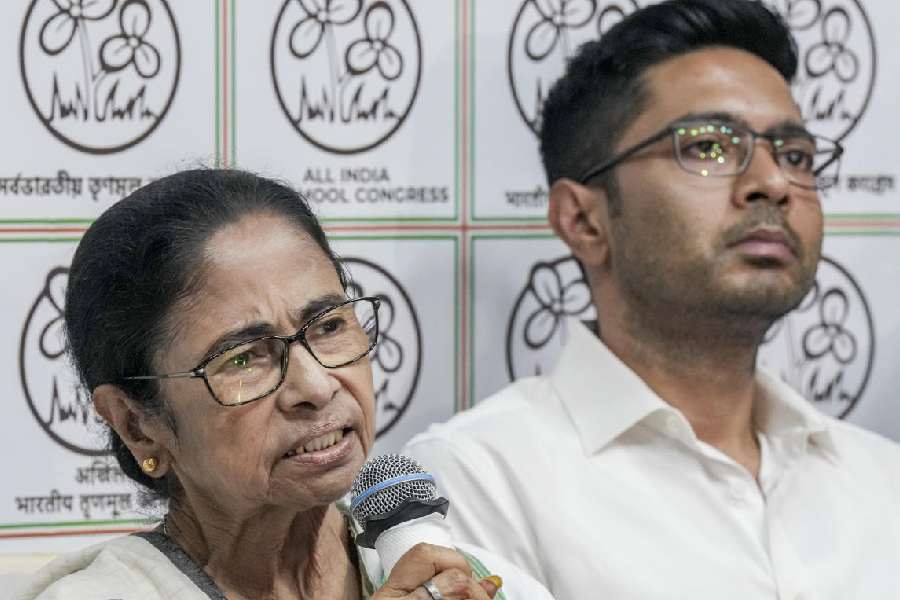
Bengal is headed for an unprecedented constitutional confrontation after Mamata Banerjee refused to resign as chief minister on Tuesday after her party, the Trinamool Congress, lost to the BJP in the Assembly election results on Monday.
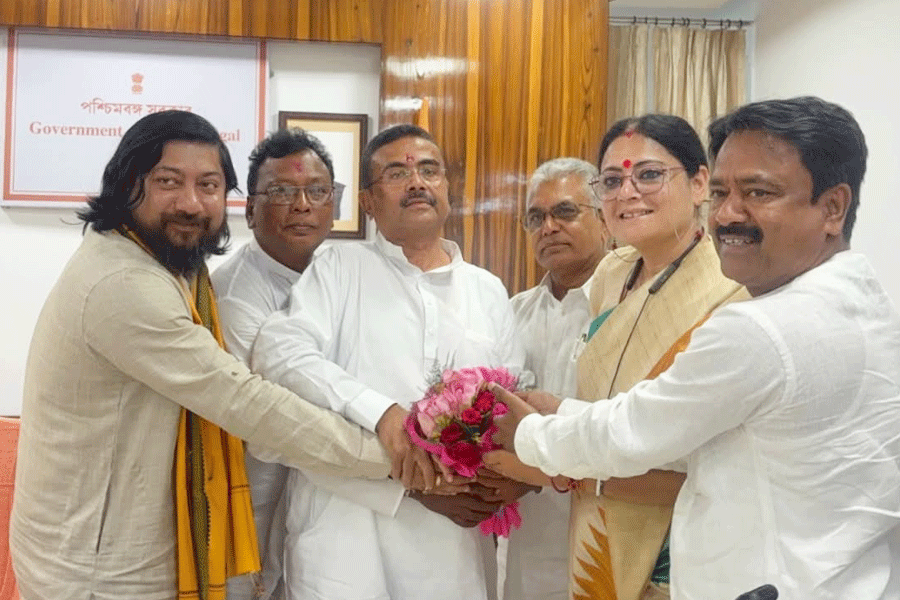
The new BJP state government is likely to take oath on Saturday.
Former chief election commissioner S. Y. Quraishi told The Telegraph Online that in such a rare situation, the constitutional provision allows the governor to ask for the CM’s resignation, failing the procurement of which the governor can invoke Article 356, or President’s Rule, citing a breakdown of constitutional machinery in the state.
“Even if for the duration of a day or two, in a situation like this, President’s Rule is the most likely outcome. After the term of her House ends, it has to be dissolved. There cannot be two incumbent chief ministers at the same time,” said Quraishi.
"The term of the House ends on May 7, after which the House and the government both cease to exist, Till the 7th, she (Mamata) cannot be compelled to resign," added Quraishi.
The BJP won in a landslide victory, in which Mamata was defeated in her home constituency of Bhabanipur by over 15,000 votes by her BJP rival, Suvendu Adhikari.
“We have not been defeated, I will not resign,” Mamata said in a press meet on Tuesday.
She alleged the election had been rigged and that she was manhandled and thrown out of the counting centre as were Trinamool representatives.
Typically, the democratic process allows the outgoing CM to act as a caretaker until the next CM is sworn in. This is unlikely in this election.
In 2005, President’s Rule was invoked in Bihar when after the term of then CM Rabri Devi no clear majority emerged. It was in place until a majority was reached later in the year leading to Nitish Kumar taking power.
“She [Mamata] will achieve nothing by resisting. By resisting her resignation she will only contribute to constitutional chaos,” said Supreme Court senior advocate Sunil Fernandes.
If she does not resign, President’s Rule may be invoked for less than a day leading up to the swearing-in of the BJP government.
Quraishi said the Constitution does not have a provision for the due process if an incumbent CM refuses to leave their post.
The Constitution states that a CM may remain in office only as long as they retain the confidence of the legislative Assembly, he pointed out. Having won only 80 seats, the 207 seats won by the BJP show that TMC has lost the confidence to continue ruling.
The responsibility then shifts to the governor to transfer power to the House with majority, by dismissing the outgoing CM and inviting the majority party to take charge.
“Since Independence we have never seen anything like this,” said Calcutta High Court senior advocate Jayanta Narayan Chatterjee. “No chief minister has refused to step down.”