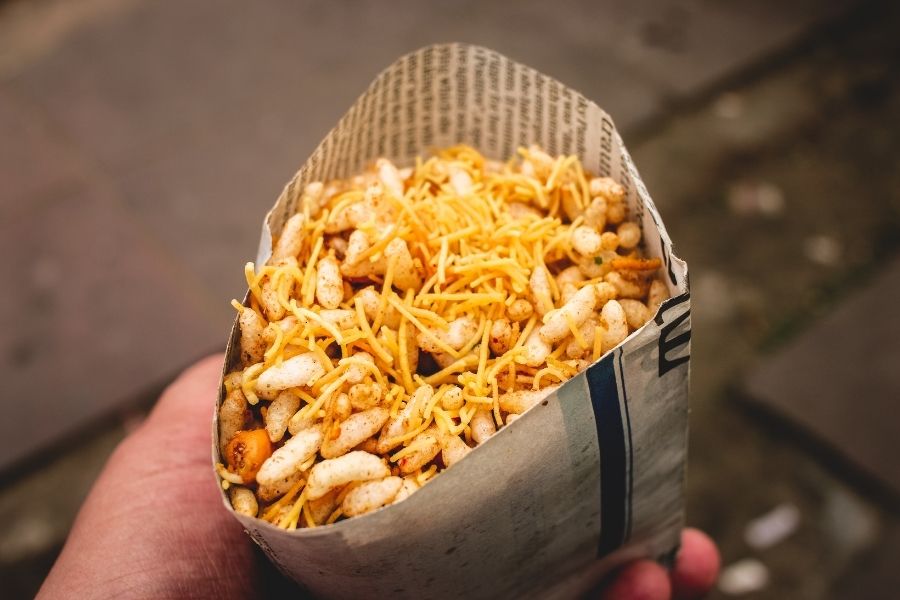
A thonga of jhalmuri became an integral part of political conversations after the recent West Bengal Assembly election. While the snack may seem to be inseparable from Bengali identity today, historians say its journey is more layered.
Food historian Utsa Ray, distinguishing between muri and jhalmuri, said, “Muri was definitely a part of Bengali identity, but not jhalmuri. I’m very emphatic about that,” she said.
Tracing food habits in Bengal back to the early and mid-20th century, Ray explained that puffed rice was a staple that was eaten in simpler forms. “Muri was eaten with cucumber, jaggery or coconut. That’s it,” she said.
She also pointed to its role in everyday life and the economy in Bengal.
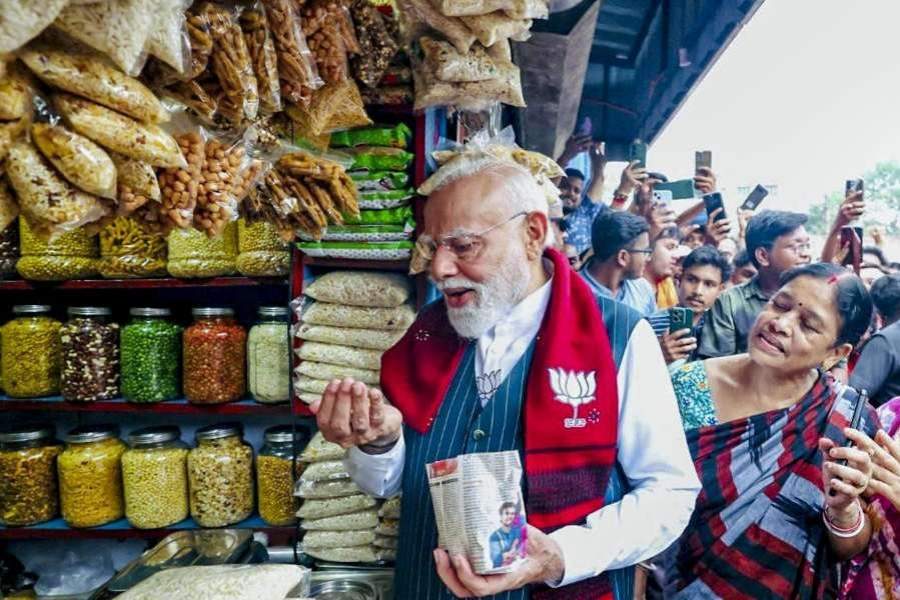
Jhalmuri gained fresh political visibility after Narendra Modi was seen eating it during his election campaign in Jhargram Image credit: PTI
“Muri was also important because it was something that women could make at home. After rice husking, they could make it, and it was part of their subsistence income,” Ray noted. It was often eaten for breakfast because it was a quick and accessible meal across rural Bengal.
The spicy, tangy jhalmuri, she said, is a later development.
“I have never heard of jhalmuri in early 20th-century accounts. We came to know about it only after street food cultures developed,” she said, linking its popularity to migration and urban mixing.
Even its recent political spotlight, she pointed out, has its own irony. “Jhalmuri was in the spotlight because the prime minister had it. It didn’t suddenly become a part of the celebrations of Bengal,” Ray added.
The history of muri goes far beyond modern Bengal.
Food researcher Dipankar Dasgupta pointed to references in ancient texts. “Puffed rice, known as laja, appears in post-Rig Vedic texts and also in Tamil Sangam literature,” he said. In these works, it is both sustenance and symbol. “In devotional songs, puffed rice is often described as the poor man’s offering to Krishna, emphasising that devotion matters more than the cost of the food,” he explained.
Dasgupta also highlighted the cultural familiarity.
“A Bengali person who has never had muri or expressed a desire for it is rare,” he said, comparing it to other staple foods in other cultures. Across districts like Bankura, Purulia and Midnapore, muri is eaten multiple times a day. “It is not just a matter of taste, but joy,” he added, describing its place in daily life, from rainy evenings to train journeys.
The transformation of plain muri to jhalmuri, however, added layers of performance and texture. “For connoisseurs, authentic jhalmuri must include multiple elements — pulses, peanuts, spices — all coming together,” Dasgupta said. He links it to music, saying, “In a Western orchestra, some instruments are played only once or twice, yet they are vital. The various pulses in jhalmuri serve the same purpose.”
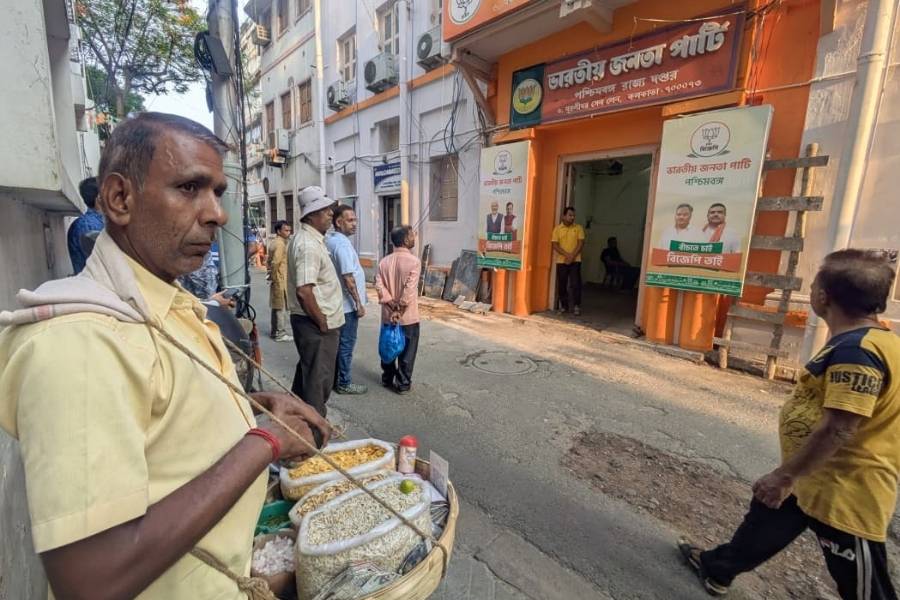
Muri has historically been eaten across Bengal districts as a daily staple Image credit: Amit Datta
That sensory appeal of jhalmuri has travelled globally. Citing the example of British chef Angus Denoon, who first tasted jhalmuri on Kolkata’s streets and took it to London, Dasgupta said, “He describes it as 'fresh and alive, full of flavours and textures… light on the tummy but nourishing to the core… a small piece of personal theatre that you eat.”
Now that the snack has become a political imagery, chefs are also reimagining it.
Culinary mentor Sujan Mukherjee suggests innovation without diluting traditions. He suggests, “Try variations with Thai chilli and roasted peanuts, curry leaf podi, gondhoraj lemon with crushed pepper, spring onion with schezwan pepper, and even khakra crumble with pickled chilli.”
London-based chef Rinku Dutt suggests a contemporary spin with a gondhoraj and avocado jhalmuri. “The classic puffed rice base is elevated with avocado, kasundi, roasted peanuts and coriander, finished with gondhoraj lebu zest and mustard oil,” she said. “It keeps the citrusy brightness of Kolkata flavours while adding a subtle creaminess, making it feel modern without losing its street food soul.”