Waiting at the Guru Nanak Dental College in Bengal’s Panihati for the counting of votes in six constituencies in the district, a candidate overheard a conversation between some government officials assigned on poll duty.
Like the candidates, the officials too were getting feelers on “kharap khobor [bad news]” from other parts of the state. One word kept returning to the conversation: Tolabaji (extortion).
The gist of the conversation was that the mounting anger against the tolabaji of the ruling party’s leaders and workers in the last 15 years or so had found a way into the electronic voting machines.
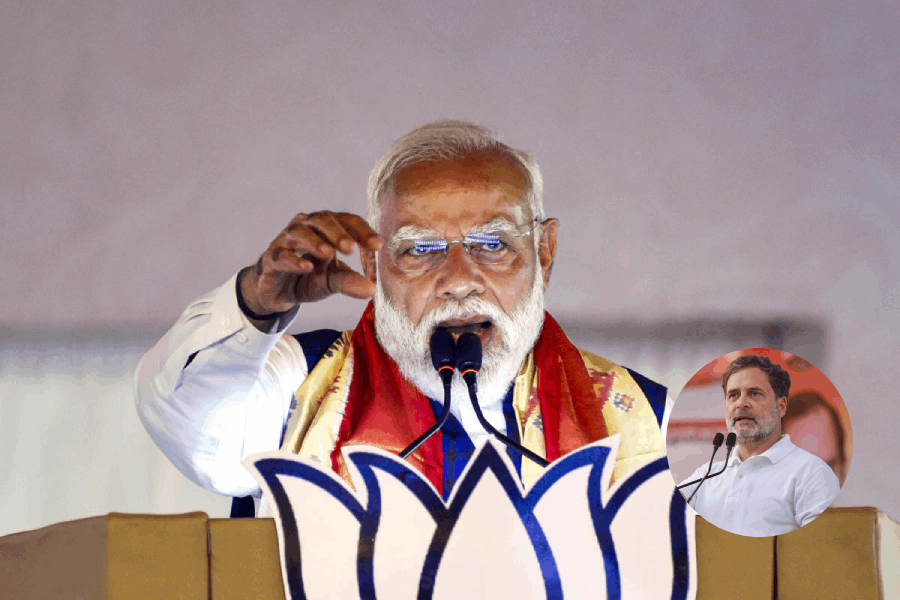
The Trinamool’s control over the building “syndicate” racket had been one of the major talking points for Prime Minister Narendra Modi in successive elections.
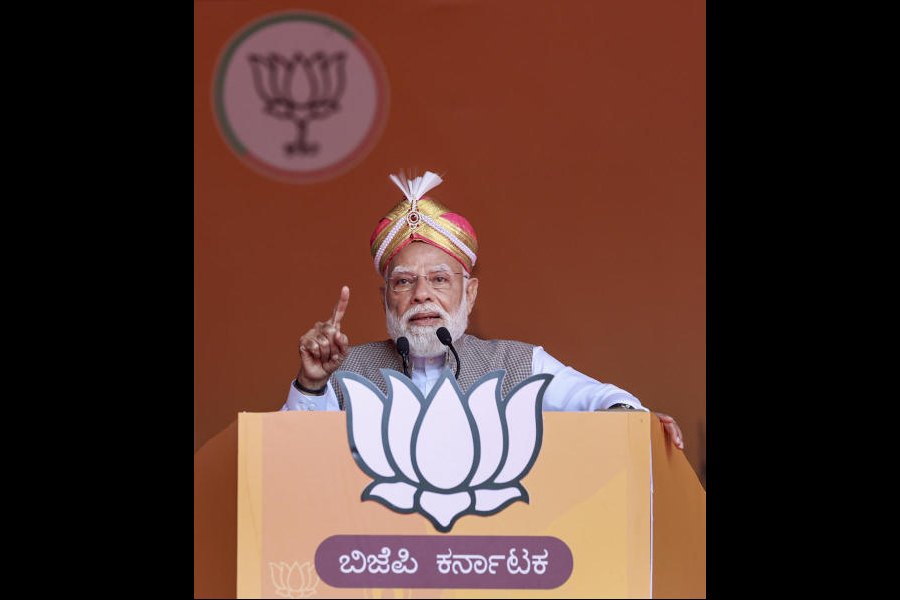
During the run-up to the just-concluded Bengal Assembly polls which saw the BJP coming to power in the state for the first time, Modi had said in one of his public meetings: “In 15 years, Trinamool has earned a PhD in looting.”
Many anecdotal incidents paint a picture of what life in the 15 years of the Trinamool was for the people living in Kolkata and beyond.
The syndicate spared none; not the rich, not the poor, and not even some of Bengal’s idols.
A group of Trinamool workers rang the doorbell at 90 Sarat Chandra Bose Road nine years ago and demanded all building materials required for the renovation work going on at the house should come from them.
The elderly woman who opened the door informed the group that the house they had come to belonged to Subhas Chandra Bose.
Undaunted, one among them demanded: “Tahole Subhas da ke deke din [Ok, then call Then call Subhas da].”
The woman who opened the door was the late Krishna Bose, a former Trinamool MP. Her son, historian Sugata Bose, was then a Lok Sabha MP from the party.
The Bose family knew the right people in the party and could seek their intervention.
In another incident, a Trinamool Rajya Sabha MP had complained to a powerful former party minister that some members of his extended family in New Alipore were told to buy building materials from them at the price quoted by them.
“Hearing out the MP, the minister remarked that he was aware about his family connection and had asked for a discounted price,” said a source.
In another instance, even the high and mighty in the Trinamool – an MP and a former cabinet minister – could not come to the aid of a well-known family in Calcutta who wanted to make some repairs to control damage from seepage.
These daily occurrences were endemic in the small towns as well, affecting the very section that the Trinamool has always claimed to be protecting.
The father of a nurse working in Calcutta could not get his house repaired because of the exorbitant demand made by alleged Trinamool workers involved in building materials supply at their home in a district town.
A writer searching for a house in the Garia-Naktala-Ranikuthi-Bagha Jatin Colony-Jadavpur area for over a year decided against buying any flat built during the Trinamool rule.
“There were cracks, seepage. It was evident the quality of construction was poor. Those built by big construction companies are different. These were built by individual promoters. I am still looking for a flat which is at least 20 years old,” he said.
The big builders in Calcutta could get away “donating” to the party, but the smaller ones did not have an escape route.
“Trinamool ran its blood donation camp on the blood of promoters,” Indrajit Roy, a promoter who operates in the three municipalities of Dum Dum, told The Telegraph Online.
“Rates were fixed for everything. For a G+4 building the rate per floor was Rs. 40 lakh. For buildings above seven floors, it could range anywhere between Rs 70 lakh to Rs 1.2 crore. If an old building was demolished the money went to the local councillor, not the owner. The Trinamool leaders virtually became our partners,” he said.
Bengal’s outgoing chief minister Mamata Banerjee often made the right noises to end the “syndicate raj” and threatened to punish party workers involved in such acts; nothing changed on the ground.
In June 2019, four days after Mamata warned of strict action against those taking “cut money,” a Trinamool booth president in Birbhum returned Rs 2.25 lakh to labourers who were allegedly forced to pay him to secure funds provided under various state-run schemes.
Manoj Tiwary, former India cricketer and former Trinamool MLA who was dropped from the candidates list for the 2026 Assembly polls, claimed in an interview to PTI on Tuesday he had refused to pay Rs 5 crore demanded for the Assembly ticket.
“I am not at all surprised by this debacle,” he told the news agency. “This was bound to happen when an entire party has indulged in corrupt practices and there was no development in any sector.
“Only those who could pay hefty money could buy tickets. At least 70-72 candidates this time paid around Rs 5 crore each to get a ticket. I was asked but I refused to pay. Just check how many of those who paid have managed to win.”
A newly elected Trinamool MLA refused to comment when The Telegraph Online asked whether the alleged extortion and syndicate racket went against the party in this election,
“As an individual I won’t make any comment,” the MLA said. “Let the party give its verdict on the factors.”