
Bhubaneswar, April 25: A three-day theatre festival, organised by the Utkal Rangamanch Trust, began here yesterday to mark the 400th death anniversary of William Shakespeare.
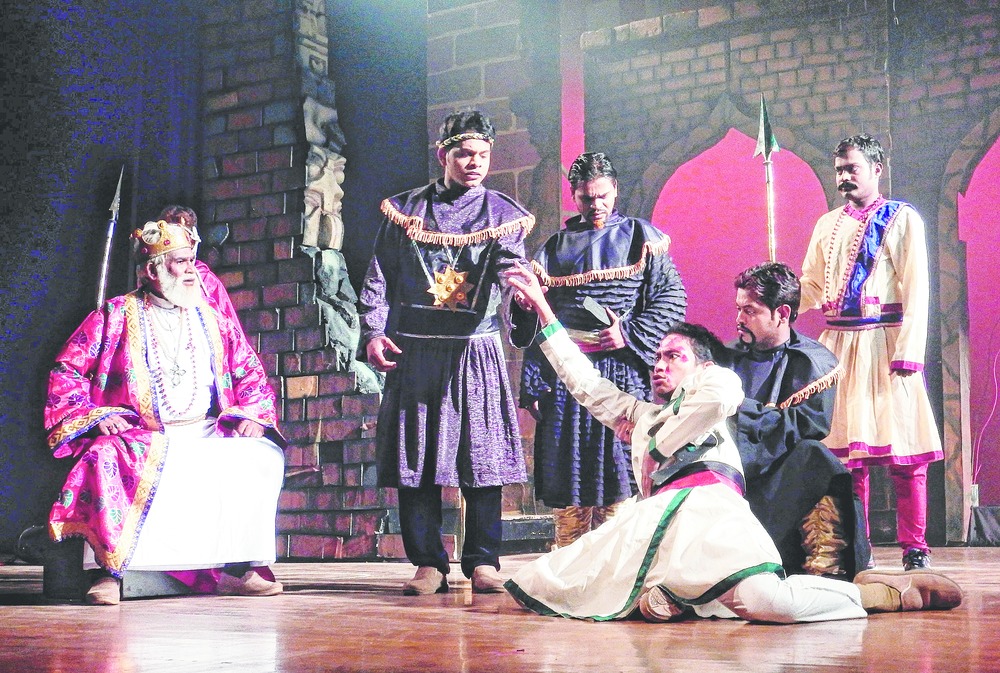
On the first day of the festival at Rabindra Mandap, theatre enthusiasts relived the woe and horror depicted in Macbeth, one of the most adapted play's of the Bard.
Staged in Odia by Think Foundation, the play brought to the fore the full scale of the glory and futility of human endeavors and of the dark ambitions behind human motivation. The play was directed by Ramakanta Mishra, who also played the lead role.
"I have read Macbeth several times, but watching it on stage had a greater impact," said 34-year-old theatre enthusiast Manisha Dash.
Today, New Delhi-based Film and Theatre Society staged a Hindi adaptation of Shakespeare's Merchant of Venice. Saudagar, the title of the adaptation, recreated quintessential Shakespearean moods on stage in an Indian setup. Calcutta-based Naye Natua will stage a Bengali adaptation of Othello on the concluding day tomorrow.
"Shakespeare continues to influence our emotional and intellectual lives through translations stage and film adaptations. His influence is felt not only in the countries once colonised by the British, but also in countries such as France, Germany, Russia and even Afghanistan," said theatre activist and Utkal Rangamanch Trust founder Anant Mahapatra.
The festival began on Saturday with the presentation of scenes from several Shakespearean plays. The recitation of a monologue from Hamlet won the appreciation of the audience.
More than 12 Odia translations and adaptations of Shakespearean plays have been published so far. Two more plays - Macbeth and King Lear - will be released during this festival.
The group plans to host the festival in cities such as Mumbai, New Delhi and Calcutta.
"Every generation has found in Shakespeare's plays a reflection of life's deepest concerns and most painful dilemmas. The plays aid us in discovering new and elusive aspects of human conditions," added Mahapatra.