|
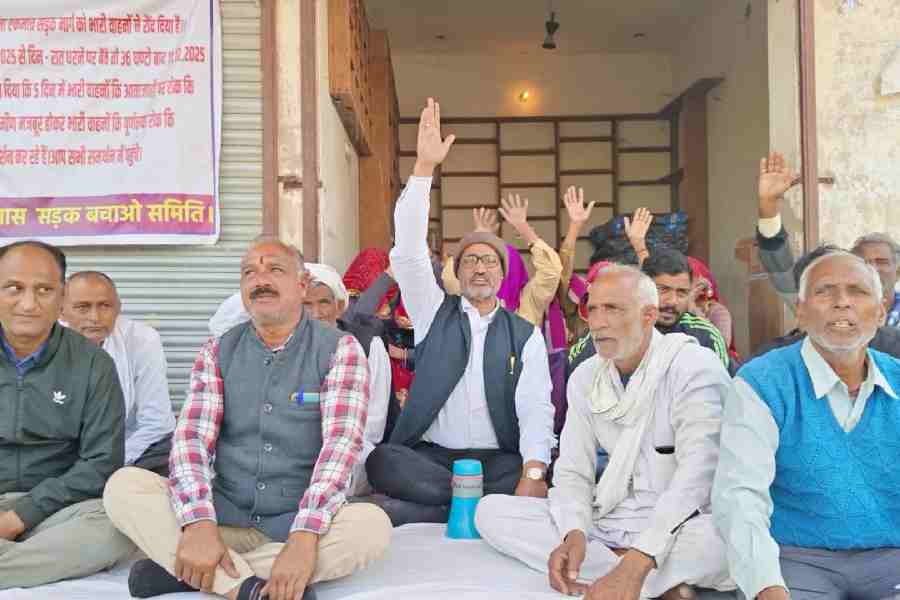
| Local villagers stage dharna near Erasama against water supply to Posco from the Hansua rivulet on Monday. Telegraph picture |
Paradip, May 19: The state government’s move in according approval to the eight-million-tonne Posco steel project for drawing water from the Hansua rivulet has triggered protest.
Protesters opposing the move today staged a sit-in at Nagari village in the Erasama police station jurisdiction. Incidentally, this was the first-of-its-kind protest after the government allowed the water linkage to the mega steel venture earlier this month.
Local people, united under the Posco Pratirodh Sangram Samity and the Hansua Surakhya Samity, said draining out water sources from the Hansua for industrial purpose would sound death knell for farmers of Jagatsinghpur district.
“Iron and steel industries are highly water-consuming ventures. It would steadily swallow the water from the rivulet leaving nothing for farming. Farmers would bear the brunt of such industrial use of water,” said samity spokesman Sashi Bhusan Bhuyan.
The agriculture fields at Tirtol, Raghunathpur, Earasama, Biridi and Kujang of the district would starve for water once the steel project company starts drawing water for the construction. An area of 50,000 acres of farmland would turn unproductive, he said.
Sangram samity president Abhaya Sahu said: “Regardless of what the government decides, our stand against the South Korean steel-maker remains the same.”
Local people of the project villages and farmers of Jagatsinghpur district will strictly oppose any move to draw water for carrying out construction of the venture, he said.
“Let there be industry. Farmers are not opposing the growth of industries. But, the larger interest of farmers needs to safeguarded in an agrarian state such as Odisha,” said local farmer Sunakar Rout.
Jagatsinghpur collector Satya Kumar Mallick said: “Of course, people do have the right to protest. But, the fact is that drawing of water from the Hansua rivulet by the company is not going to affect the agrarian activity. The steel company would draw water from the rivulet only during the construction. Once the project is fully commissioned, it would draw water from the Mahanadi for its daily requirement.”
“The steel-maker will utilise the rivulet’s surplus water that is going in waste. Thus, the apprehension of the farming activities being affected is unfounded,” he said.
“We have received letter from the state water resources department regarding the approval given to the project for water linkage. We are waiting for orders from the higher-ups to resume the project work at the villages. The work had been suspended due to the general election process,” Mallick said.