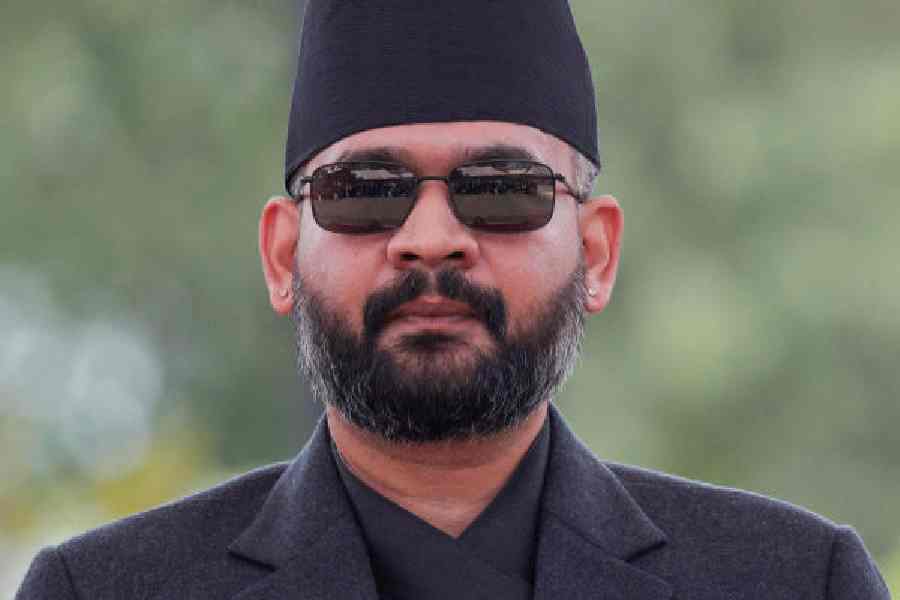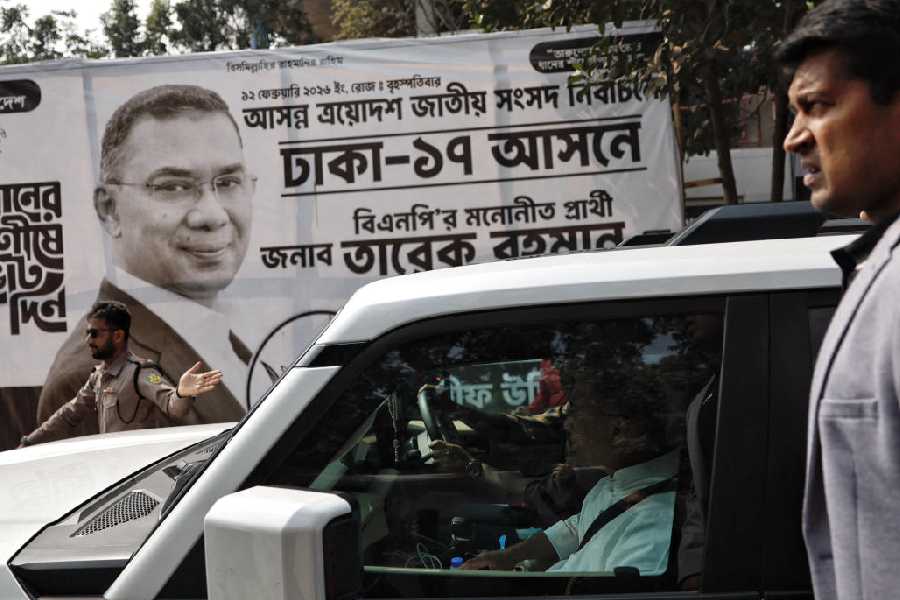
Tarique Rahman, who spent 17 years in exile in London before returning to Dhaka last December, is all set to be the next prime minister of Bangladesh after his centre-right Bangladesh Nationalist Party swept Thursday's controversial general elections.
The results suggested that the BNP was about to get two-thirds majority by winning 209-odd of the 299 seats that went for polls. The Jamaat-e-Islami, which has always been a fringe player in the Muslim-majority country, made remarkable gains by winning around 68 seats.
The Jamaat leadership, however, did not concede defeat, casting doubts about the "counting process."
The poll panel announced that 59.44 per cent of the electorate had exercised their franchise in the 13th general elections of Bangladesh, held around 18 months after the fall of the Sheikh Hasina-led Awami League government in the face of a wave of protests.
Hasina has been in exile in India since August 5, 2024.
The rate of participation, said Bangladesh’s poll panel, was about the same in a referendum on constitutional reforms, which took place along with the general elections. The controversial referendum -- which drew criticism for a variety of reasons -- passed the test as "yes" votes, signalling a slew of reforms within 180 working days from the first session of the next parliament, far outweighed the "no" votes.
The claims on the turnout, however, remained suspect primarily for two reasons.
First, the country's main political force, the Awami League, was out of the race because of a ban imposed by the interim government of Muhammad Yunus. Terming the poll process a "sham" and labelling Yunus an "illegal occupier", Hasina had urged Awami supporters to boycott the polls and the referendum.
Second, the discrepancies between hourly turnout figures and the final count suggested "meticulous" election engineering to produce a decent voter participation rate. Multiple observers said that the poll panel produced cooked numbers, referring to turnout trends -- poor voting in the morning hours till 11am -- that did not tally with past experience.
The BNP and the Jamaat have been allies in the past and there are radical elements in both the parties. Hence, there have also been questions on whether the poll battle was a staged one and the likelihood of the two forces coming together in future.
Despite the doubts, this election was indeed a landmark one, coming as it did after an uprising led by “Gen-Z’ – those from 15 to 25 years of age. But will this “revolution” succeed? Or will that old French saying that translates to “the more things change, the more they stay the same" be proved right once again?
“The Hasina regime was corrupt and inefficient, which led to its fall,” said a young businessman, who has decided to leave Bangladesh. “The interim government came with a lot of hope, but they were even worse and betrayed all our hopes. This new government will do the same and it will be another betrayal.”
Tarique, who was billed as the next PM in most pre-poll surveys, has promised a "new path" at a "challenging time" for Bangladesh, plagued with a plethora of problems like rise of radical Islam, breakdown in law and order, collapse of the economy and complex equations with major global forces like the US, China and India.
The question is whether the 60-year-old man -- who was once accused of grave allegations like terror links and corruption -- can deliver on his promises after taking guard as the premier early next week. The performance of Tarique, son of military dictator Ziaur Rahman and two-time prime minister Begum Khaleda Zia, will critically hinge on how he negotiates with six key challenges.
"He has changed a lot since 2006-07. His wife [Zubaida, a physician] and daughter [Zaima, a barrister] have a lot of influence on him. You will see Tarique 2.0," said M.R. Chowdhury, editor of Bengali daily Manab Jamin, known for his proximity with the first family of Bangladesh.
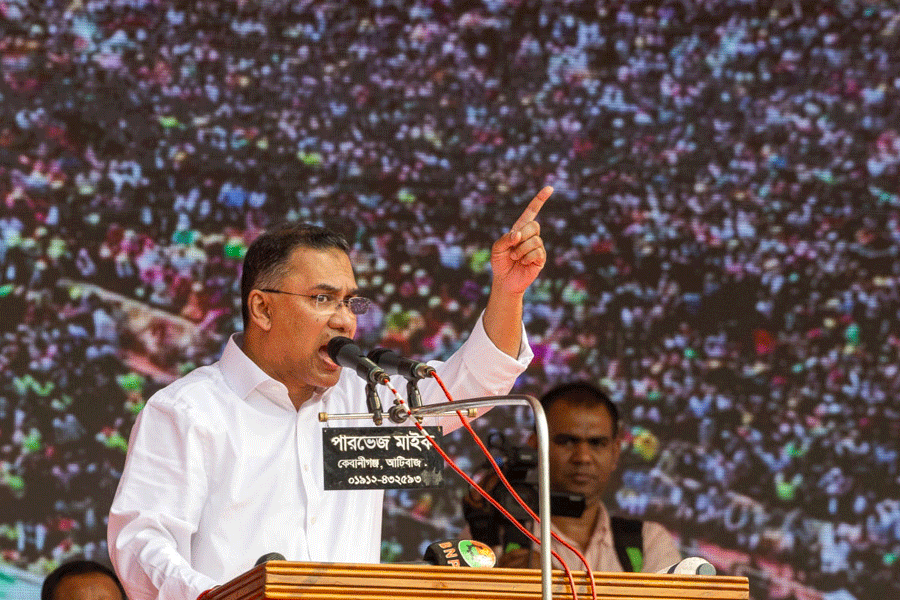
1. Bidding adieu to Yunus and his cronies
Tarique has to ensure the exit of Yunus and his team that had created a reign of terror and lawlessness that plunged Bangladesh into an unprecedented crisis. While the resounding political mandate gives him the heft to carry out a clean-up mission, it will be tough because of the realities of Bangladesh politics.
As some of the advisors -- like Yunus's legal eagle Asif Nazrul, who masterminded arrests of dissenters -- have had links with the BNP and Tarique himself had warm ties with the chief advisor, it remains to be seen how he deals with the key players of the interim regime, which lost popular support among ordinary Bangladeshis. As Yunus and his team enjoyed the support of the Islamists, who proved their presence with Jamaat's best ever performance, easing them off will pose a real challenge for Tarique.
"Don't worry. Yunus will be out. People voted for Bangladesh this time and their aspirations will be the priority of the new government," said a BNP source.
2. Restoring faith in institutions
Bangladesh witnessed a collapse of law and order and the justice delivery system under Yunus. Tens of thousands of Awami League leaders and supporters, including former ministers and members of the civil society like teachers, journalists and social workers, were arrested in the last 17 months.
Student-led mobs forced sitting Bangladesh Supreme Court and high court judges to resign and replaced them with their loyalists. Bail for the illegally arrested persons became a rarity. The police force, which faced unprecedented mob attacks during the uprising that uprooted Hasina, had become virtually defunct under Yunus. The armed forces, with magisterial powers, were on the streets.
Tarique has a job cut out to set the flawed system right and send the men in uniform back to the barracks.
3. Handling the referendum mandate
The referendum won approval of 68 per cent of the polled votes, per the Bangladesh poll panel. As the provisions in the referendum can bring sweeping changes, like dumping of the 1972 constitution, lowering of the powers of the prime minister and the treasury benches, impeding the functioning of the government, it can be an Achilles heel for Tarique.
From the very beginning, the referendum -- the brainchild of Yunu's close aide Ali Riyaz, a US-based academic -- has been criticised for denying voters the chance to decide on reforms individually, instead clubbing together multiple proposals to force a single yes-or-no answer.
The referendum has also been viewed as antithetical to the ideals of the 1971 Liberation War and a secular Bangladesh.
Though the BNP had reservations about several provisions of the referendum, Tarique had campaigned for a "yes" vote in favour of the referendum. “That was a strategic move... A lot of our voters cast 'no' votes. Now that we have this political mandate, the referendum will be sent to the freezer," said a BNP source.
"The Jamaat will be pressing for it and will be creating unrest, but we will tackle it," the source added.
This claim, however, is looked at with suspicion by a section in Bangladesh as they think the BNP is inextricably linked with the Jamaat. "I doubt whether the BNP government can run without help from the Jamaat," said a veteran journalist.
Tarique will find it difficult to take decisions that will antagonise a rejuvenated Jamaat, which gave a tough fight to the BNP in a large number of seats. Tarique himself won by a slender margin of 4,000 votes in Dhaka 17, one of the two seats from where he contested.
“After its stellar show, the Jamaat will exert its influence in all spheres. Tarique Rahman will find it difficult to control the Jamaat,” said an observer, before adding that the rise of the right-wing Islamist party was the most significant outcome of the election.
4. Putting in place a competent team
Given the scale of problems Bangladesh faces and the relative inexperience of Tarique – this was his first election – the next prime minister needs an efficient team to tackle the challenges, specially on the economy and international relations fronts.
"To begin with, it will be a small cabinet with 20-odd people... The party will fall back on technocrats to handle the finance and foreign affairs, the two most important ministries," said a source close to Tarique.
The Bangladesh economy suffered a huge blow during Yunus as fresh investments -- both local and global -- dried up due to law-and-order concerns. The worsening situation in the country prompted several countries to impose visa restrictions on Bangladeshi citizens.
"We need experienced technocrats to handle the situation," said the source, before admitting that cabinet formation “will be a huge challenge in view of political considerations."
5. Managing relations with India
While Prime Minister Narendra Modi was among the first to congratulate Tarique and promise cooperation to strengthen the "multifaceted relations" between the two countries, Delhi will be closely tracking the team that Tarque picks up.
If he is keen on a "new path" in the Indo-Bangla relationship, he cannot afford to induct people like Lutfozzaman Babar, who was minister of state for home affairs under the BNP-Jamaat alliance government between 2001 and 2006.
Babar, a close aide of Tariek, was convicted in the high-profile 10-trucks arms-smuggling case in Chattogram that soured Delhi's equations with the BNP; the arms were apparently meant for insurgents in northeast India.
"All efforts will be made to improve ties with India and so people like Babar will not find a cabinet berth," confirmed a source, before adding that special care will be taken to protect the Hindu minorities in the country to address India's concerns.
The BNP government will also have to be cautious in its dealings with China and Pakistan. The two countries increased their footprints in Bangladesh after the fall of the Hasina regime and Dhaka signed several deals with the two countries to procure arms and ammunition.
"The past bonhomie with China will be missing in the BNP era as they heavily betted for Jamaat in the election... It is, however, difficult to predict the trajectory of ties with Pakistan," said a source.
Pakistan Prime Minister Shehbaz Sharif congratulated Tarique after the results and promised to work closely with him.
6. Allowing return of Awami League in politics
The BNP's sweep over the Jamaat-e-Islami may have soothed the taut nerves in Delhi but there is little doubt that the Indian establishment would like to see the return of the Awami League in Bangladesh politics.
Several BNP leaders, including Tarique, had said during the polls that they did not support the ban that the Yunus regime had imposed on Hasina's party.
Tarique has an opportunity to raise his stature as a politician by lifting the ban and allowing space to the Awami League, albeit with conditions, to ensure a multipolar polity in Bangladesh, which will be a big boost to democracy in the country.
"The outcome of the elections is good news for us as it signals a permanent end to the BNP-Jamaat alliance... As the Awami League cannot be kept out for long, the future elections will have a three-cornered contest and we will surely have an edge over the BNP and the Jamaat," said a senior Awami League leader.
Tarique and his family had a bitter rivalry with the Hasina clan. Tarique was convicted of masterminding a grenade attack on Hasina on August 21, 2004 in which 24 people were killed. His mother, Khaleda Zia, was convicted in corruption cases by the Hasina regime and spent several years in jail.
“Given the dynamics between the two families, it is doubtful whether Tarique will allow the Hasina-led Awami League to return to Bangladesh politics,” said a veteran journalist.
7. Addressing the concerns of Gen-Z
Tarique will have to deliver on the expectations of Gen-Z, who played a key role in the movement that led to the fall of the Hasina regime.
Though the movement against the Awami League regime began with the younger generation’s anger with a quota system in government jobs that gave preference to relatives of freedom fighters, it snowballed into an oust-Hasina campaign because of factors like rampant corruption, growing disparity and joblessness.
The BNP manifesto has listed a number of promises on tackling corruption and creating jobs; delivering on the promises is easier said than done.
“The BNP regime was notorious for corruption and Tarique himself was accused of leading the syndicate… It's easy to say a lot of things in the manifesto, but can they do it? I don’t believe it,” said a young college teacher.
According to him, the chances of any major change in Bangladesh are few and far between.