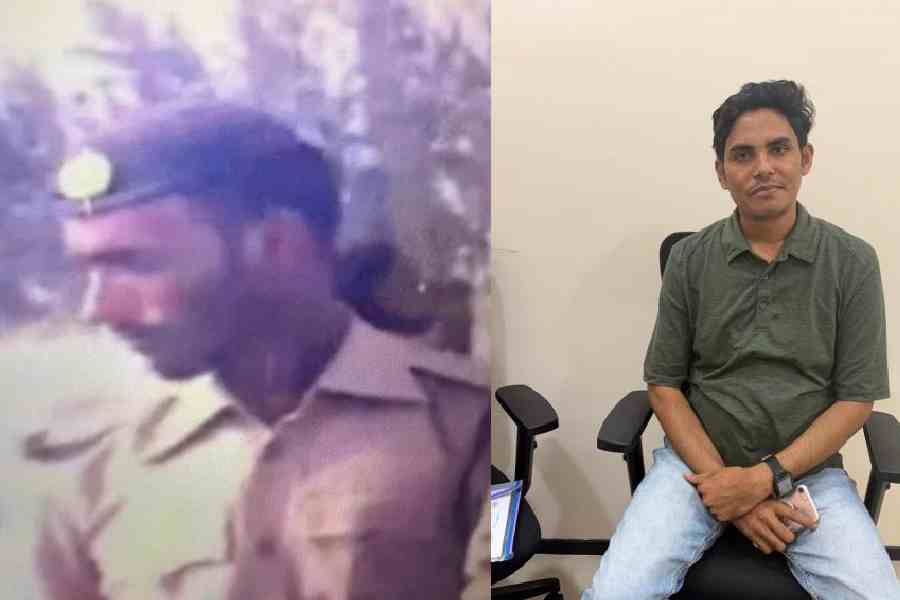
A Muktijoddha who fought in the Bangladesh Liberation War of 1971 said he was stripped of his honour by Jamaat-e-Islami supporters and was relieved at the party’s defeat in the national elections.
Nasir Ahmed, 75, told Metro over the phone from Rangamati in Chittagong on Friday: “My name was recently struck off the Jatiya Muktijoddha Council (National Freedom Fighter Council) by Jamaat supporters. They called me a fake Muktijoddha... I am happy that the Jamaat has been rejected by the people of Bangladesh.”
Ahmed, a former policeman, said he was also happy with the BNP win. “Ziaur Rahman (former president and founder of the BNP) was himself a Muktijoddha. He served as a sector commander and fought for our liberation,” he said.
His son, Anwar Hossain, 43, who was at Narayana Health RN Tagore International Institute of Cardiac Sciences for his wife’s treatment, said his father had been called a “fake Muktijoddha and an agent of India” by Jamaat supporters at a meeting of the council last year. “We have appealed for reinstating his name, but the hearing has not taken place. Now that a new government has been elected, we hope it will be heard,” Hossain said.
The Jatiya Muktijoddha Council is an autonomous Bangladesh government body responsible for the welfare of Muktijoddhas and maintaining a list of freedom fighters.
Ahmed was posted as a policeman in Noakhali just before the Liberation War broke out. “I had joined the Pakistan police force, but I responded to the call from Mujibur Rahman and joined the Liberation War. Listening to Mujib’s speeches, the Pakistan police force was divided. We sided with the Liberation War,” he recounted.
On the night of March 25, 1971, he was stationed at the Noakhali police barracks in Chittagong. “The superintendent of police warned of a possible attack by the Pakistan army. That night, we stayed awake with rifles in hand,” he said. The attack, however, was on the police barracks in Sonagazi, also in Chittagong.
Ahmed fought in the field for nine months. “On December 7, 1971, when Noakhali was liberated, I returned to the police barracks,” he said.
Hossain said his father had long been respected in the neighbourhood but was cornered after the ouster of the Sheikh Hasina government. “The Yunus government was supporting Jamaat, and they had no respect for the freedom fighters,” he added.