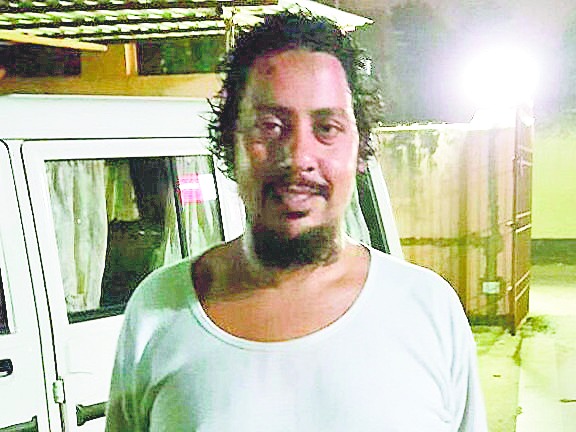

Cuttack/Bhubaneswar, Dec. 17: Police today said Mohammad Abdul Rahman Katki, the cleric who was arrested for his suspected links with al Qaida in the Indian Subcontinent, was in touch with a terrorist involved in the Glasgow International Airport attack in Scotland in 2007.
Police commissioner R.P. Sharma said Delhi police had come to know about Rahman's links with one Kafeel Ahmed of Bangalore, who had died of burn injuries sustained in his failed bid to blow up the airport by ramming an explosive-laden truck into the airport building. Rahman had even attended the marriage of Kafeen's sister in Bangalore this year and reportedly signed her nikahnama.
A senior police officer said Rahman had also received a forwarded email from one Mohammad Asif, another suspected terrorist, who was in touch with an al Qaida co-ordinator based in Pakistan. The co-ordinator of Indian origin wanted recruitment activities to be stepped up in the Indian subcontinent.
Yesterday, Delhi police arrested Mohammad Asif after the special cell officials had intercepted the mail. Based on Asif's information, the cops arrested Rahman from his house at Paschim Kachha village in Jagatpur police limits of Cuttack yesterday.
The police have intensified probe to identify Rahman's local contacts. The police commissioner told The Telegraph that today they had picked up at least three persons for interrogation. Another Cuttack resident, who has recently returned from London, is under the scanner as he is believed to have helped Rahman in arranging funds from Dubai and other Gulf countries for his activities.
"Our focus is primarily on establishing Rahman's links with people in the twin cities and other parts of the state. We are in constant touch with the Intelligence Bureau, and once credible evidence against Rahman is received, a case will be registered against him," said Sharma.
Rahman, who runs a madarsa at Tangi in Cuttack and had stayed in Dubai for over a month this year, had also been arrested in 2011 by Cantonment police for allegedly attacking some people and making an illegal entry into a local mosque. "He was arrested in connection with an assault case at a mosque in the Barabati Fort. The police have framed a chargesheet in that case," said Sharma.
Senior officials said Rahman had spent most of his time outside the state, working for organisation based in Bangalore, Uttar Pradesh, Jharkhand and some other parts of the country.
The police suspected that Rahman had indulged in suspicious activities outside Odisha but confined himself to delivering religious discourses in Cuttack. The cops have also seized some passbooks and documents from his house at Jagatpur.
Following Rahman's arrest, the police have planned to set up a special cell on the lines of Delhi police to tackle terrorism related cases in the state. "We have sent a proposal to the state government in this regard," said Sharma.
In August, a meeting of the state intelligence bureau, Central Industrial Security Force, Border Security Force, Central Reserve Police Force and other police units had underscored the need to formulate a Standard Operating Procedure to thwart possible terror attacks on the state.
The state police have a dedicated anti-terrorist squad named the Special Tactical Unit consisting of jawans of the Special Operations Group. The unit that had been launched in July 2013 was deployed in Puri during rath yatra. "As Odisha does not have a unit of the National Security Guard, and since it would take sometime for its Calcutta counterpart to reach the state, we need to set up a special unit to tackle such cases," said a senior police official.