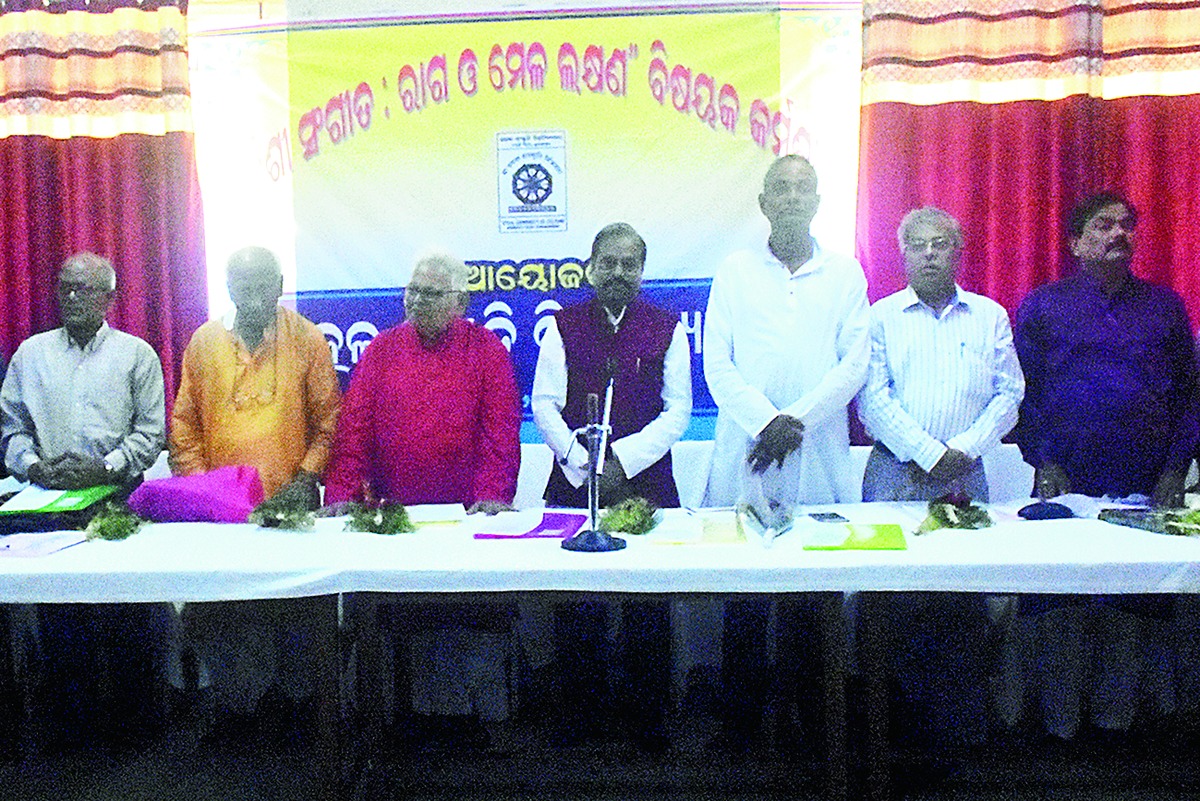

Bhubaneswar: Utkal University of Culture organised a workshop here on Friday. At the workshop, music connoisseurs of the state held discussions on why Odissi music could not acquire the classical tag.
Odissi music exponent Damodar Hota feels there is need to increase the knowledge about the music form among the young singers.
"Odia music fraternity members are demanding classical status for Odissi music but, many themselves have no idea about the real format of Udra Padhati, which is the ancient system of music of our region which is now called as Odissi music. Most of the musicians are themselves confused about the structure and history of Odissi music and they are only practicing hybrid Odissi music. We need clarity on that at the earliest," he said.
Singer Ramahari Das feels Odissi music, like Hindustani and Carnatic styles, has distinct elements that clearly bring out its classical nature. "Odissi music has codified grammars. This is presented with specified Raagas. It has also distinctive rendition style. If Odissi dance has been accepted as classical, the music accompanying it since ages is obviously classical."
The workshop also emphasised on the idea to develop the rendering style of various ragas in Odissi and the use of bhabanga and natyanga.
"Odissi music has a rich legacy dating back to 2nd century B.C. when King Kharavela, the then ruler of Odisha (Kalinga), patronised this music and dance. There are historical evidences in the form of sculptural. We need to pass on the heritage to the younger generations," Das said.
Singers interacted with the participants at the workshop. The experts presented an Odissi, Hindustani and Carnatic recitals. Singers brought out the differences in singing styles and also similarities in them. "Odissi music could not flourish due to lack of patronage. It remained confined to Odissa and neighbouring states, mostly in temples, courts of Gajapaties, feudatory kings and zamindars. But, time has come to give it its due," said Akanksha Mohapatra, a young singer.