New Delhi, April 25: Dara Singh, convicted for the 1999 murder of Australian missionary Graham Staines and his two minor sons, has now joined the chorus of those complaining to the Supreme Court about trial by the media. His review petition against his conviction is incidentally yet to be decided by the apex court.
A petition, filed on April 19, 2012, through lawyer Sibo Sankar Mishra, has alleged that others with similar evidence against them had got away, but he was convicted because the media made him a “cause célèbre”.
An application filed on his behalf by his brother Arbind Kumar, 38, claimed that Dara was a pious and upright man and that he had all along maintained that he was innocent. He claimed that Dara’s presence at the incident spot was never proved.
“However, from the date of the incident, the media has been after the applicant (Dara Singh) running a continuous campaign for his conviction,” his application said.
“The media has not analysed the evidence and has never discussed facts. Yet, throughout the judicial procedure through trial and appeal in various courts including the present court, sections of the media have maintained that the applicant is guilty of the murder of Graham Staines. There has been no attempt to verify the allegations,” his application said.
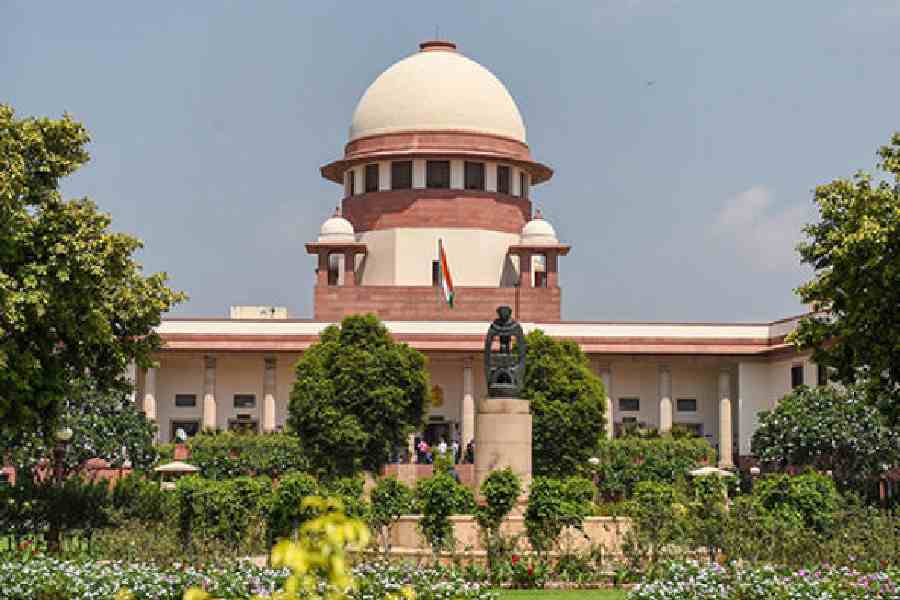
The application is expected to be heard along with several others by a Supreme Court Constitution bench, which is currently grappling with the issue of framing guidelines on how to deal with misreporting of sub judice cases. During these hearings, senior counsel Ram Jethmalani has already cited the case of Manu Sharma, whose acquittal in the Jessica Lal murder case was overturned by the high court as a case of trial by the media. Dara Singh is the second major case of a convict complaining about trial by media.
Dara Singh was convicted on September 15, 2003, by a trial court. He claimed that he was “convicted on minimum evidence and others similarly situated were acquitted, simply because they were not cause célèbre in the eyes of the media.”
On appeal, the appellate court commuted his sentence to life by an order dated May 19, 2009. This was confirmed by the top court on January 21, 2011, and modified on January 25, 2011.
“… through the entire proceeding, the trial was vitiated by continuous repetition of the media that the applicant (Dara Singh) was the leader of the group and was responsible for the crimes as alleged. The allegation was given very wide publicity and was made a self-fulfilling prophecy, making it impossible for him to be given benefit of doubt, even though on fact the entire case against the applicant is filled with loopholes, and, the applicant stood a very good chance of being completely acquitted if the applicant was given a fair trial.”
The application claimed that the entire process of “lynching by the media took an ungainly turn when at every step the media would deride the courts” if he was given the benefit of doubt.
The courts, on various occasions, though seemingly convinced that Dara Singh had a strong case, refused to give Dara Singh the benefit of doubt as the media had already designated him the chief culprit in the crimes, it alleged.
“The media, by spreading this conception about the applicant (Dara Singh) so openly and without evidence, also created a subconscious bias against the applicant in the minds of courts trying my case. But when the facts and evidence were placed before the courts, some of the courts obviously came to the conclusion that the evidence against the applicant was not very strong. However the media tirade against the applicant never stopped.”
Dara Singh said he was not pleading for leniency, but said the court should frame guidelines so that this sort of continuous, motivated media tirade could not be carried out.