 |
 |
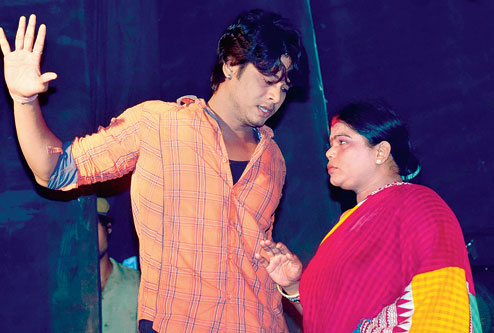
| Scenes from Bhanga Ghare Saloon Nataraj and Kanoon Kata Ghare Chunna, staged by the group at Annapurna Theatre in Cuttack. Pictures by Badrika Nath Das |
Cuttack, Oct. 12: A group of over 20 amateur artists has staged 99 plays, including a marathon of six plays stretching over eight and a half hours, to revive Cuttack’s Annapurna Theatre. It aims to stage the 100th play on the 29th of this month.
The group, under the aegis of Annapurna – B, is performing a new play on the 29th of every month for over eight years now, the last one being Bhanga Ghare Saloon Nataraj. This endeavour is a major impetus in the battle to keep theatre alive in the city.
The determined group had started off with Bai Mana Ho, on April 29, 2006. The play had the Kalinga Nagar tribals-police clash as its backdrop.
Bhanga Ghare Saloon Nataraj, staged on September 29, was based on a barber’s fight for survival in the changing times and his disillusionment with the indifference of people to social degeneration. Badadanda Ru Swargadwaraon— journey between life and inevitable death was staged on June 29.
“No play could be staged in July and August due to inclement weather conditions and leaking roof. However, we are back and hope to reach the century mark this month,” said Yugaprakash Kanungo, the group head and director of over 25 of the plays staged so far. “We have been trying to communicate with the audience through contemporary issues and social problems, and create interest for theatre among the people,” Kanungo said.
Jantrana on child labour, Mahapapa on female foeticide in private nursing homes, Daktara Babu on insensitive and commercial attitude of doctors, Asha on break ing up of joint family system, Iti Eka Jugara on drug addiction among youth, Kanoon Kata Gha Re Chuna on the heightened plight of a rape victim in the court and Samparka Eka Achinda Anka on extramarital sex are some of the other plays performed by the group.
“It’s a classic example of an amateur group’s passionate effort to rejuvenate the cultural mascot of the city that was allowed a quiet burial by professional artistes,” said Murali Nayak, editor of Cine Sansar, an Odia monthly.
The theatre had start ed its journey 81 years ago and went on to become the cradle of Odia theatre. However, it was closed in mid 1980s and abandoned thereafter.
“Annapurna theatre is too important to the cultural and social life of Cuttack to be ignored, as it is the cult ural mascot of the city. The group has remained stead fast in its mission to breathe life into it, but unfortunately the effort still lacks patronage,” said Kshirod Mohanty, a theatre buff who has wat ched most of the group’s shows.
The group had staged a marathon of plays stretching over eight-and-a-half hours in October 2006. The event from 6pm to 2.30am included six plays, each of 80 to 90 minutes duration.
It was reportedly the longest ever of its kind in the history of Odia theatre in the state. “It all started with the collapse of one half of the massive doors of Annapur na Theatre’s arched gate way in February 2006,” one of the group members recalled, “but our determination has kept squatters away.”
“Making the beginning was a Herculean task. The wooden stage had collapsed. The chairs for the audi ence had gone missing. Now the theatre has a concrete stage. We started with rented chairs, but now we have ones of our own,” group coordinator Shantanu Kumar Das said.
“The fruits of labour have not been disappointing over the years. The number of members has increased with time. We have been having full house audience for over three years now,” said Ashok Kumar Mohanty, who has been portraying supporting roles in the plays.