Iranian hospital and tourist site damaged in strikes
A hospital and tourist site in southwestern Iran have been damaged from US or Israeli strikes, killing at least one child, according to Iranian news agencies.
Strikes killed a child at the Ritaj entertainment complex in Ahvaz, according to Iran's state news agency, and damaged the Andimeshk's Imam Ali Hospital hospital, according to the semi-official Mehr and Fars news agencies. Both are in the Khuzestan province on the border with Iraq. The hospital said the blast created significant damage and it is no longer accepting patients, but did not give any other information.
The death toll has risen to more than 1,300 people in Iran, more than 1,000 people in Lebanon, 15 in Israel and 13 US military members in the region as the war enters its fourth week.
Israel says its not responsible for Natanz nuclear site attack
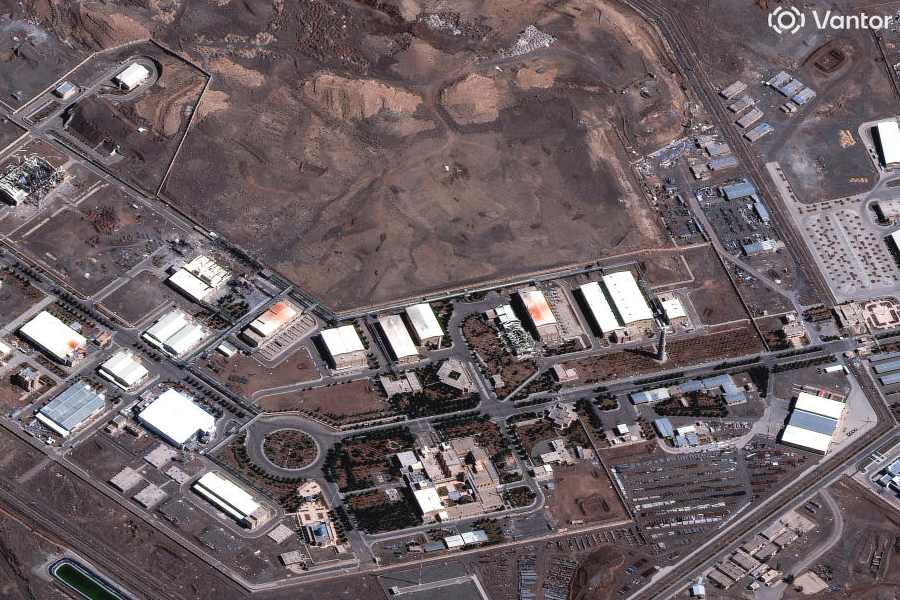
The Israeli military denied that Israel was responsible for a strike that hit Iran's Natanz nuclear enrichment facility. An official Iranian news agency reported on Saturday that the site was damaged in an airstrike but there was no radiation leakage. The Israeli military said it wasn't aware of Israeli strikes in that region.
The denial came as Israel's Defence Minister Israel Katz said in a video statement that next week, "the intensity of the attacks" by Israel and the United States against Iran's ruling theocracy will "increase significantly."
Iran warns US of 'surprising' reaction over Kharg Island threats, says military source
An unnamed Iran military source has told Tasnim News Agency that if US follows through on its threats of military aggression against Kharg Island, it will face Iran's 'surprising' reaction.
The source added that, "Insecurity in other straits, including the Bab Al-Mandeb strait and the Red Sea, are among options available to the resistance front."
Safety of Indians living in UAE is a 'priority': Envoy
The UAE has assured India that the safety of Indians living in the Gulf country is its "priority", stressing that they are protected and treated like family, especially amid the ongoing conflict in West Asia which has seen the emirate facing attacks from Iran.
UAE Ambassador to India Abdulnasser Alshaali also hailed India's move to co-sponsor a UN resolution that condemned Iran's attacks against Gulf countries, saying it was a statement of principle from a country that the UAE considers a strategic partner and friend, at a moment when it mattered most. The UAE will remember that India was among those "who stood with us first", he said.
"The safety of Indian nationals in the UAE is a priority. They are protected and are treated as family, including the 200 nationalities living in the country in peace and harmony," Alshaali told PTI Videos.
22 countries urge Iran to cease attacks, reopen the Strait of Hormuz
Twenty-two countries on Saturday urged Iran to cease attacks and reopen the Strait of Hormuz, reports AP.
Countries including the United Arab Emirates, Bahrain, the UK, Germany, France, Japan, South Korea and Australia have condemned Iran's attacks on commercial vessels as well as oil and gas facilities in the region.
"The effects of Iran's actions will be felt by people in all parts of the world, especially the most vulnerable," they said in a joint statement Saturday.
Russian foreign ministry condemns attack on Iran's Natanz facility
The Russian Foreign Ministry condemned an attack on Iran's Natanz enrichment facility that occurred on Saturday.
"This is a blatant violation of international law," the ministry's spokeswoman Maria Zakharova said in a statement. Iran has informed the International Atomic Energy Agency that the Natanz nuclear enrichment site was attacked on Saturday, the agency said in a post on X.
Hezbollah rocket strikes Israeli city of Safed: Report
Israeli media reports that a Hezbollah rocket struck the northern city of Safed a short while ago, causing slight damage to a road and nearby buildings.
No injuries have been reported, rescue services were quoted as saying, by The Times of Israel newspaper, as reported by Al Jazeera.
US, Israel targeting private and passenger ships in Gulf says Iran military spokesperson
Iran military spokesperson on Saturday said that, "US, Israel targeting private and passenger ships in Gulf." He also warned of unspecified retaliation as reported by state media.
Bahrain says Patriot missile system involved in March 9 blast over residential area
A Patriot air defence system was involved in the interception of an Iranian drone over a residential area of Bahrain on March 9, Bahrain's government told Reuters on Saturday, describing an incident that led to civilian injuries.
The interception prevented a drone strike and saved lives, the spokesperson said. The US military had previously said an Iranian drone had struck a residential neighbourhood on March 9, injuring civilians.
Britain condemns 'reckless attacks' after Iran fires missiles at UK-US base in Indian Ocean
Britain has condemned "Iran's reckless attacks" after its military fired missiles at the UK-US air base on the island of Diego Garcia in the Indian Ocean, reports AP.
UK officials have not given details of the attempted strike, which was unsuccessful. It's unclear how close the missiles came to the base, which is about 2,500 miles (4,000 kilometres) from Iran.
The Ministry of Defence said on Saturday that Iran's "lashing out across the region and holding hostage the Strait of Hormuz, are a threat to British interests and British allies."
Britain has not participated in US-Israeli attacks on Iran, but has allowed American bombers to use UK bases to attack Iran's missile sites.
On Friday, the British government said US bombers can also use UK bases, including Diego Garcia, in operations to prevent Iran attacking ships in the Strait of Hormuz.
Iran targeted the base before that UK statement.
Attacks against Iran will increase significantly in coming week, says Israeli defence minister
Israeli defence minister says attacks against Iran will "increase significantly" in coming week, reports AP.
Katz spoke on Saturday, hours after US President Donald Trump said he was considering "winding down" military operations in the Mideast.
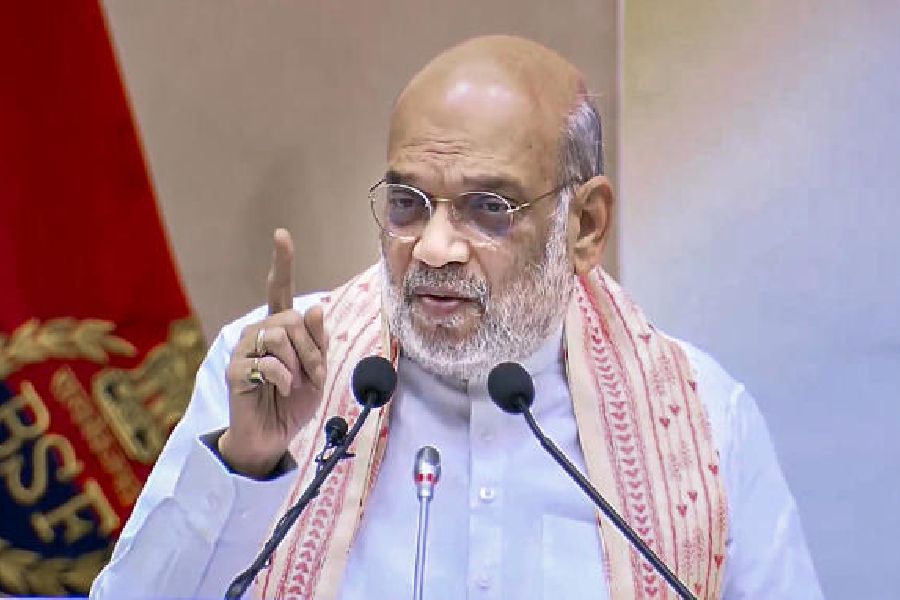
"This week, the intensity of the attacks that the IDF and the US military will carry out against the Iranian terrorist regime and against the infrastructures on which it relies will increase significantly," Katz said in a video statement.
Iran informs IAEA of attack on Natanz nuclear site, UN watchdog says no increase in radiation levels
Iran has informed the International Atomic Energy Agency that the Natanz nuclear enrichment site was attacked on Saturday, the agency said in a post on X.
No increase in off-site radiation levels was reported, the United Nations nuclear watchdog said, adding that it is looking into the report.
Scotland police charge Iranian man, Romanian woman over attempt to enter UK submarine base
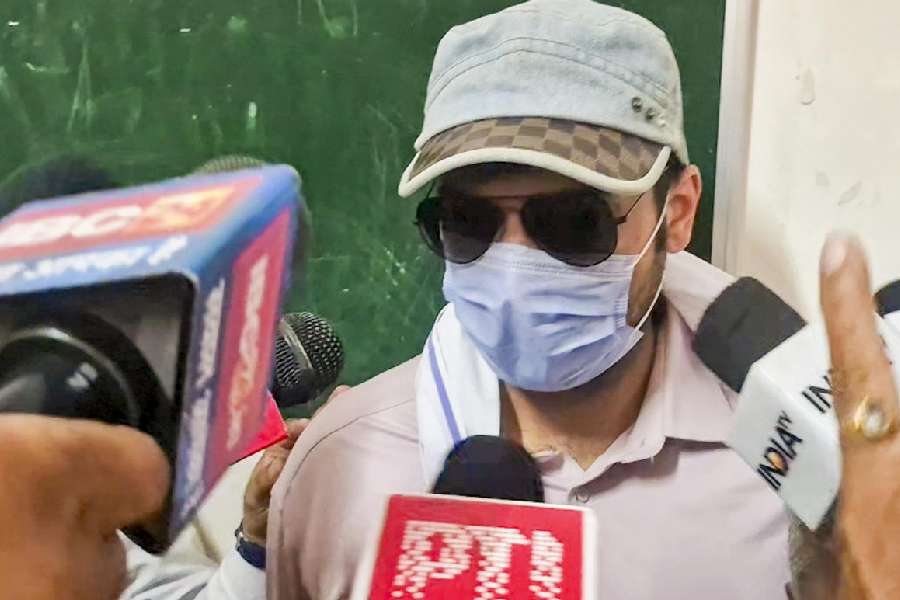
An Iranian man and a Romanian woman have been charged after attempting to enter Britain's nuclear submarine base in Scotland, Police Scotland said on Saturday.
The two, who British media have called suspected Iranian spies, were arrested on Thursday.
The charges come three weeks into the U.S.-Israeli war on Iran. While Britain has not taken part in the attacks on Iran, the country's forces have downed Iranian missiles and drones in the Gulf region.
HM Naval Base Clyde is located on the west coast of Scotland and is key to Britain's security, hosting the country's nuclear-armed submarine fleet, as well as its attack submarines.
Police Scotland said the Iranian man, 34, and the Romanian woman, 31, are due to appear at Dumbarton Sheriff Court on March 23.
Iranian army claims drone strike on fuel tanks, refuelling aircraft at Israel's Ben Gurion airport
The Iranian army said it targeted fuel tanks and refuelling aircraft at Israel's Ben Gurion airport with drones, as per the state media
Airstrike hits Iran’s Natanz nuclear site again, state media reports
Iran's Natanz nuclear facility was hit Saturday in an airstrike, the official Iranian news agency Mizan reported. There was no radiation leakage, it said.
Natanz, Iran's main enrichment site, was hit in the first week of the war and several buildings appeared damaged, according to satellite images. The United Nations' nuclear watchdog said that "no radiological consequence" was expected from that earlier strike.
The nuclear facility, located nearly 220 kilometers (135 miles) southeast of Tehran, had been targeted by Israeli airstrikes in the 12-day war between Iran and Israel in June 2025, and by the United States.
Officer killed after 'outlaw groups' launch drone strike near intelligence headquarters in Baghdad
An officer was killed after a drone launched by "outlaw groups" struck near the Iraqi intelligence headquarters in Baghdad on Saturday, the National Intelligence Service said in a statement.
Russia remains a loyal friend and reliable partner to Iran: Kremlin
Russian President Vladimir Putin congratulated Iranian leaders on Nowruz and said Moscow remained a loyal friend and reliable partner to Tehran, the Kremlin said on Saturday.
The extent of Moscow's support for Iran, though, is in dispute. Some Iranian sources have said that they have had little real help from Moscow in the biggest crisis for Iran since the U.S.-backed Shah was toppled in the 1979 revolution.
Putin sent congratulations to Iran's Supreme Leader Ayatollah Mojtaba Khamenei and Iranian President Masoud Pezeshkian on the Iranian new year, the Kremlin said.
"Vladimir Putin wished the Iranian people to overcome the harsh trials with dignity and stressed that in this difficult time Moscow remains a loyal friend and reliable partner of Tehran," the Kremlin said. Russia says the U.S. and Israeli attacks on Iran have thrust the entire Middle East into the abyss and triggered a major global energy crisis, while of Iranian Supreme Leader Ayatollah Ali Khamenei as a "cynical" murder.
Politico reported that Moscow proposed a quid pro quo to Washington: the Kremlin would stop sharing intelligence with Iran if Washington ceased supplying Ukraine with intelligence about Russia, but the United States rejected the idea. The Kremlin has dismissed the report as fake.
Russia was deprived of an ally when the United States toppled Venezuelan leader Nicolas Maduro, though Moscow has benefited from the high oil prices triggered by the U.S. and Israeli attacks on Iran, a strategic partner.
The published strategic partnership does not contain a mutual defence clause, and Russia has repeatedly said that it does not want Iran to develop an atomic bomb, a step that Moscow fears would trigger a nuclear arms race across the Middle East.
Iran's missiles at Diego Garcia did not hit US-UK military base in Indian Ocean, WSJ reports
Iran fired two intermediate-range ballistic missiles at Diego Garcia but did not hit the U.S.-U.K. military base in the Indian Ocean, the Wall Street Journal reported on Friday, citing multiple U.S. officials.
One of the missiles failed in flight, while a U.S. warship fired an SM-3 interceptor at the other, although it could not be determined if the interception succeeded, the newspaper said. The Journal did not specify when the missiles were fired.
Israeli strikes pound Tehran, Beirut as US signals more troops to be deployed in Middle East
The Israeli military struck Iran and Beirut on Saturday as the U.S. was sending thousands more Marines to the Middle East and President Donald Trump accused NATO allies of cowardice over their reluctance to help open the Strait of Hormuz.
More than 2,000 people have been killed since the U.S. and Israel attacked Iran on February 28, while Americans appear increasingly concerned at signs the war could expand further as it enters its fourth week.
Israel said it was attacking Hezbollah on Saturday in the Lebanese capital as it steps up airstrikes targeting the Iran-backed militia in the deadliest spillover from the war on Iran since Hezbollah fired on Israel in support of Tehran on March 2.
Israel also launched new attacks on Iran on Saturday, including on the capital Tehran, its military said.
Vital energy infrastructure in Iran and neighbouring Gulf states has also been attacked, and oil prices have jumped 50% since the war began, threatening global economic shock.
In the U.S., United Airlines said it would cut its scheduled flights by 5% in the second and third quarters, planning for prolonged higher oil prices.
The Strait of Hormuz, conduit for around a fifth of global oil and liquefied natural gas supplies, has been effectively closed to most shipping since the United States and Israel launched the war against Iran.
Trump on Friday called U.S. allies "cowards" for declining to help open the strait while fighting continued.
Several allies, who were not consulted before the war, have pledged to join "appropriate efforts" to ensure safe passage through the strait, but Germany and France have said fighting must stop first. German Chancellor Friedrich Merz said he would speak to Trump this weekend.
Iran is ready to let Japanese-related vessels pass through the Strait of Hormuz, Kyodo News reported on Saturday, citing Iranian Foreign Minister Abbas Araqchi. Japan gets around 90% of its oil shipments via the strait.
The Trump White House, in an effort to increase supply and lower prices, said it would waive sanctions for 30 days to allow the sale of 140 million barrels of Iranian oil stranded on tankers by the war. The administration had previously eased sanctions on a similar amount of sanctioned Russian oil.
The Israeli military said before its Saturday attacks it had issued evacuation warnings for seven neighbourhoods in the southern suburbs of Beirut. More than 1,000 people have been killed in Lebanon and over 1 million displaced in the Israeli attacks.
On Friday, Israel's military carried out two large waves of airstrikes on Tehran and central Iran, and Israel faced multiple waves of missile attacks from Iran, according to the Israeli military.
As Muslims around the region began to celebrate Eid al-Fitr, ending the fasting month of Ramadan on Friday evening, and Iranians marked Nowruz, the Persian New Year, new Iranian Supreme Leader Mojtaba Khamenei issued a message of defiance.
Khamenei - who has not been seen in public since the Israeli attack that killed his father, Ayatollah Ali Khamenei, on the war's first day - said Iranians had responded with unity and resistance and "dealt a disorienting blow to the enemy".
A U.S. intelligence official, speaking on condition of anonymity, said Khamenei's statement raises questions about his condition, since his father had traditionally marked the New Year with a video address.
Three U.S. officials told Reuters on Friday that 2,500 Marines, along with the amphibious assault ship Boxer and accompanying warships, would deploy to the region, although they did not say what their role would be.
A new Reuters/Ipsos poll showed almost two-thirds of Americans believe Trump will order troops into a large-scale ground war, with only 7% supporting such a move.
Two officials said there had been no decision on whether to send troops into Iran. Sources had told Reuters that possible targets could include Iran's coast or Kharg Island oil export hub.
Trump said on Thursday he was "not putting troops anywhere," when asked by a reporter about his plans, adding, "If I were, I certainly wouldn't tell you."
Trump said the United States was close to reaching its goals in the war, which include degrading Iran's military and preventing it from developing a nuclear weapon, and might wind down its military effort.