One of Peshawar’s largest markets in western Pakistan once bustled with thousands of Afghan-owned shops and carts, selling everything from deep-fried khajoor pastries to kitchen items and cricket gear.
But business has been cut by half, according to business owners, and the market’s alleys have become so sparse that shoppers can walk freely along its stalls without elbowing through crowds.
“Afghans are afraid of going outside,” said Hameed Ullah Ayaz, an Afghan owner of 12 bakeries in Peshawar.
Amid the deepest erosion of relations between Afghanistan and Pakistan in decades, the Pakistani government has cut off cross-border trade. It is aiming to punish the Taliban administration for failing to rein in affiliated militants who attack Pakistan and find refuge on the other side of the border.
The suspension of trade is hurting millions of farmers, traders and members of close-knit communities in Afghanistan and Pakistan as trucks full of coal, cement, pomegranates, cotton, medicines and other goods worth $2-billion in bilateral trade last year have not crossed in nearly two months.
Afghanistan has scrambled to shift trade routes. Yet Pakistan, with its market of 250 million consumers and the land access it offers to India, has been vital to a beleaguered Afghan economy, which has already been hit this year by aid cuts worth hundreds of millions of dollars, two deadly earthquakes and the forced return of more than 2.5 million Afghans from neighbouring countries.
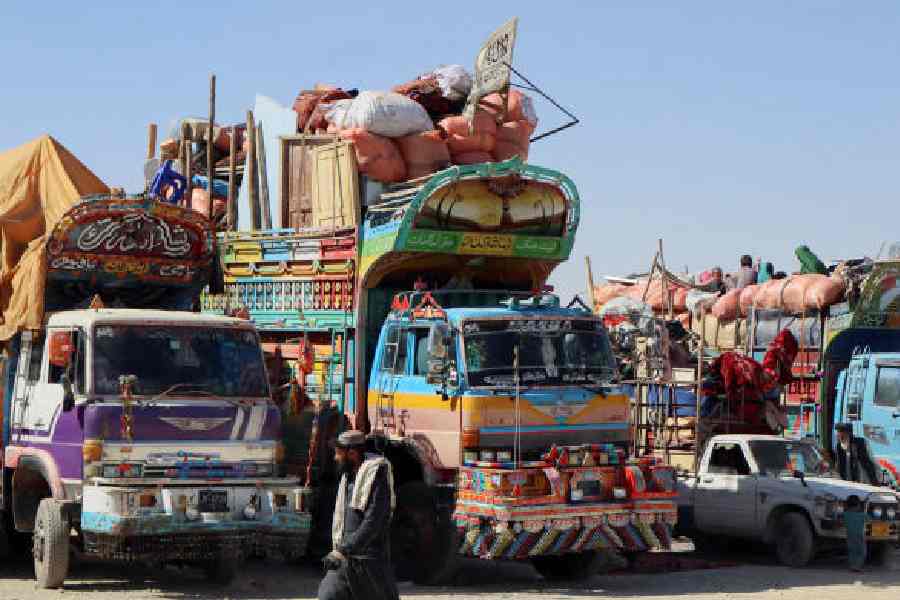
Near Peshawar and along the nearby road that runs through the border, hundreds of container-laden trucks and trailers have sat idle since October 11. Some have been pushed off the road onto the dusty ground. Border guards have barred most crossings, except for Afghan nationals leaving Pakistan.
“When they stopped us here, it was still summer,” Abdul Wakeel, an Afghan driver, said on a recent afternoon as he sipped tea on a threadbare carpet at the Torkham border crossing between Pakistan and Afghanistan. “Now winter is right upon us.”
Pakistan accuses the Taliban government in Afghanistan of supporting a resurgent insurgency that has killed hundreds of Pakistani security forces in recent years and that struck its capital last month. The Taliban administration has denied supporting Tehreek-e-Taliban Pakistan, also known as Pakistani Taliban or TTP, and claims that the violence faced by Pakistan is its own problem.
Pakistan has responded by expelling more than a million Afghans this year and carrying out airstrikes on Afghanistan’s capital, Kabul, and in Kandahar, where the Taliban’s leader lives. Dozens of soldiers from both armies were killed in cross-border clashes this fall.
A ceasefire declared in October hangs by a thread. Mediation efforts by Turkey, Qatar and Saudi Arabia have yielded no result. And the trade war seems to have no end in sight as both governments have geared up for more hostilities.
Pakistan and Afghanistan have repeatedly closed their border since the Taliban reclaimed power in 2021. But Shahid Hussain, a Pakistani representative of traders with more than two decades of experience with Afghanistan, said he had never witnessed such prolonged volatility.
“The Taliban are indicating that things aren’t going to get better anytime soon with Pakistan, and the Pakistani military won’t let up on this,” said Azeema Cheema, the founding director of Verso Consulting, an Islamabad-based research firm. “There doesn’t seem to be any path.”
New York Times News Service