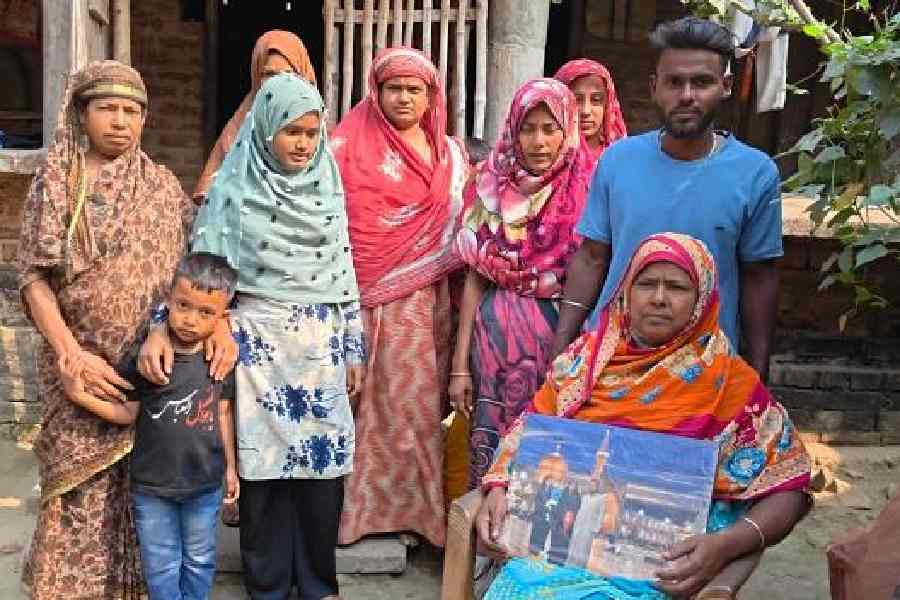
Seventy-year-old Yaar Banu Biwi of Sakchura Bagundi village in Basirhat, North 24-Parganas, has not slept for the past two days.
Since hostilities erupted between Iran and US-Israel, she has been desperately trying to reach her son, Amir Hossain Gazi, 34, a teacher based in Tehran, but there has been no contact since Friday.
Amir, 34, left India eight years ago to live in the Iranian capital with his wife Usha Parveen, 28, and their two sons and one daughter. A religious teacher by profession, he built a modest life in Iran. But that stability has now been
shattered.
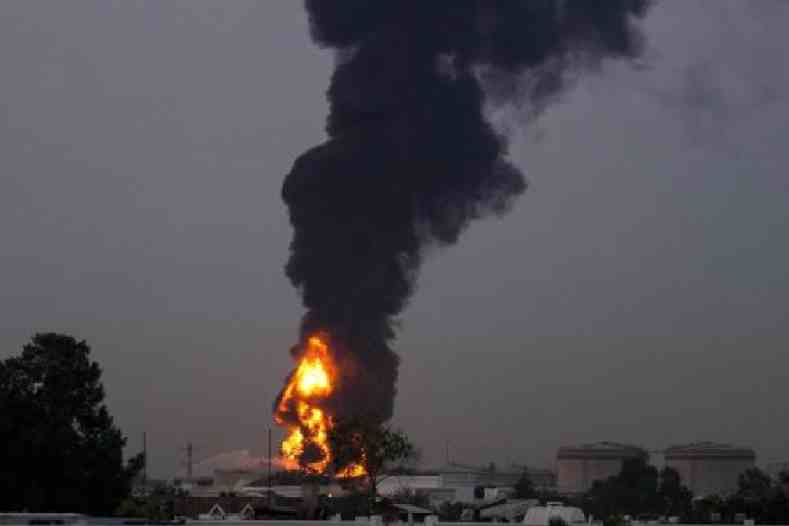
The conflict sharply intensified following a series of missile and aerial strikes. Communications across parts of Iran were severely disrupted after the Iranian government shut down Internet services. Reports of high-profile casualties further deepened uncertainty
and panic.
Missile strikes have continued intermittently, and fears of a broader regional conflagration have mounted, with multiple countries in the region now drawn into the
confrontation.
In Basirhat, the Ghazi household is gripped by fear. Yaar Banu Biwi, along with her two other sons, Sain Ghazi and Sabir Ghazi, and nearly 14 family members, spend hours anxiously watching the news.
“The last time I spoke to my son, he asked me to send money so that he, his wife and children could return home. After that, silence,” Yaar Banu said. “We don’t know how they are. Moreover, we can’t afford to send airfare for five people,” she said.
Unsure whether her son could afford airfare to return home and unable to understand what was going on in Iran, Yaar Banu pleaded for the direct intervention of Prime Minister Narendra Modi to help persons like her son. “When our children are back home, many Indian mothers like me will pray for the Prime Minister,” she said, her eyes tearful.
The Indian embassy in Tehran issued a fresh advisory urging Indian nationals in Iran to leave the country using available means, including commercial flights, in view of the evolving security situation in Iran.