Three weeks into a war in West Asia that is roiling energy markets, Asia is confronting one of the first major consequences of an oil shortage, as jet fuel prices surge to record levels and governments scramble to keep flights running.
Airlines have cancelled thousands of flights, stranding tens of thousands of passengers. Major regional energy suppliers, including China, South Korea and Thailand, are restricting exports, while import-dependent countries like Vietnam are forced to ration and call on others for help.
The accelerating crisis offers a first glimpse of what happens when oil supplies are suddenly choked off by an unexpected crisis with no clear end in sight. The pain is most acute in Asia, where countries rely on West Asian oil and have limited stockpiles, and experts warn that it may foreshadow more disruptions if the war drags on.
“We’re peering into what our gasoline and diesel future is going to look like if this doesn’t get resolved,” said James Noel-Beswick, the head of commodities at Sparta Commodities, a data firm. “Jet is kind of a canary in the coal mine,” he said.
The risk of oil shortages rippled across Asia within days after the US and Israel went to war against Iran, bringing shipping through the Strait of Hormuz to a halt. About a fifth of the world’s oil flows through the narrow shipping corridor along Iran’s southern coast, and most of it ends up in Asia.
In Indian cities, people started hoarding liquefied petroleum, widely used for cooking. Bangladesh cancelled university classes. The Philippines has moved to a four-day workweek. In Vietnam and Thailand, gas stations posted “sold out” signs as governments with limited stockpiles imposed emergency conservation efforts.
Then came a shock no one expected. Jet fuel prices spiked to a record high of more than $200 a barrel, more than doubling the pre-war price.
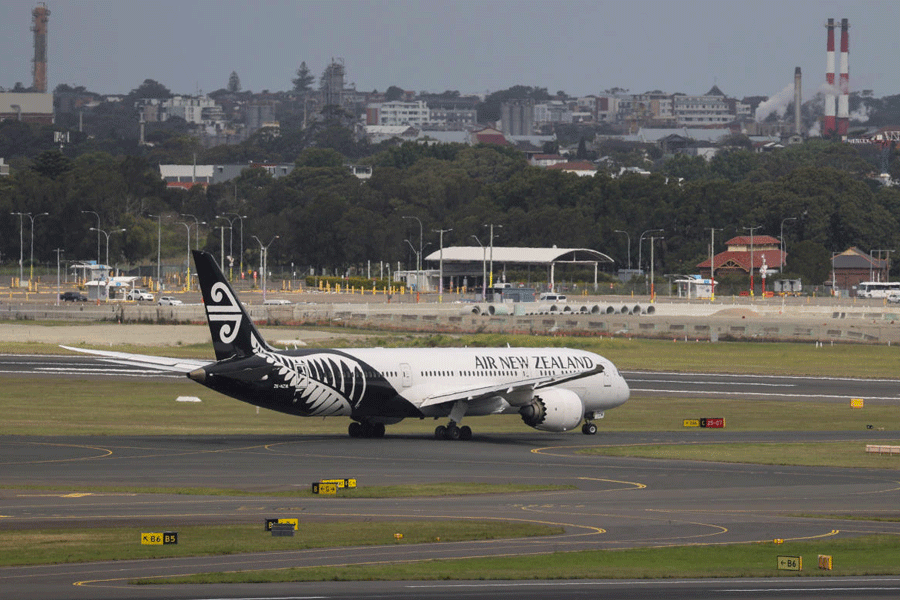
“It is at unprecedented levels,” Nikhil Ravishankar, the chief executive of Air New Zealand, told a local media outlet last week after it cancelled around 1,100 flights through early May.
New York Times News Service