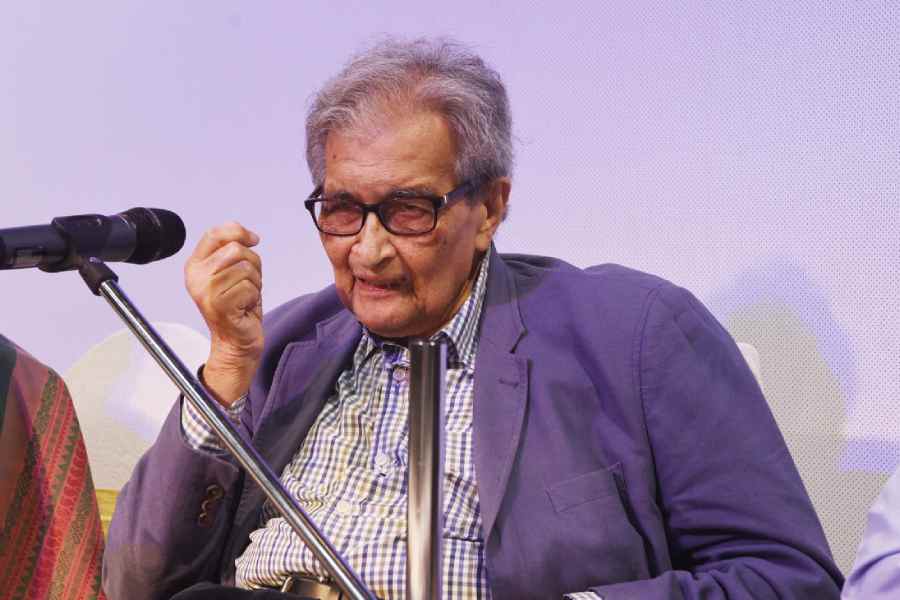
The special intensive revision (SIR) of electoral rolls SIR underway in Bengal is being done with “undue haste”, Nobel laureate economist Amartya Sen said on Saturday, warning that it may jeopardise democratic participation, particularly with the Assembly elections months away.
The Election Commission and the Supreme Court “must make sure no adult Indian citizen faces difficulty to qualify for voting,” Sen, 92, told PTI.
He did not disagree with the need for the SIR but questioned the process.
“A thorough review of electoral rolls done carefully with adequate time can be a good democratic procedure, but this is not what is happening in West Bengal at this time," Sen said.
Election Commission officials had visited Pratichi, Sen’s home in Santiniketan, on January 7 and served an SIR hearing notice on him over a “logical discrepancy” in his enumeration form entries.
According to the poll panel, the notice was issued because the age difference between Sen and his mother Amita Sen, as calculated from the data entries on his enumeration form, was less than 15 years.
However, the 2002 electoral rolls — an Election Commission-authorised document — suggest an age difference of 19 years.
Sen, speaking to PTI from Boston, reflected on the democratic value of electoral roll revisions and the circumstances under which they can strengthen voting rights. He stressed that such an exercise must be conducted with care and adequate time, conditions he believes are “missing” in Bengal’s case.
“The SIR is being done in a hurry, with inadequate time for people with voting rights to have sufficient opportunity to submit documents to vindicate their entitlement to vote in the coming assembly elections. This is both unjust to the electorate and unfair to Indian democracy,” he said.
Drawing from his own experience during the SIR, Sen said time pressure was evident even among poll officials.
“Sometimes, the officials of the Election Commission themselves seem to lack enough time.
“When they questioned my right to vote from my home constituency in Santiniketan – from where I have voted earlier, and where my name, address and other details are registered in official records – they questioned me about my deceased mother’s age at my date of birth, even though, as a voter herself, my mother’s details, like mine, were stored also in their own official records,” he said.
The celebrated economist went on to describe the documentation challenges he encountered, noting that these difficulties are common for many Indians born in rural areas.
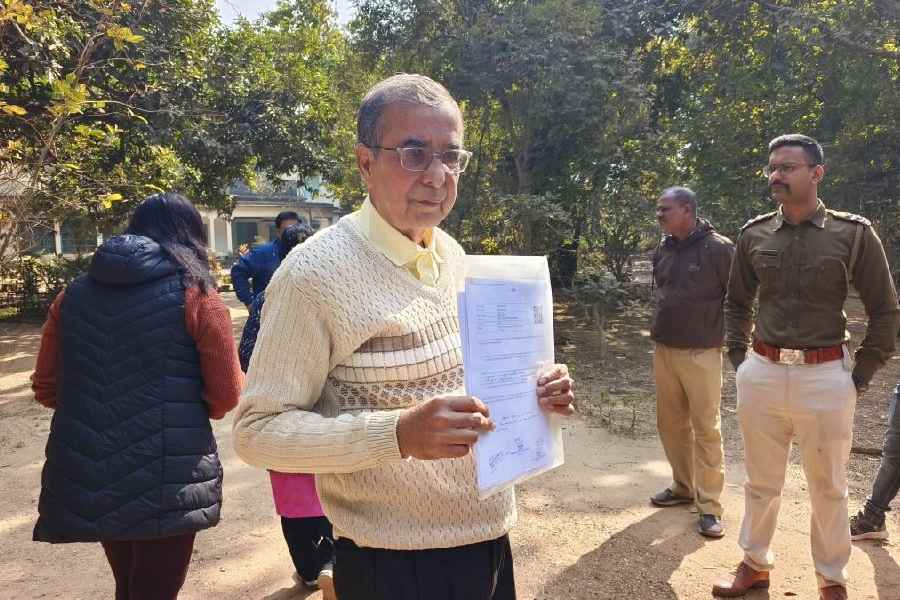
“Like many Indian citizens born in rural India (I was born in the then village of Santiniketan), I do not have a birth certificate, and my eligibility to vote required further paperwork to be presented on my behalf,” he said.
Although the issue was eventually resolved for him, Sen expressed concern for citizens who lack similar access to assistance.
“Even though I could happily say (like the Beatles) – ‘Oh, I get by with a little help from my friends’ – I worried about others who do not have so many loyal friends. My friends helped me to get through the rigid gates of the formidable EC,” he said.
Asked whether the SIR could politically advantage any political party in West Bengal, Sen said he could not offer a definitive assessment, underlining that democratic integrity should remain paramount.
“I am not an election expert, so I cannot answer the question with certainty. I have been told by those who seem to know more, that the BJP will benefit from the under-accounting.
“I don’t know whether that is true, but the real point is that the EC should not insist on a faulty arrangement and force our proud democracy to commit an unnecessary error, no matter who benefits,” he said.
On sections of society that are most vulnerable to being excluded during the SIR, Sen pointed to the structural disadvantages faced by poorer citizens.
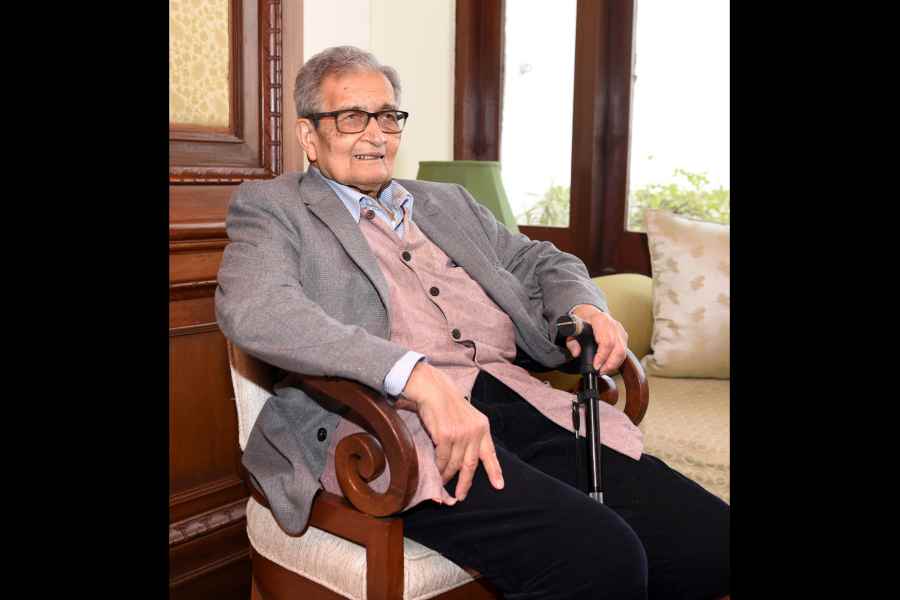
“An obvious answer must be the underprivileged and the poor. The documents needed for being allowed into the new electoral roll are often difficult to obtain for the underdogs of society.
“The class bias that may show up in the necessary requirement of getting and showing particular documents in order to qualify to enter the new voters’ list will tend to work against the indigent,” Sen said.
On January 16, when the poll panel officials arrived for Sen’s SIR hearing, Gitikantha Mazumdar, a family friend of the Nobel laureate, had asked them: “Will the Bharat Ratna citation work as an SIR document?”
Majumdar had later told The Telegraph: “I was being sarcastic [in asking the question]: I wanted to send a message to the Election Commission that it was harassing a person who had been awarded the country’s highest civilian honour.”