

privacy of patients

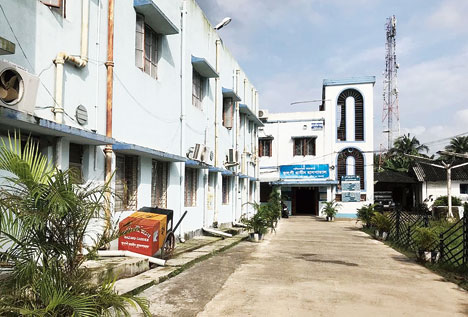
Kulpi: A spacious labour room, a nursery, a modern baby warmer, a resuscitation kit, well-equipped antenatal and post-natal care units, LCD screens, an injection room and a private feeding corner - all this at a government hospital that focuses on maternity care in Kulpi in South 24-Parganas, more than 60km from the city.
Five years ago around 70 per cent of pregnant women in this block preferred delivery at home but for the past two years Kulpi Rural Hospital has been catering to around 6,000 pregnant women in a year. All because of the efforts of the block medical officer , health,and his team of five doctors, 11 nurses and other staff.
The hospital has 30 sanctioned beds and 35 makeshift ones. It is equipped with 14 ambulances that bring pregnant women from a 33km radius around the hospital well in time for delivery.
"The facilities were scarce. Another deterrent was the ordeal of a journey to the hospital from the villages," said A.S. Md Mahfuz-ul-Karim, the block medical officer of health, who went door to door to explain the benefits of institutional delivery. "We had to educate the villagers for months, sometimes even admonish the male members, and also personally help them bring pregnant women to the hospital. Many did not want male doctors to treat them. We had to build a level of trust."
Two years on, the hospital has now achieved 100 per cent institutional delivery, high rate of immunisation and low infant mortality.
Post delivery, mothers at the hospital are trained to look after their babies and feed them the right way besides being made aware of the immunisation schedule. Karim and his team also give the villagers lessons on their social responsibility towards the girl child. The hospital also offers ultrasonography facilities before delivery.
The journey has not been smooth. "I faced hurdles. My plans for improvement were often discouraged. I had to wait for funds (from the state) but I refused to give up," he said.
The hospital moved to a more spacious facility, provided by the state government, in 2016. Aided by Unicef's technical support and training, the hospital slowly went through a makeover. Clean corridors and beds, attractive signage and graphics on walls now greet visitors.
"Free service should not mean inferior quality. I decided that curtains and privacy would bring more patients to my hospital. The labour room now has bright lights and three beds with blue curtains separating them for complete privacy of patients," Karim said. All rooms at the hospital have been painted in warm colours.
"Funds have been a problem. We are still waiting for around Rs 12 lakh allocation but we keep trying to make the mothers happy," Karim said.
The smile on Tulsi Das's face said it all. The 24-year-old from Ramkrishnapur village, who is expecting her second child, was brought to the hospital in an ambulance. "Earlier, most women of my village would not come here. But now we prefer the comforts of this hospital to home," she said.
Cleanliness is never compromised on. "Many now prefer this hospital to a nearby nursing home and that is a big compliment," Karim said.
Yasmin Ali Haque, a representative of Unicef India, visited Kulpi recently and recommended it as a model hospital.
The doctor's dream: adding C-section facility and a neonatal ICU to the hospital.