At first glance, it might seem like a disaster for pharmaceutical giant Novo Nordisk. The Danish drugmaker had the market for its weight-loss and diabetes wonder drugs, Ozempic and Wegovy, entirely to itself when the medicines were launched in India last year.
Now it is facing at least 20 rival Indian pharmaceutical manufacturers who are racing to sell their cheaper versions after the drugs' blockbuster molecule, semaglutide, went off patent. Dozens more firms are waiting on the sidelines, hoping to storm the market if conditions are right. "There's huge competition," says Dr Jothydev Kesavadev, who runs a chain of diabetes clinics in Kerala.
Novo Nordisk no longer commands the market. But the company has already discovered that a smaller share of a vastly larger market is still a winning proposition.
In fact, the weight-loss market may be the ultimate growth story. Nearly one in three women and more than one in four men are now overweight or obese, according to the latest National Family Health Survey, while 101 million Indians are diabetic and 136 million are pre-diabetic.
"The unmet need is immense," says Vikrant Shrotriya, managing director of Novo Nordisk India. The country is at a "pivotal point in its health journey".
In March, Ozempic and other semaglutide-based diabetes and weight-loss drugs went off patent in India and the market has exploded.
Sales of semaglutide-based diabetes and weight-loss drugs reached Rs 88 crore in April, up from 48 crore in February. The semaglutide market is now roughly split evenly by revenue between Novo Nordisk and generic companies.
"What matters most is that the overall category is growing," Shrotriya says. "The market for GLP-1 therapies is expanding rapidly, and Novo Nordisk continues to lead."
Industry experts forecast the domestic weight-loss and diabetes drug market will expand from Rs 1,500 crore to Rs 8,000 to Rs 10,000 crore by 2030. Nearly 60-70 per cent of demand is expected to be driven by diabetes treatment, while weight-loss patients will account for the rest.
The enthusiasm for the drugs is easy to understand. "These drugs really are quite remarkable," says veteran diabetologist Dr V. Mohan. Semaglutide, which hit the US market in 2017, was "the real breakthrough in weight reduction," he says.
"Patients began losing 10 kg to 15 kg, something we had never seen before with a medication."
He describes the drugs as transforming obesity treatment in a way "unlike anything we've seen before in modern medicine".
Industry experts have almost lost count but reckon anywhere between 12 and 20 companies launched products within days of the semaglutide patent expiring. Shrotriya reckons there are now around 50 companies preparing to launch as many as 150 brands (that includes tablets to multi-dose pens which each have different brand names).
Out in front after Novo Nordisk, according to industry analysts, is Torrent, which had its oral tablets and injectables on the market within days of the patent expiry.
"What we are seeing is unprecedented," says Mohan. "We have never seen 40 companies enter a market so quickly."
The frenzy is being fuelled by a simple fact: for the first time, semaglutide is becoming affordable for India's vast middle class.
Novo Nordisk has responded by cutting prices aggressively. The monthly cost of Ozempic's 0.25 mg starter dose has fallen 36 per cent to Rs 5,660 from Rs 8,800. Wegovy's 0.25 mg dose, which launched at Rs 17,345, has also been reduced to Rs 5,660. Sales of the two drugs jumped about 40 per cent in April after the cuts.
The generic versions are cheaper still. Natco Pharma's multi-dose vials can be bought for Rs 1,290 for a month. Torrent's oral and injectable offerings are selling at Rs 3,999.
"The result has been a dramatic reduction in price," says Mohan. "In the United States, treatment can cost well over Rs 1 lakh per month. In India, some generic versions are now available for around Rs 2,000 to Rs 3,000 a month. That's a remarkable achievement and demonstrates why India is called the pharmacy of the world."
Does Novo Nordisk still have an edge over its generic competitors? The answer is nuanced. Doctors say they still favour the original drug but must balance quality against affordability.
"Most of us still prefer the original innovator drug from Denmark," says Dr Jothydev. "But for cost-sensitive patients, we use generics. The problem is nobody really knows which generic is best. Many are using similar compositions but under different brand names."
Adds Prashant Tandon, CEO of Tata 1MG: "I think there's space for all price points in the Indian market."
The picture is further complicated because only a handful of companies are actually manufacturing the active ingredient. Hetero, Dr Reddy's, Sun Pharma and MSN Laboratories are among the major producers, supplying multiple brands.
"So 10 brands may actually come from one manufacturer," says Jothydev.
The market is also spawning unusual alliances. Zydus, which has strong manufacturing capabilities, has tied up with Lupin, which has a broader marketing reach. Novo Nordisk, meanwhile, has partnered with Emcure and Abbott India to push deeper into smaller cities and towns. Emcure will market Wegovy under the brand name Poviztra, while Abbott will leverage its large diabetes-focused sales force to promote Ozempic.
Abbott says the partnership "combines Novo's GLP-1 expertise with Abbott's distribution network to expand access across India".
The sudden explosion in semaglutide use is creating new challenges.
Doctors warn that the sheer number of brands, formulations and prices is creating confusion. Some companies sell injectable pens, others vials and others oral tablets. Some market the same drug under multiple names.
"There are at least 40 brands available now in India," says Jothydev. "Some companies have two or three different brand names. Some have vials, some have pens, some both. There are so many names that everyone is confused."
The government has stepped in, recommending that semaglutide and similar drugs should be prescribed only by qualified physicians and endocrinologists, but even that does not guarantee proper treatment protocols.
"The real issue is that doctors need training," says Jothydev. "Many adjustments are required. Some drugs need to be stopped, some doses reduced."
The concern is not the drug itself but how it is being used. Semaglutide medicines such as Ozempic and Wegovy can be prescribed for two main reasons: type 2 diabetes and obesity or overweight-related health problems.
Ozempic was originally developed and approved to help people with type 2 diabetes manage their blood sugar levels. Many people who take it for diabetes also lose weight, which helped spark wider interest in the drug.
Wegovy contains the same active ingredient, semaglutide, but is specifically approved for weight management. It is generally prescribed for people who are obese or overweight and have weight-related health conditions.
Pharmaceutical companies have begun organising training programmes for doctors and nurses. Some are launching diet-coaching apps and patient-support programmes designed to improve adherence. Misuse is already becoming a serious problem. Says Jothydev: Many non-qualified practitioners, cosmetologists and even patients themselves are using these drugs without proper guidance."
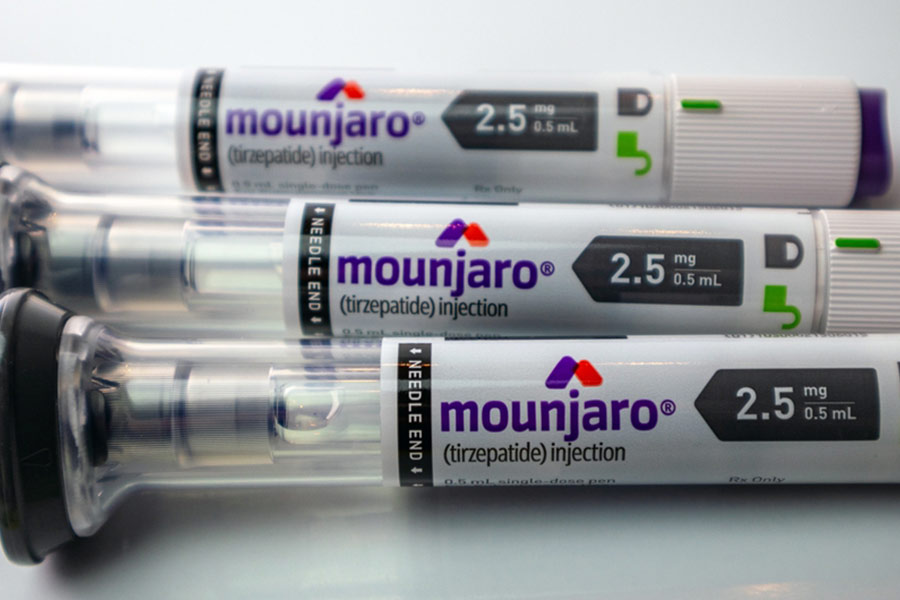
The craze has become so intense that some clinics now advertise "Mounjaro bride" packages, folding weight-loss injections into pre-wedding transformation programmes alongside beauty treatments and fitness coaching.
Even patients who've been prescribed the drugs need to be educated on the need for utmost caution. Jothydev recounts the case of a 37-year-old patient who accidentally took a double dose.
"He developed severe diarrhoea, dehydration and kidney failure and had to be admitted to ICU," says Jothydev. The patient eventually recovered.
Doctors stress that the drugs must be started gradually and under supervision. "It's like taking off in an aircraft," says Mohan. "You don't climb vertically at 90 degrees. You ascend gradually."
Despite all the excitement, doctors say one stubborn problem remains: many patients still do not accept obesity as a disease.
"We need national awareness programmes like those for tuberculosis or Covid," says Jothydev. "Modern medicine clearly recognises obesity as a major illness."
The rewards can be substantial. Doctors say the drugs do far more than help patients lose weight.
"These drugs reduce liver fat, prevent cirrhosis, heart attacks, strokes and kidney failure," says Jothydev. "There are more than 25 proven benefits."
Mohan agrees. "For decades we assumed there would never be a truly effective and safe weight-loss medication," he says.
The challenge is persuading patients to stay on treatment.
Doctors estimate that around 49 per cent discontinue the drug within six to eight months. In many cases the weight returns quickly.
"The more important issue is that the drug works only while you continue taking it," says Mohan. "If you stop, the weight usually returns and diabetes control often deteriorates. Many people assume they can take it for a few months, lose weight and then stop. In reality, obesity and diabetes are chronic conditions. Long-term treatment is often required."
For Novo Nordisk, however, the bigger picture remains encouraging. Rather than shrinking the market, the generic drugs have expanded it. As Shrotriya puts it: "As more players enter the market, share pressures are natural. But broader participation will enlarge access. Far from slowing down, India's market is opening."