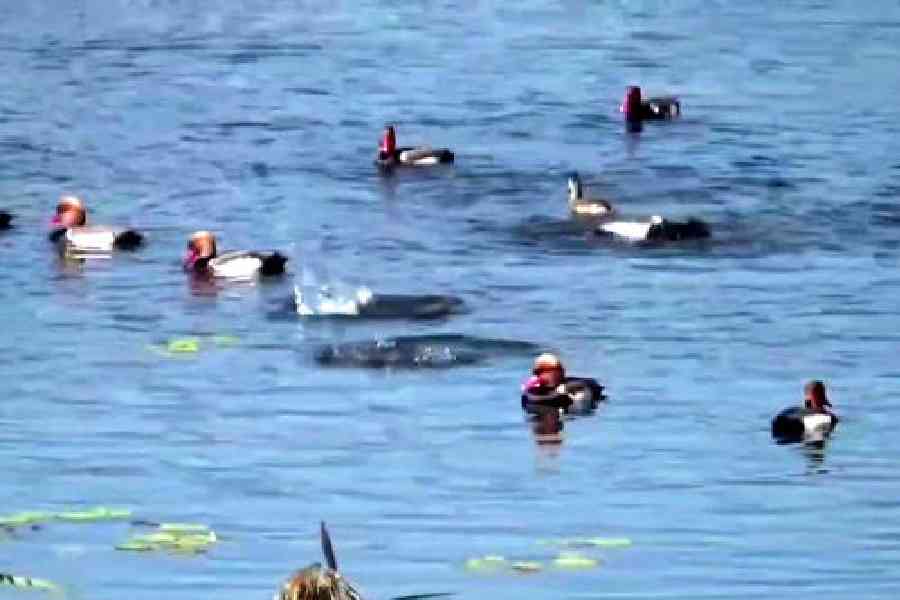
Concerned over the impact of the October floods on wetlands and bird habitats in north Bengal, environmentalists have decided to conduct a comprehensive survey of waterfowl to assess a possible decline in migratory bird populations this season.
Usually, every winter, birds such as Brown Shrike, Bar-headed Goose, Northern Pintail, Gadwall, Common Teal, herons and storks (like Asian Openbill), reach north Bengal from Central Asia and Siberia for food and warmer climates.
However, environmentalists apprehend that the floods, which wreaked havoc in several districts of north Bengal, deposited massive amounts of silt in water bodies, adversely affecting aquatic life and food availability for the winged visitors.
This, they fear, may result in a lower turnout of avian species compared to previous years in this ongoing winter.
Animesh Bose, veteran environmentalist and programme coordinator of the Himalayan Nature & Adventure Foundation (HNAF), an NGO, said that the floods on October 4-5 devastated large parts of Alipurduar, Jalpaiguri and Cooch Behar districts, washing debris and silt into wetlands that annually attract thousands of migratory birds.
“The massive siltation caused by the floods has severely impacted the flora and fauna of these areas. The deposition of silt in water bodies and the resulting lack of appropriate fodder may lead to a poor turnout of migratory birds this year compared to last season,” Bose said.
To scientifically assess the impact of the floods, the Siliguri-based HNAF will conduct its month-long annual waterfowl count (AWC) beginning January 4, 2026.
According to Bose, the survey would cover major wetlands and riverine stretches across the three districts of Cooch Behar, Alipurduar and Jalpaiguri.
The places where the survey would include Gajoldoba, Fulbari, the Jaldapara Wildlife Sanctuary, the Gorumara National Park, the Nararthali Beel, the Rasik Beel, Noukabehar (the confluence of the Murti, the Jaldhaka and the Diana rivers), Teesta-Korola, Domohani, Gosaihat, the Gholani river stretch and the Teesta-Nandikhola area.
“During last year’s AWC, more than 35,000 birds were recorded across these water bodies. The highest counts were at Fulbari (Jalpaiguri district), with 6,554 birds, and Rasik Beel (Cooch Behar district), with 6,418 birds. At Fulbari, 68 bird species were documented, and at Rasik Beel, the number was 55,” Bose said.
“However, most of these sites fall in districts badly affected by the floods barely two months ago,” he said.
The migratory bird survey will be conducted in association with the forest divisions of the respective locations.
Once completed, the findings will be forwarded to the International Wetlands Bureau (IWB) through the state biodiversity board.
“Based on the report, the IWB will update its database on migratory birds and wetlands of the region,” a source said.