If joy is a direct derivative of celebration and food, then Dominique Lapierre was absolutely on the mark in naming Calcutta the ‘City of Joy’. Calcutta is a wondrous potpourri of people from all over the country. They differ in class, creed, religion, ethnicity. Celebrating together and bonding over food is an important cultural cornerstone, strengthening community bonds, and honouring traditions. Like in many places across the world, food acts as a symbolic language fostering connections and spreading joy.
In Calcutta, this becomes all too apparent during key festivals like Bengali New Year, Durga Puja, Christmas, Chinese New Year and Eid. Eating out with family and friends is on everyone’s itinerary during Durga Puja festivities and it is common to find serpentine queues of Puja revellers waiting patiently for a table outside their favourite restaurants during this time. No one bats an eye when they discover the person just ahead of them in the “line” has landed from a far-off place the day before. Come Christmas and it is much the same scene in front of bakeries and some nostalgic and new-age eateries showcasing Anglo-Indian Christmas delicacies in Calcutta. Even the neighbourhood kirana store puts out a makeshift table that looks like it will give way under the immense weight of colourfully wrapped cakes. Chinese New Year celebrations over the past decade have also taken a huge leap and is also celebrated with great enthusiasm, specially in Chinatown at Tangra.
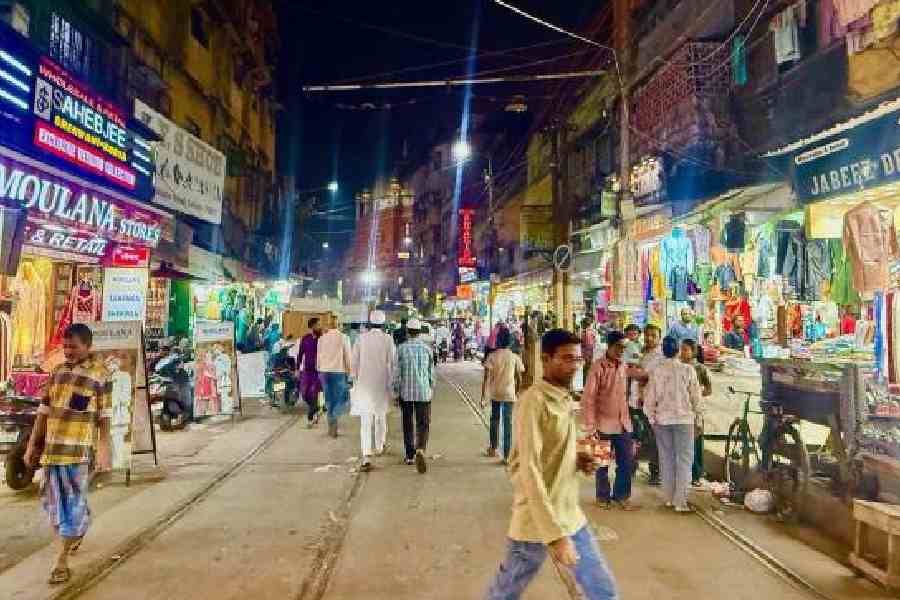
When Ramzan comes around, the city joins our Muslim brethren to partake in iftar after each day’s period of fasting is over. Each year, different establishments and organisations lay out an exotic array of iftar buffets that are attended by people of all religions. In the Chitpur area around Nakhoda Masjid and at Metiabruz near the Qasr-ul-Baiza (original durbar hall of Nawab Wajid Ali Shah), the streets comes alive with a palpable buzz after the day’s fast is over and everyone joins for a warm community experience. The quintessential iftar spread that consists of all the traditional favourites is available to partake whether you have fasted or simply joined to soak in the atmosphere.
While a trip to Chitpur has been on my schedule for years during Ramzan, this year I decided to include Metiabruz too. It was an exhilarating experience. We visited the area quite late in the night and I was amazed to see the happy crowds of shoppers. As the evening wears on, families start making trips to their preferred shopping outlets here, for the month of Ramzan means that Eid is only days away and this is a time of gifting. To my surprise the entire 3km stretch at Metiabruz past midnight was buzzing with crowd. I have been visiting night markets at Thailand for many years now but this Eid Market at Chitpur and Metiabruz definitely can give a tough competition to most of them. Slowly starting from 5.30pm onwards in a laidback manner, it takes the speed on from 8pm onwards till 4 in the morning.
We started from Chitpur and was almost taken aback to see the attar stores selling homemade fragrances resembling perfume brands Gucci, Armani and so on. The 156-year-old attar store, Taj Surma Company, a fifth-generation business run by Md. Jamaluddin, migrated from Chambal in UP and is now one of the largest traders of attar in Calcutta. To have a feel of the fragrance, I did a sampling of their rose oud and it remained intact till the next morning. M.E. Karodia, a sweet-meat store next to Taj Surma Company, is also a 160-year-old fifth-generation store and their Aflatoon Halwa is definitely a must-try. They have been preparing a variety of halwas for the past 160 years and the recipes have not changed, according to the owners.
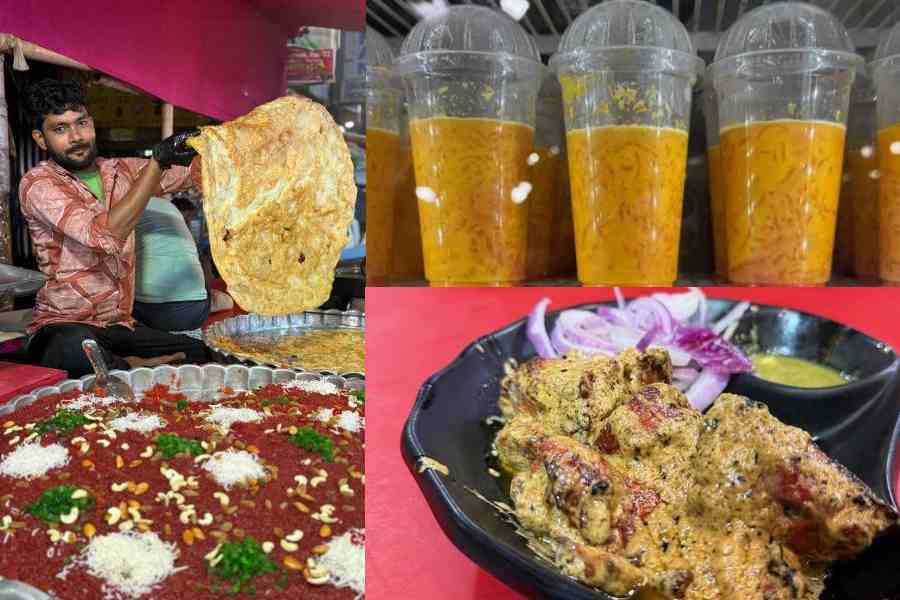
As we entered the main food street, I was amazed to see the incredible street food culture that thrives here, making it one of Calcutta’s liveliest culinary hubs. Makeshift food stalls line both sides of the street, creating a bustling bazaar filled with delicious aromas — from sunset into the early hours of sehri (the last meal before fasting). Mohabbat Ka Sharbat was right at the starting point with its subtle taste of Rooh Afza mixed with milk, watermelon and ice cubes, soothing the tastebuds just before the invigorating food trail was about to start. The beef kathi kebabs and khiri kebabs served from the heart by the owner Shadaab Ali at the New Lucknow Hotel are definitely to die for.
The most interesting part in this tour was a stop at Taskeen, gorging on their speciality Murgh Taimuri and Afghani Muragghan. The creamy butter-based gravy paired with the perfect rumali rotis definitely has a character and is hard to find anywhere else in Calcutta. To end the meal here, their special falooda was the perfect choice. The beef chaanp and the haleem at New Bombay Hotel was on my list too, however it was so crowded even at 2am that it was impossible to take a seat.
Next stop, Adam’s Kebab Shop genuinely greeted me with its quintessential suta and boti kebabs. They were so soft that they almost melted in my mouth. At Haji Allauddin, it simply brought the charm of trying sweets that are made in pure ghee and blend dry fruits like pista, almonds, walnuts, cashew and berries together with semolina or chana dal. The star from the sweet offerings was definitely the famous Batteessa Halwa, made with 32 different ingredients as prominent as the name, topped with makhana (fox nuts), chopped almonds and magaz seeds.
The next food trail, at Metiabruz, was a feast for the senses. When Wajid Ali Shah was deposed in 1856 and was sent to exile by the British at Metiabruz, rather than surrender to hardship, the Nawab recreated a mini Lucknow on the banks of the Hooghly, bringing with him his courtly traditions, art, music and food. Even today it traces that legacy creating a detailed culinary identity. The overcrowded streets here carry the scents of the aromatic spices echoing Nawab’s love for lavish, refined dishes. Portraits of the Nawab still hang in shops as a living tribute to his passion for the culture and flavours of Awadh.
The various bakeries in this stretch selling the best of bakharkhanis was definitely a sight to soak in. The innumerable roadside stalls selling pasinda and galawati kebabs with ulta-tawa parathas reminded me of the Chowk in Lucknow. Lucknowi kulcha and nihari at Shahi Lucknowi Dhaba tasted perfect, without a hint of miss of the perfect spices. A roadside stall selling jumbo parathas with halwa was as exotic as a visual treat too.
The haleem at Shahnaz Hotel and the biryani, mutton paaya and beef bhuna at Afreen will definitely take me to this street again and again. It was almost past midnight and Afreen seemed like Park Street on a Christmas night. We are used to frequent biryani dens at Park Circus and Mullick Bazaar, but Afreen is a hidden gem indeed.
Gastronomic experiences are what I predominantly seek whenever I am out in any city and this trip was full of delightful discoveries. From its Nawabi beginnings to the vibrant buzz of Ramzan evenings, Metiabruz’s food stalls are not just places to eat, they are living pages of culinary history, celebrating an enduring legacy of flavour, culture and community.
Shiladitya Chaudhury is a communication consultant and a restaurateur co-owning popular brands Oudh 1590, Chapter 2 and Chaudhury & Company. His passion for food and wildlife photography takes him to the remotest of places