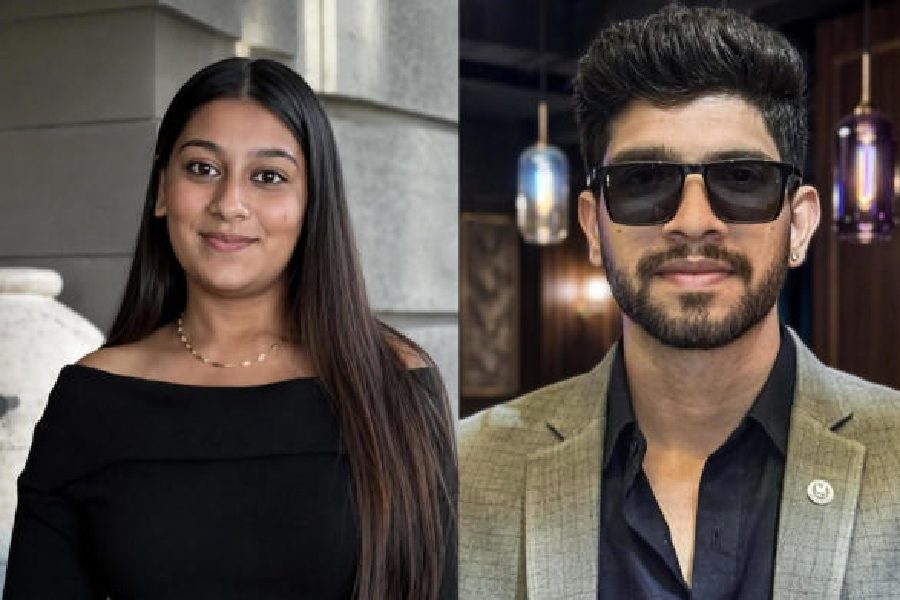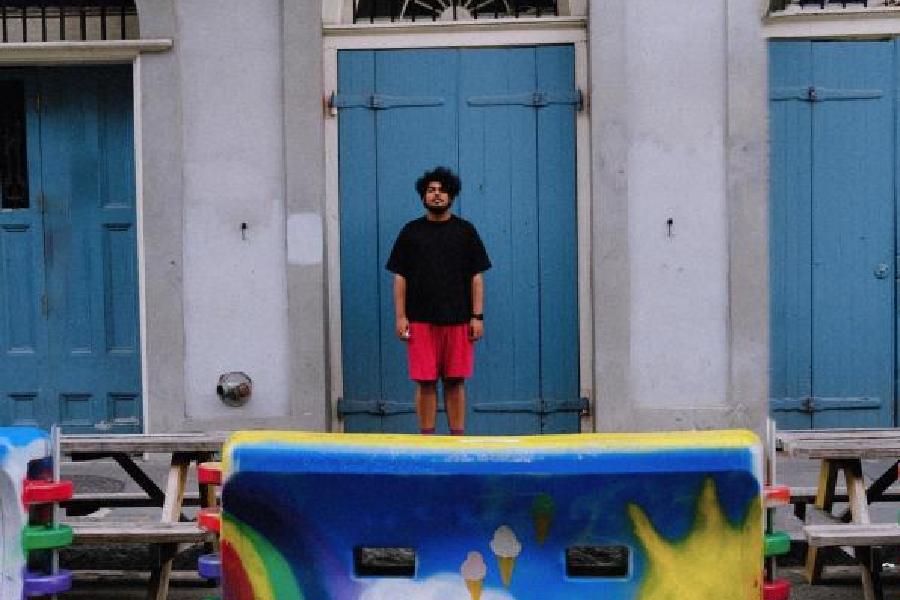
Delhi- and Bangalore-based producer and visual artist Dolorblind — the stage name for Rohan Sinha — makes music that feels as much like a memory as it does an atmosphere.
Shaped by an India where digital sounds seeped into cinema, railway announcements and television adverts, his work blends stark electronic textures with something far more intimate. His latest EP, No Signal, moves between pop, hip-hop, IDM and ambient, using atonal fragments and fractured rhythms to explore isolation, expectation and emotional unease.
Dolorblind speaks about the ideas, influences and inner landscapes that shape a sound he describes as dystopia meeting nostalgia.
The title, No Signal, refers to that old blue screen on a TV when the connection is lost. Why did that specific image of “disconnection” feel like the right theme for this EP?
The title No Signal reflects a yearning for elusive signs and the anticipation of change or an event. This EP explores the journey of finding solace in “disconnection”. It embraces the acceptance of a lack of reward rescue or visible signs while confidently remaining distorted and broken. This EP explores a range of emotions, sonically interpreted, that resonated with me amidst the haze of uncertainty and disconnection.
Digital sounds from railway announcements and old TV ads in India stayed with you. What specific sound from your childhood can you still ‘hear’ in your music today?
The ‘ta-da’ horns preceding every announcement and the distorted low-quality voice that follows, along with the repetition, are hallmarks of old TV ads. These catchy and short sounds linger in my mind long after I heard them. I’m drawn to the aesthetic of vintage quality and textures, particularly the unique artefacts they create. There’s a distinct Indian identity embedded in these textures. My track OD is a more evident example. It heavily relies on sound artefacts and a synth reminiscent of railway announcement horns and even a chase scene soundtrack.
You recorded this between New Delhi and New York. Did the ‘noise’ of those two cities change the way the record sounds?
While working on this project, I spent some time in Bushwick and was surprised by the constant sirens from fire brigades and ambulances and the occasional blasting of heavy bass hip-hop tracks at night. This urban noise definitely influenced the “urgency” mood of the EP. You can hear both elements in it.
However New Delhi provided more emotional inspiration. I was planning to move to Bangalore around this time which gave me a fresh perspective on the city. I think west Delhi has a similar vibe with people blasting Punjabi music and distorted bass from their cars. I’ve always loved the sound of bass coming from a loud car half a kilometre away since I was a kid. It might be annoying now but I was always fascinated by the hums.
In the track UVB-76, you use a mysterious Russian radio signal. What drew you to a cold sound for a song about nature and Mother Earth?
I found it jarring at first but after listening for over two or three minutes I realised there’s a sense of doom. I wanted to borrow this feeling from the sample but also wanted to use these textures for storytelling. I debuted this track performing the demo version of my EP at the Magnetic Fields Festival in 2023.
After returning I worked on it again and managed to express emotions rather than just creating a heavy track. It became a conversational emotional instrumental. This transformation from something emotionless and robotic to something human and full of feeling was truly beautiful.
I sent this track to Rara (Sekar Larasati), sensing its nature. She’s an amazing musician who’s also very active in conservation of nature biodiversity and food sovereignty. She decided to write a song inspired by chants written by a specific women’s farmer group called The Kartini Kendeng.
You’ve said your music comes from a hopeless and dystopian place. Is making music a way for you to escape those feelings (like the way AI is taking over conversations), or a way to face them?
I think we already live in a dystopian world. My music is more like an abstract exaggeration of that reality. I naturally gravitate toward these kinds of sounds because they feel more honest and real to me. Making music is not really about escaping those feelings. If anything, it helps me accept and process them. I try to tap into the emotions that exist within that dystopian atmosphere. It can be haunting and eerie, but also strangely beautiful at the same time.
For example, hearing a distant siren can feel unsettling, but when it blends with the quiet of the night or the sounds of nature, there is also a certain beauty in it. That tension between beauty and unease is something I am drawn to. The world around us is full of these contrasts. Urbanisation, poverty, abandoned infrastructure, war, survival. These themes feel more relevant every day.
Recently I saw a photograph of fiber optic cables spread across the city of Lyman in Ukraine, and images like that evoke a strange mix of emotions in me.
So I think of my music less as an escape and more as a kind of world building. It is about creating a space where those feelings can exist and be explored rather than avoided.
The EP ends with OMNI 2, which deals with destruction. Is that a pessimistic ending, or do you see destruction as a way to start something new?
Omni 2 is a manic representation of an episode. It begins with screams and escalates throughout the track. It’s almost like destroying everything around you only to be left with silence at the end. Interpretation is open-ended; it could be pessimistic or not. When you’re in that mental state you just keep going without much thought — that’s what this track is about. This track is also subtly inspired by the final scene of the anime Evangelion where humanity becomes one consciousness to increase their chances of survival.
You go by the name Dolorblind. What does that name mean to you, and why not just release music as Rohan Sinha?
Dolorblind started partly from my nickname. Most of my friends call me Dolo, and I wanted to choose a name that didn’t really exist so I could give it whatever meaning I wanted.
The idea behind it was also to be a kind of shapeshifter. I didn’t want the music to be tied too closely to my social background, upbringing, physical features, race, or class. It is important to me that the work can exist without a preconceived identity attached to it. As a visual artist, I think a lot about imagination and perception, and the name allows the listener to project their own image of who or what Dolorblind is. In that sense, the sound comes first and the identity comes later.
Interestingly, a similar word appeared in 2021 in the book The Dictionary of Obscure Sorrows by John Koenig. He coined the term “dolorblindness,” which describes the frustration of never truly being able to understand another person’s pain, only searching their face for some reflection of it and comparing it to your own experiences. I think that idea is very apt and resonates with how I think about emotion and perception in art.
Mathures Paul