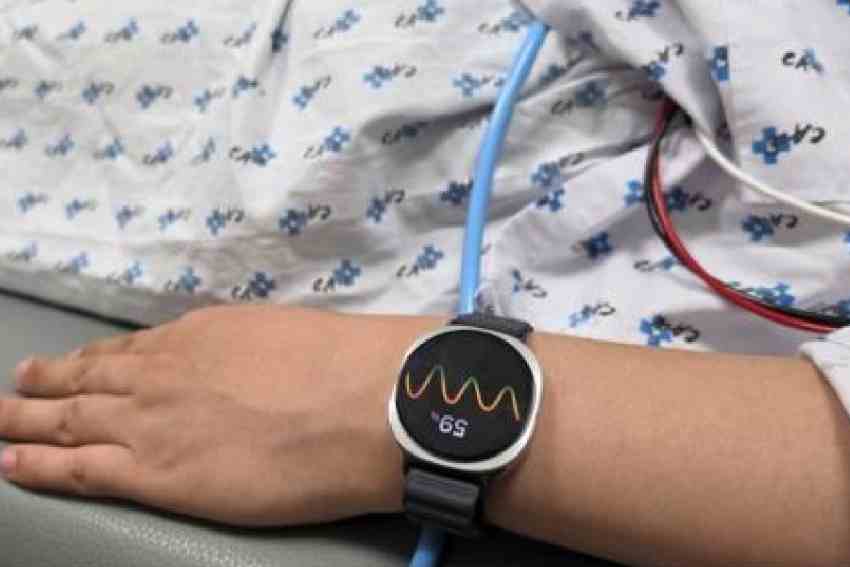
A clinical study conducted in South Korea has found that a Galaxy Watch smartwatch can predict vasovagal syncope — a common cause of fainting — up to five minutes before it occurs, with an accuracy rate of 84.6 per cent.
The joint research, carried out by Samsung Electronics and Chung-Ang University Gwangmyeong Hospital, involved 132 patients who were undergoing induced fainting tests for suspected vasovagal syncope (VVS).
Researchers used a Galaxy Watch6 fitted with a photoplethysmography (PPG) sensor to collect biosignal data during the tests. An AI algorithm then analysed heart rate variability (HRV) readings from the watch to identify patterns preceding a fainting episode. The model achieved a sensitivity of 90 per cent and a specificity of 64 per cent — thresholds the researchers described as clinically meaningful.
What is vasovagal syncope?
Vasovagal syncope occurs when the body overreacts to certain triggers — such as emotional stress, pain, or prolonged standing — causing a sudden drop in heart rate and blood pressure that briefly reduces blood flow to the brain, resulting in a temporary loss of consciousness. According to professor Junhwan Cho of the department of cardiology at Chung-Ang University Gwangmyeong Hospital, who led the research, up to 40 per cent of people experience VVS at some point in their lifetime, with roughly a third having recurrent episodes.
Although the fainting itself is typically not dangerous, the falls that accompany sudden loss of consciousness can cause serious secondary injuries, including fractures and concussions. A reliable early warning system could give individuals enough time to sit or lie down before losing consciousness, significantly reducing that risk.
How the Galaxy Watch detects the warning signs
The Galaxy Watch 6 was used specifically for its PPG sensor, which monitors blood flow through the skin using light. From this, researchers derived HRV data — subtle variations in the time between heartbeats that can indicate shifts in the autonomic nervous system. These shifts often precede a vasovagal episode.
The AI model was trained to detect these changes and flag an impending faint with enough lead time for the wearer to take precautionary action.
The study, published in volume seven, issue four of the European Heart Journal: Digital Health, is described as the first in the world to demonstrate the potential of a commercially available smartwatch to provide early syncope prediction. Previously, monitoring of this kind required clinical-grade equipment in a hospital or specialist setting.
The findings represent a broader shift in how wearable consumer technology is being evaluated for healthcare applications — moving beyond general fitness tracking into territory that was once the preserve of medical devices.
Samsung has not announced a timeline for integrating syncope prediction as a live feature in its wearables. The research represents a proof-of-concept validation rather than a ready-to-deploy product update. Further studies, regulatory considerations, and real-world testing would typically be required before such a feature could be made available to consumers.