As Bibi Payra completes a successful 25-day theatrical run, director Arjunn Dutta reflects on audience reactions, housefull shows, viral songs, emotional feedback and the challenge of making layered storytelling accessible without diluting its impact.
How are you personally processing the audience love as Bibi Payra completes 25 successful days in theatres?
It’s still sinking in. We completed 25 days on May 4, and I’m genuinely overwhelmed. Bibi Payra is a hard-hitting film wrapped in humour. It talks about domestic violence, sexuality, parenting and gender equality — uncomfortable truths, really. It was also a complete detour from my usual style. After the quiet, reflective Deep Fridge, this film was intentionally chaotic and messy.
Honestly, I was nervous. The audience I’ve built over the years knows a very different side of me. So the love we received felt deeply validating — proof that I’m on the right path, and that viewers are willing to walk that path with me. The timing of the release wasn’t easy either. Election fever was everywhere, IPL had begun, and Calcutta was battling extreme heat. We had multiple houseful shows across Calcutta and the suburbs. Swastika, Anindya and I even visited Memari, where the film had consecutive housefull shows for nearly a week. Watching that kind of organic audience response has been incredibly special.
What has surprised you the most about the audience reaction to the film?
What surprised me most was that audiences refused to label the film as “niche”. Bibi Payra explores uncomfortable middle-class realities — domestic violence, gender roles, sexual agency and parenting. On paper, that doesn’t sound like easy Sunday entertainment. I packaged it as a situational comedy-drama, but the narrative still carries layers, subtext and moments that don’t handhold the audience.
I expected the film to find its audience. What surprised me was how many people connected with it. The regular audience came in, laughed, clapped, hooted for the characters and embraced the chaos, discomfort and emotional messiness of the film without treating it like “homework” or dismissing it as arthouse cinema. I’ve never had a problem with the “niche” tag — my earlier films wore it proudly. But with Bibi Payra, I wanted to see whether difficult stories could travel wider without being diluted. The audience answered that question for me. They embraced the film wholeheartedly, subtext and all. That kind of trust is rare, and honestly, very moving.
Did viewers connect with the film in the way you originally imagined, or did the response exceed your expectations?
I was always confident — not overconfident — that Bibi Payra would entertain. It’s my direct tribute to 1990s Bollywood: loud, chaotic, emotional and unapologetic. My only hesitation was the dance number. And yes, I call it a dance number, not an “item song”, because I refuse to let music commodify women. The track, composed by Mainak Mazoomdar, written by Prasen and sung by the sensational Shilpa Rao, went viral. The way audiences embraced it completely surpassed my expectations. People were singing along inside theatres and thoroughly enjoying the experience.
What exceeded everything, though, was the response beyond the screen. The reviews — both from Bengal and outside — were overwhelming. Every major outlet wrote about the film with incredible warmth. But the real reward was the audience. The film connected across generations. College students quoted dialogues, elderly couples sat through noon shows in 40-degree heat, and families came back for repeat viewings. On the second Sunday, even with a KKR match happening, we still had houseful shows and young audiences cheering throughout the screening. I imagined the film would find its people. I didn’t imagine so many people would claim it as their own. The audience didn’t just watch Bibi Payra — they celebrated it.
Which kind of audience feedback has stayed with you the most?
I’ve done several theatre visits over the past four weeks, and the reactions have been overwhelming in the most organic way. A group of women came up to me and said they had been following my work since Abyakto. They told me I’m one of the few directors consistently bringing woman-led stories from different strata of society to the screen. That meant a lot to me.
Then there were viewers who said Bibi Payra feels like a different kind of Bengali cinema — one that can stand alongside national-level work. I’m not saying that to sound pompous; these are conversations people genuinely had with me after screenings. The peer response has also been incredibly special. Tota Roy Choudhury and Shaheb Chatterjee watched the film recently, and Totada told me he had heard good things but still didn’t expect it to be this good. Sudipa Basu watched the film twice in theatres and personally reached out to congratulate me for making something both entertaining and hard-hitting. So the feedback that stays with me is twofold: when women say they saw their lives reflected with dignity, and when audiences stop comparing Bengali cinema to “regional cinema” and simply start calling it good cinema. That shift matters to me.
Have you noticed any particular scene or emotional moment becoming an audience favourite?
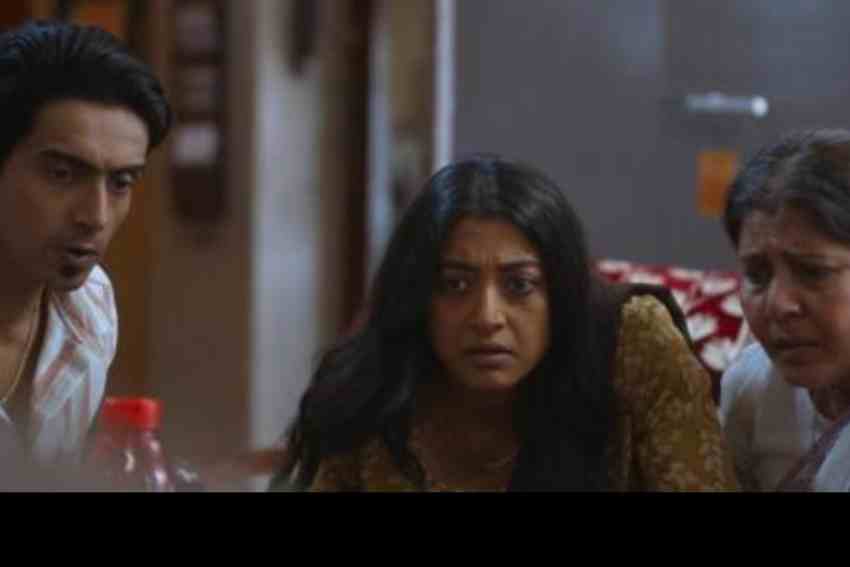
Since I’ve been doing regular theatre visits, I’ve had the chance to watch portions of the film with audiences, and the reactions have been completely organic. Post-interval, Paoli’s character makes a shocking revelation, and you could literally hear the murmur spread across the hall as people processed what they had just discovered. The climax is pure chaos, and audiences have been clapping and hooting for Jhuma and Shiuli. That payoff feels deeply satisfying to witness. The comic tracks also worked beautifully as breathers. Every time Anirban Chakrabarti shared scenes with Lokenath Dey as his boss, or whenever Anindya Sengupta appeared onscreen, audiences loosened up and laughed freely.
But what stayed with me the most were the silences. The film has several deeply uncomfortable moments where the entire theatre would go completely quiet — no whispers, no coughs, just attention. So there isn’t one singular favourite moment. It’s the rhythm of reactions — the laughter, the gasps, the silence and finally the applause. Watching audiences move through all of that with the film has been incredibly fulfilling.
What is the most memorable compliment you’ve received for Bibi Payra so far?
There have been many memorable compliments, but the most special one came from family. My Baba attended the premiere and told me this is my best work so far. That moment was deeply emotional for me. Last year, he couldn’t be with me during the National Awards or at the premiere of Deep Fridge. A lot has happened in our family over the last few years. After losing my mother and elder brother, Baba and I have become very protective of each other.
So watching him laugh throughout the screening meant everything. That compliment will always remain deeply personal and irreplaceable. I also have to mention Sudipa Basu. A veteran of her stature took the time to watch Bibi Payra twice in theatres. She personally called me with such warmth and encouragement, and even said she had voluntarily done word-of-mouth publicity for the film. So yes, the most memorable compliments came from home and from a peer I deeply respect. One told me I had made my best film. The other made sure more people watched it.
Was there any audience reaction that genuinely moved you emotionally?
I honestly can’t pick just one. I take every reaction seriously — compliments, criticism, silence, laughter, all of it. With Bibi Payra, the emotional reactions hit differently. Women told me they felt seen without being pitied. Men told me the film made them rethink certain things within their own homes. That’s what stays with me — not just praise, but the proof that the film reached people emotionally, exactly where I hoped it would. And for someone who once started out simply hoping for one release, that feeling is overwhelming.