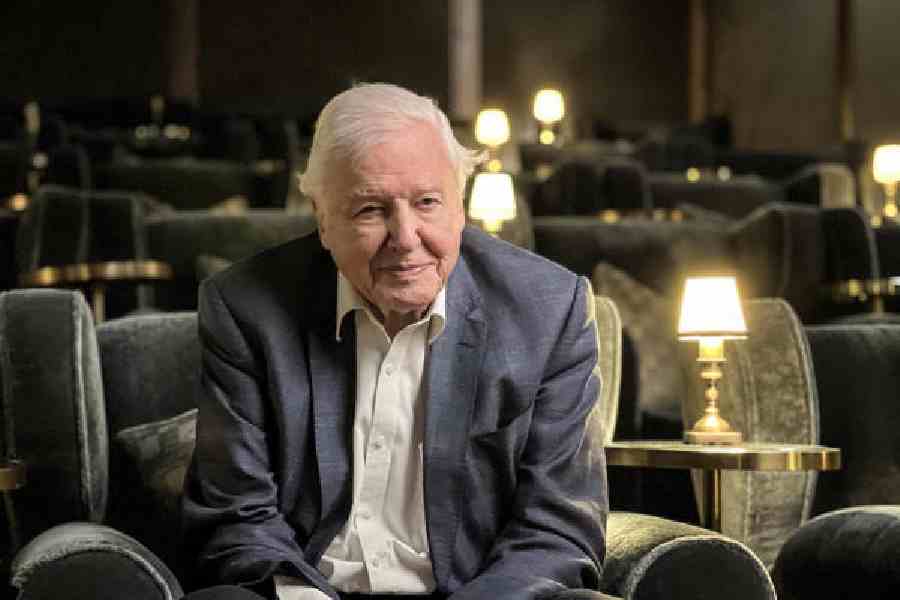
With Sir David Attenborough turning 100 on May 8, the world is celebrating not merely a broadcaster, but a voice that taught generations to look at the planet with wonder, humility and responsibility. Across decades of groundbreaking documentaries, Attenborough has transformed nature storytelling into a moral conversation about humanity’s place in the living world. His unmistakable narration brought the deepest oceans, the densest forests and the rarest creatures into our homes, making distant ecosystems feel intimately connected to our own lives. At a century old, he remains a symbol of curiosity, grace and urgent environmental conscience — a reminder that to understand nature is also to protect it.
A special programming initiative has been taken to celebrate Attenborough’s life and work, which has culminated in the airing on Sony BBC Earth of a specially curated one-hour show, Making Life on Earth: Attenborough’s Greatest Adventure.
The BBC documentary has been created to mark Attenborough’s 100th birthday, and is both a tribute and a fascinating behind-the-scenes chronicle of the landmark 1979 series Life on Earth that transformed wildlife filmmaking forever. Revisiting the extraordinary three-year journey across more than 40 countries, the documentary captures the risks, innovation and sheer ambition involved in telling the story of evolution on screen for the first time in colour television. Through archival footage, personal diaries and reflections from Attenborough himself, it reveals how the series not only changed natural history broadcasting but also shaped the world’s understanding of conservation and the interconnectedness of life on the planet. More than a celebration of one man’s remarkable century, the film stands as a reminder of Attenborough’s enduring legacy as the voice that brought Earth’s wonders — and its fragility — into millions of homes across generations.
“Life on Earth was a story of evolution across 13 episodes of one hour each, and it had never been done before. That’s why it was so groundbreaking. It was the first truly global colour wildlife series that had ever been made, and David was absolutely passionate about making it,” the show’s producer, Victoria Bobin, told t2oS on a video conferencing call from London last week, days ahead of the legend’s birthday. The award-winning producer has worked closely with Attenborough and had marked his 90th anniversary as well, with a programme called Attenborough at 90.
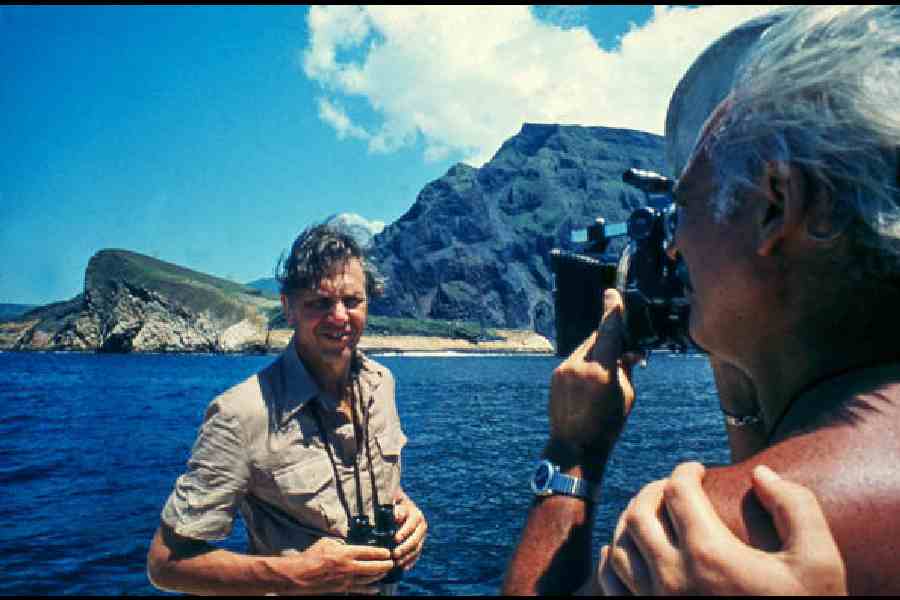
David Attenborough during filming for the 1979 Life on Earth series
Bobin also spoke about the challenges faced by Attenborough in technologically primitive times and through political unrest and his legacy in creating awareness about the interdependence of species and the impact of human action on their cradle, the planet Earth. Excerpts from the interview:
A centenary is a huge milestone. Hope Sir David is keeping well.
Yeah, he’s doing very, very well for somebody who’s so close to being 100. I filmed the interviews with him for Making Life on Earth. He was 98 at the time, because we filmed it just over a year ago, and it was incredible. I feel very privileged to have had that opportunity to talk to him about his life and career.
What was the conversation centred on?
Obviously, we were focusing on Life on Earth, and what a groundbreaking series that was, and how they made that in the late 70s, despite having no Internet, no email, no mobile phones. They still travelled all over the world and filmed this incredible wildlife series. But we did also discuss his career and how it led to the point of Life on Earth. We talked about how he got into television as a young man in his 20s, and how the first programme he made was Zoo Quest, and then he had a stretch of time at the BBC in senior management. But Life on Earth was a very pivotal moment in his life, because he left behind that desk job, the senior management job at the BBC, because he was passionate about making wildlife films. So he decided to do what was absolutely what he wanted to do.
How long has Making Life on Earth been in the making?
It had been talked about for quite a long time, because Life on Earth is such an influential series that anybody in wildlife filmmaking, in the world of natural history would always know how significant it is. Actually, even beyond this, there are some very, very famous moments from the series — for example, when David is filmed with the young mountain gorillas. We always knew how important it was, and we always wanted to tell the story. When we saw the 50th anniversary of the series was coming up, we felt it was the right opportunity to tell that story. And given that it’s also David’s 100th birthday, it felt like the perfect timing to look back on one of his most groundbreaking series to tell the story of Life on Earth. But yeah, so I suppose in total it was probably just over a year in the making, because essentially it was a question of sitting down with David and having that master interview for him to tell his side of the story. We also interviewed several of the key people in the documentary, who worked on Life on Earth 50 years ago.
What was your biggest challenge?
There was the job of pulling together excerpts from the original series, which is 31 hours long. To try and pick those specific moments was quite a challenge, because there are so many wonderful moments, but in our one-hour documentary, of course, we couldn’t fit it all in, so we chose those sort of key moments to illustrate the story of Life on Earth.
For someone who’s been tracking wildlife for 70 years, when he looks back, are there specific trips or specific creatures that he feels closer to than the rest?
Well, for him, Life on Earth was a life-changing moment. He says that in the interview, you know, it sort of changed the course of his life because it really put him onto the screen, and launched his career. He is the most influential wildlife presenter of our time, and Life on Earth was the beginning of that. There are key moments from that series that he recalls, and he said to us in the film that he still thinks about it today. He says the gorillas moment, because it is so famous, is one of the most privileged moments of his career. So, obviously, that really made an impact.
You call the show truly global, right?
They filmed all over the place, all over the world. They went to something like 40 countries, travelling millions of miles around the world, and in that time, he was able to tell the story from the smallest creatures, through to fish crawling onto the land, through to birds and mammals, up to apes, and then even humankind. So, it was the most comprehensive story of our planet ever told at the time, and I think it’s something he is still enormously proud of.
Did he mention the challenges back in the day, when the cameras were heavier than they are now, and things hadn’t gone digital, tape must have been precious...?
He did, yeah, you’re right. He said that they had huge cans of film, which were very heavy, and film was very expensive. They only had limited amounts with them, so they did have to be very, very careful about what they filmed.
David is, even today at his age, still fascinated by technology. He loves hearing about the latest updates in technology. Today, we can film things in the natural world that you could never see before, in terms of the cameras that we have now. We can film in the dark, so you can film lions hunting at night to the real macro level of filming in terms of time lapse. So much has developed in the world of technology, which David still finds fascinating.
Technology for him has always been an important part of his work, and as that has improved, he has been able to tell more and more fascinating stories from the natural world.
For him, no creature, however small. has been insignificant. How did they manage to film the smaller creatures in those days?
When you see what they did manage to capture 50 years ago, it was, at the time, groundbreaking, and David is this incredible storyteller. He makes even a story about termites in a termite mound as fascinating as something about lions or tigers.
No matter what he’s telling you, you are absolutely absorbed and gripped. He could almost read a sort of telephone directory, you would still want to listen to him. His absolute skill is engaging you, and whether he is talking about an ant, or the blue whale, that excitement and that passion and his authenticity are what really engage people.
As the climate change became evident, he became equally concerned about the environmental aspect also. How much of that came through when he spoke to you and in his later work?
I think that’s something that David has been aware of and talked about for a long time. Even beyond his wildlife programmes, he’s spoken at UN climate change conferences and is such a huge advocate for protection of the natural world and the environment. And increasingly, his programmes have been a reflection of that. Blue Planet 2, for example, had a huge real-world impact, in terms of people’s awareness of plastic pollution and changing government legislation and laws. He has been an incredible influence in terms of people realising that it’s vital for us all to protect the planet.
The BBC has planned a live concert to mark Sir David’s centenary.
Yes. It’s a 90-minute concert at the Royal Albert Hall in London, and there will be the BBC Concert Orchestra playing key pieces of music from the series across David’s career over the years — music composed by people like George Fenton and Hans Zimmer on programmes going right back to Planet Earth originally till today. Music is very, very important in terms of those landmark wildlife series, so the concert orchestra is going to be playing key pieces. There will also be guest speakers, and beautiful archive packages to illustrate David’s 70-year career on screen, from right back to the 1950s in Zoo Quest, to Life on Earth in the 70s, to his key landmark series, Life of Mammals, Life of Birds in the 80s and 90s and early 2000s, right up to today. So, it will be a huge celebration, in front of an audience.
Will there be a screening also?
Yes, so we’re currently putting together short films to cover different eras and different aspects of David’s career. So they will be played on the big screens in the Royal Albert Hall for the audiences there. Audiences at home will be watching these archives, montages of the key shows and the key programmes from across his career.
You mentioned birds, because we tend to forget that he also did Life in Air. It was not just about terra firma.
Absolutely! He’s done several series about birds and obviously, a whole range of species, but, yeah, so after Life on Earth, there were several other key, series, including Trials of Life and Living Planet, but then, of course, he went on to make Life of Birds, Life of Mammals, and he did Life in the Freezer, so he’s kind of covered every aspect that you possibly could cover of the natural world in his lifetime.
Is he feeling any different on reaching the 100-year landmark?
I think that David is such a practical, pragmatic person and so interested in the world around him, I don’t think he reflects upon his own life very much. He loves to look forward, he loves to know what’s the next project, what’s the new science, what’s coming next in terms of conservation. Obviously, he’s very proud of the work he’s done, but I think if you spoke to him, he’d say the thing that most interests him is what’s coming next.