|
|
| Specialist at work |

Word Watching
Field notes of an Amateur Philologist
By Julian Burnside,
Thunder’s Mouth, $ 12.75
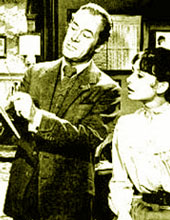
Henry Higgins of Pygmalion and My Fair Lady fame belonged to that rare species called word watchers. Julian Burnside is one of them, and among the many things that one learns from this wonderful book is the fact that George Bernard Shaw created Higgins on the basis of Henry Sweet, a late 19th century English philologist who was anything but what his surname suggested.
As Burnside writes, everyone who has an interest in language and the way it is used notices ?the machinery, the stage props, the blunders and the curiosities? of a language. But a handful develop a special interest in investigating even common words ?because every word in the language has a history, and that history passes unnoticed in everyday use?. To illustrate the point, he takes the word pedigree, which refers to the shape of a crane?s foot.
It might appear that the nuances of language are meant only for specialists. But this is not the case. When a recorded phone message says, ?Your call is important to us?, all, save the most simple- minded, will wonder what important means in this particular context, and even ponder the sincerity of the statement. Words, their meanings and the usage are important because they help to cope with ordinary experiences. Words also excite the scholar.
Burnside begins his investigation with words that end with al. The letters al can act as an adjectival suffix. Thus navy ? naval, norm ? normal, and so on. Some of these adjectives revert to being nouns without any change in form. Thus commercial, confessional, terminal etc. An interesting case is presented by the word pedal, which is derived from the Latin for foot: ped. Pedal was originally an adjective, but is only used as an adjective in the special case of the pedal pipes of a pipe organ. Pedal pipes refer to those pipes in an organ that are activated not from the keyboard but by depressing levers with the feet.
Take the word dismissal. Here the suffix al is used for converting a verb into a noun. Arrival is another example of the same operation.
English, however, refuses to fall easily into a pattern. One might be tempted to think bridal is an example of a noun becoming an adjective by adding al. It isn?t. It comes from bride-ale: the ale that is drunk at the feast for a newly-married bride. It began life as a noun but then expanded its meaning and usage to become an adjective. The original usage is all but lost.
Burnside?s exploration is as delightful as it is lucid. His book is full of delightful nuggets about histories of words. There is a super little section on the dreaded F-word. Who knew that the simple word nice ? now meaning agreeable or meaning fine and subtle as in nice distinction ? originally meant stupid? Even Burnside chronicles the change but cannot quite explain it.
Writers and lovers of words should not be without this book by their side.