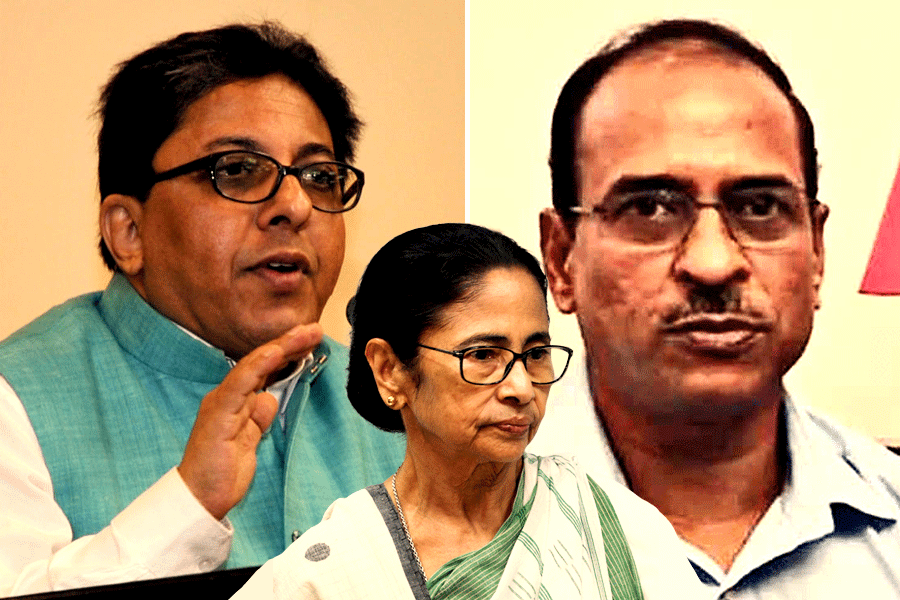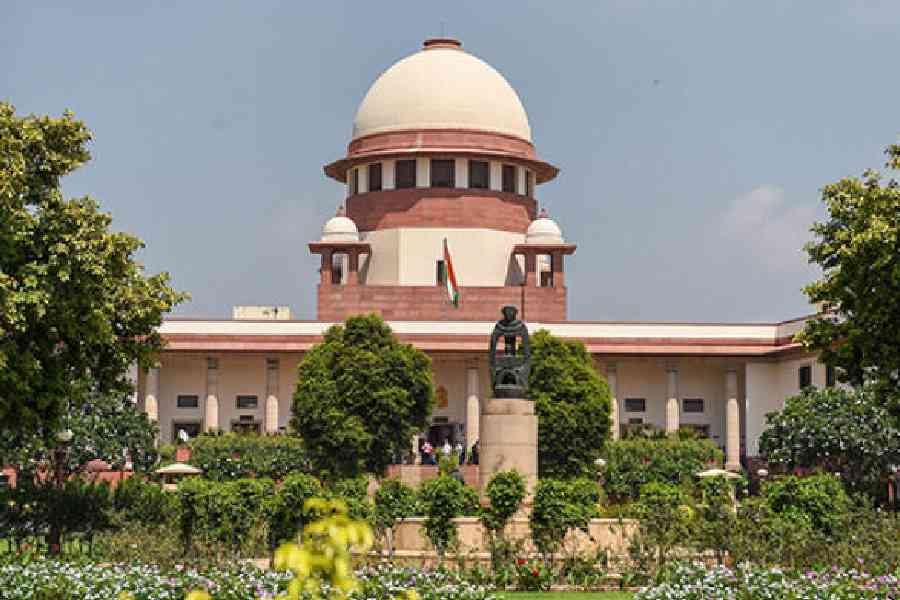
The three academics who were blacklisted by the Supreme Court for writing a chapter on corruption in the judiciary in the Class VIII social science textbook of the National Council of Educational Research and Training have filed personal affidavits before the highest court, explaining the context in which they wrote the chapter and seeking hearings. Earlier, the Supreme Court had taken suo motu cognisance of the references to corruption in the judiciary and imposed a blanket ban on the book, directing governments and publicly-funded institutions to disassociate from the three academics. The chief justice of India had described the chapter as a “calculated attempt” to denigrate the judiciary and undermine public confidence in the institution. The NCERT then withdrew the book and issued an unconditional apology. The academics have tried to defend themselves by underlining that the pedagogic framework under the National Education Policy encouraged discussion of institutional challenges across constitutional bodies. The Campaign for Judicial Accountability and Reforms, too, has urged for a balanced approach from the judiciary, noting that the chapter acknowledged the judiciary’s role in protecting rights, referred to landmark decisions, and devoted only limited space to concerns, including corruption, alongside references to transparency measures and reforms.
The Supreme Court has long maintained a tradition of reconsideration where fairness demands a second look. In Rupa Ashok Hurra versus Ashok Hurra, it recognised the power to revisit its own decisions; in 2022, while closing the Prashant Bhushan contempt matter, the court observed that magnanimity and restraint are facets of its majesty. This willingness to reconsider is indisputably the judiciary’s inherent strength. A calmer relook at the matter would only be consistent with the apex court’s wisdom and majesty. Moreover, the issue of judicial corruption is on parliamentary record. In 2022, the then minister of state for law and justice had informed Parliament that 1,631 complaints about the functioning of the judiciary, including allegations of judicial corruption, had been forwarded to the then CJI and chief justices of the high courts. A reappraisal of the matter, including the challenges faced by the three academics, would not sully judicial authority; on the contrary, it would situate the judiciary within the constitutional framework of accountability, which the Supreme Court has championed over the years. A second look, undertaken with deliberation and restraint, would assure the people, including naysayers, that procedural fairness remains integral to the court’s ethos even when institutional reputation is involved.