Lebanon says Israeli attack killed 13 state security personnel in Nabatieh
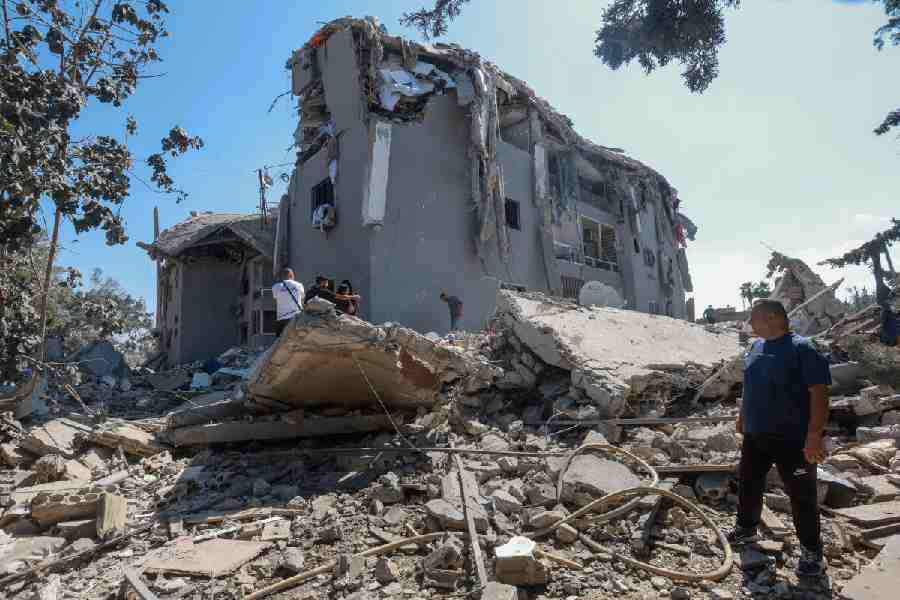
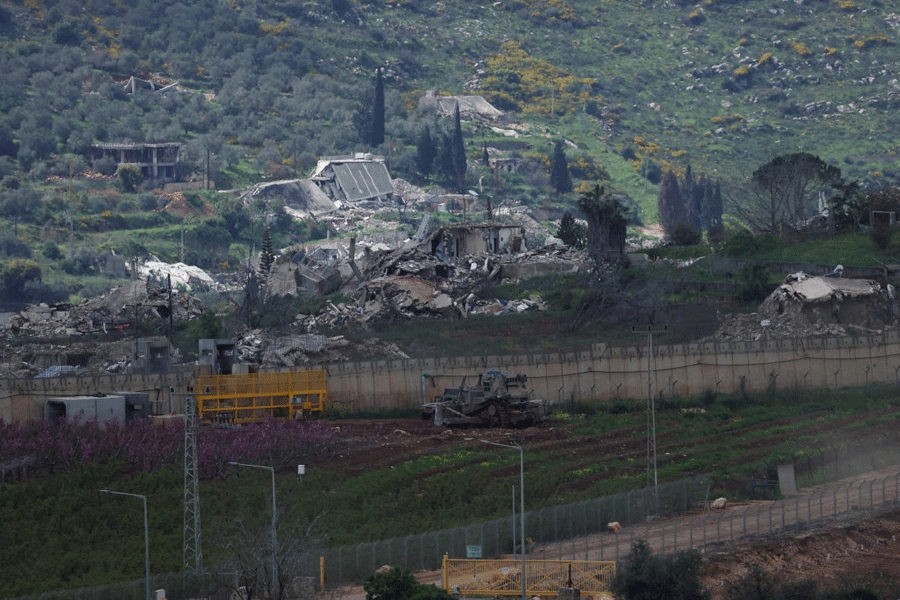
Lebanon's President Joseph Aoun said on Friday that 13 state security personnel were killed in an Israeli strike on a governmental building in the southern city of Nabatieh.
In a statement, Aoun condemned continued Israeli attacks and said targeting state institutions would not deter Lebanon from defending its sovereignty.
Iran parliament speaker says Lebanon ceasefire, asset release must precede talks
Iran's parliament speaker Mohammad Baqer Qalibaf said on Friday that two previously agreed measures, a ceasefire in Lebanon and the release of Iran's blocked assets, must be implemented before negotiations begin.
In a post on X on Friday, Qalibaf said the steps were part of commitments made between the parties and warned that talks should not start until they were fulfilled, amid mounting disputes over ceasefire terms and continued hostilities in Lebanon.
Hezbollah leader urges Lebanese authorities not to give free concessions
In the first official statement from the militant group since Israel announced it would enter into direct negotiations with Lebanon, Hezbollah chief Naim Kassem said, "We call on (Lebanese) officials to stop offering free concessions," but did not take a clear stance on the prospect of talks.
Kassem praised the performance of Hezbollah fighters battling Israeli forces in southern Lebanon and said Israel had been unable to make significant advances.
"We will not accept a return to the previous situation," Kassem said, an apparent reference to the 15 months before the outbreak of the latest Israel-Hezbollah war, when a ceasefire was nominally in place, but the Israeli military continued to carry out near-daily strikes in Lebanon that it said aimed to stop Hezbollah from regrouping.
Vance warns Tehran not to 'play' US
Vice President JD Vance on Friday warned Tehran not to "play" the US as he departed for Islamabad for negotiations aimed at ending the war with Iran.
President Donald Trump has tasked the member of his inner circle who has seemed to be the most reluctant defender of the conflict with Iran to now find a resolution to the war that began six weeks ago and stave off the US president's astonishing threat to wipe out its "whole civilisation."
Vance, who has long been sceptical of foreign military interventions and outspoken about the prospect of sending troops into open-ended conflicts, set off Friday to lead mediated talks with Iran in the Pakistani capital of Islamabad.
Boarding Air Force Two on his way to Pakistan, the vice president said, "We're looking forward to the negotiation. I think it's gonna be positive. We'll, of course, see."
He cited Trump in saying, "If the Iranians are willing to negotiate in good faith, we're certainly willing to extend the open hand." But he added, "If they're gonna try and play us, then they're gonna find that the negotiating team is not that receptive."
Vance says he expects Iran talks to be positive
US Vice President JD Vance said on Friday he was looking forward to upcoming negotiations with Iran and that he expected the talks in Islamabad to be positive. Vance spoke just before leaving Washington for Pakistan.
UK's Starmer and Trump discussed military options for Strait of Hormuz
British Prime Minister Keir Starmer said on Friday that he discussed military capabilities and the logistics of moving vessels though the Strait of Hormuz when he spoke to U.S. President Donald Trump a day earlier.
"We've been pulling together a coalition of countries ... working on a political, diplomatic plan, but also looking at military capabilities and ... the logistics of actually moving vessels through the Strait," Starmer said during his visit to the Gulf.
"That was the focus of the discussion last night - reflection on what I've been discussing here, but also that focus on a practical plan in relation to navigation through the Strait."
He did not provide further details.
Asked if he raised U.S. threats of withdrawing from NATO with Trump, Starmer did not answer directly but said the alliance was in both the U.S. and Europe's interests.
"NATO is a defensive alliance which, for decades, has kept us much safer than we would otherwise have been," he said.
India to delay maintenance shut down of 10,000 MW coal-fired power capacity to July
India will shut about 10,000 megawatts of coal-fired power generation capacity in July for maintenance, a delay of three months as the country seeks to meet its summer power demand, Piyush Singh, additional secretary in the federal power ministry, said on Friday.
He said about 8,000 megawatts of gas-fired generation capacity is hit due to higher fuel costs under the impact of the Iran war.
World Food Programme warns Lebanon facing food security crisis due to Iran war
Lebanon is facing a food security crisis as the Iran war disrupts supplies of goods inside the country, the United Nations World Food Programme said on Friday.
A fragile two-day-old ceasefire has halted the campaign of U.S. and Israeli airstrikes on Iran, but it has not so far calmed a parallel war waged by Israel against Iran's Hezbollah allies in Lebanon.
"What we're witnessing is not just a displacement crisis, it is rapidly becoming a food security crisis," said World Food Programme country director Allison Oman, speaking via video link from Beirut.
She warned that food was becoming increasingly unaffordable due to rising prices and demand among displaced families.
Price of vegetables has soared
The price of vegetables has soared by more than 20% and bread prices have increased by 17% since March 2, the WFP said.
"What we're now seeing is a very worrying combination: prices are rising, incomes are disrupted and demand is increasing as displacement continues for many families," Oman stated.
Lebanon faces a two-layered crisis, in which some markets have fully collapsed - especially in the south, where more than 80% of markets are no longer functioning - while those in Beirut are under increasing strain, Oman said.
Many traders in conflict-affected areas in southern parts of Lebanon are reporting less than one week of essential food stocks remaining, she added.
The ability to deliver food aid into hard-to-reach areas in the south, which has faced heavy bombardment by Israeli airstrikes since March 2, was becoming increasingly difficult.
While the Qasmiyeh bridge, which was previously struck, is now operational, movement remains difficult. Ten WFP convoys have reached the south to provide aid to some of the estimate 50,000 to 150,000 in need of humanitarian support in that part of the country.
"This escalation is pushing vulnerable communities even closer to the edge," said Oman, adding that, due to this latest escalation, about 900,000 people across Lebanon were facing food insecurity - a number that was set to rise.
Former Iranian foreign minister died after being wounded in airstrike
A former Iranian foreign minister who once suggested Tehran could seek a nuclear weapon died late Thursday after being wounded in an airstrike last week, Iranian state television reported.
Kamal Kharazi had served as a foreign minister for Iran's reformist President Mohammad Khatami, then as a foreign affairs adviser to the late Supreme Leader Ayatollah Ali Khamenei.
In 2022, he told news network Al Jazeera that Tehran has "the technical means to produce a nuclear bomb, but there has been no decision by Iran to build one," sparking concern about Tehran's intentions.
Lebanon to attend Washington ceasefire talks
Lebanon intends to take part in a meeting next week in Washington with US and Israeli representatives to discuss and announce a ceasefire, a senior Lebanese official told Reuters on Friday, saying the exact date had not yet been confirmed.
The official said Lebanon's position was that a ceasefire was a precondition to further talks to reach a broader deal with Israel.
Pakistan West Asia Talks: No official word on arrival of US, Iran delegates
Uncertainty shrouded the US-Iran dialogue, as there was no official word about the arrival of delegates on Friday, the day set for the start of talks between the two warring sides, even as Pakistan waived visa requirements for journalists and officials attending talks. Prime Minister Shehbaz Sharif, while announcing a two-week ceasefire on Wednesday, had stated that the two countries would hold talks in Islamabad on April 10. He had tagged presidents of the United States and Iran and other officials in his statement on X.
Iran’s ambassador to Pakistan, Reza Amir Moghadam in a statement confirmed that a 10-member Iran delegation would arrive in Islamabad.
“Despite skepticism of Iranian public opinion due to repeated ceasefire violations by the Israeli regime to sabotage the diplomatic initiative, invited by Hon PM Shehbaz Sharif, Iranian delegation arrives tonight in Islamabad for serious talks based on 10 points proposed by Iran,” he said on X on Thursday.
Hours later, he deleted the statement amidst the deteriorating situation in Lebanon, which was subjected to aerial attacks by Israel, calling it a violation of the ceasefire agreement.
Iran’s president also, in a tweet, cast doubts over the process of talks if Israel continued its policy of attacks on Lebanon.
Officials have not provided any timeline for the arrival of delegates due to security reasons, adding to the mystery as the day of the dialogue has arrived, but not the parties involved in the conflict. Despite uncertainty, Pakistan was geared up to host the two sides.
Deputy Prime Minister and Foreign Minister Ishaq Dar, on Friday, announced "Visa on Arrival" for delegates and journalists travelling to Pakistan for talks.
"Pakistan welcomes all delegates including journalists from participating nations, traveling in relation to Islamabad Talks 2026. To this end, all airlines are requested to permit boarding to all such individuals without Visa. Immigration authorities in Pakistan will issue them Visa on Arrival," Dar posted on social media Friday morning.
A thick security blanket covered the capital, Islamabad, which was on ‘red alert’ ahead of talks.
Officials said that more than 10,000 police and security personnel have been deployed to ensure multi-layered security for the visiting delegates. Police and paramilitary Rangers personnel were deployed and are being helped by the army.
The Red Zone housing key buildings are being protected by the army and the Rangers, which was open at one place through the Margalla Road, and only authorised officials and residents would be allowed to go through it.
The upcoming negotiations are being closely watched globally, as their success or failure could have far-reaching implications for West Asia's security, global energy markets, and international diplomacy.
Zelenskyy says Ukrainian forces shot down Shahed drones in Middle Eastern countries during Iran war
Ukrainian military personnel shot down Iranian-designed Shahed drones in multiple Middle Eastern countries during the Iran war, President Volodymyr Zelenskyy said, describing the operations as part of a broader effort to help partners counter the same weapons used by Russia in Ukraine.
Zelenskyy made his first public acknowledgment of the operations Wednesday in remarks to reporters that were embargoed until Friday.
Zelenskyy said Ukrainian forces took part in active operations abroad using domestically produced, battle-tested interceptor drones.
Pakistan to issue visas on arrival ahead of talks
Pakistan said Friday it would issue visas on arrival for those travelling to Islamabad for the Iran-US talks, signalling the interest in the world's media in the event.
Japan releases more oil reserves
Japan said it will release an additional 20 days' worth of oil reserves in May, in a second round to address supply uncertainty over the war in the Middle East.
Japanese Prime Minister Sanae Takaichi said the planned release of the government reserves will start in early May, after an earlier release last month.
Japan started releasing about 50 days' worth of oil reserves in March, including from those held by the state, the private sector and oil-producing Gulf nations.
As of April 6, Japan had 230 days' worth oil reserves, including 143 days' worth in government stockpiles, according to the Natural Resources and Energy Agency.
Takaichi said her government is working to secure oil imports via routes that do not include the Strait of Hormuz, while Japan seeks to diversify suppliers.
Air defence fire and explosions heard in Iran
Multiple times overnight into Friday morning, people around Iran's capital, Tehran, and other parts of the country said they heard what sounded like air defence fire and explosions.
However, Iran's government did not acknowledge any attack during that period.
After past exchanges of fire with Israel, similar incidents happened as troops remained on edge.
Vance sets off to Pakistan to lead talks with Iran as war's ceasefire remains shaky
President Donald Trump is tasking the member of his inner circle who has seemed to be the most reluctant defender of the conflict with Iran to now find a resolution to the war that began six weeks ago and stave off the US president's astonishing threat to wipe out its "whole civilization."
Vice President JD Vance, who has long been skeptical of foreign military interventions and outspoken about the prospect of sending troops into open-ended conflicts, sets off Friday to lead mediated talks with Iran in the Pakistani capital of Islamabad.
It comes as a tenuous, temporary ceasefire appears to be on the precipice of collapsing. The chasm between Iran's public demands and those from the US and its partner Israel seem irreconcilable. And in the US, where Vance might ask voters in two years' time to make him the next president, there is growing political and economic pressure to wrap it up.
Vance is joined by Trump's special envoy Steve Witkoff and Trump's son-in-law Jared Kushner, who took part in three rounds of indirect talks with Iranian negotiators aimed at settling US concerns about Tehran's nuclear and ballistic weapons programs and its support for armed proxy groups in the Middle East before Trump and Israel launched the Feb. 28 war against Iran.
The White House has provided scant detail about the format of the talks - whether they will be direct or indirect - and has not provided specific expectations for the meeting.
But the arrival of Vance for negotiations marks a rare moment of high-level US government engagement with the Iranian government. Since the Islamic Revolution in 1979, the most direct contact had been when President Barack Obama in September 2013 called newly elected Iranian President Hassan Rouhani to discuss Iran's nuclear program.
Ship-tracking data shows tanker movement in Strait of Hormuz
Underlining Iran's continued control of the Strait of Hormuz, a Botswana-flagged liquified natural gas tanker called the Nidi attempted to travel out of the Persian Gulf via a route ordered by the Revolutionary Guard but suddenly turned around and headed back early Friday, ship-tracking data showed.
On Thursday, four tankers and three bulk carriers crossed through the Strait of Hormuz, bringing the total number of ships passing through since the ceasefire to at least 12, according to the data firm Kpler.
However, other ships not transmitting their locations may have passed through as well. The strait typically saw well over 100 ships passing through it daily in peacetime.
On Thursday evening, US President Donald Trump appeared to be casting doubt on the effectiveness of the ceasefire that has halted the Iran war.
"Iran is doing a very poor job, dishonorable some would say, of allowing Oil to go through the Strait of Hormuz," he wrote on his social media site.
"That is not the agreement we have!"
The post came after Trump posted earlier that "There are reports that Iran is charging fees to tankers going through the Hormuz Strait – They better not be and, if they are, they better stop now!"
The White House supports reopening the strait as part of the ceasefire deal, but says that Trump opposes Iran's military, which continues to control the waterway, from seeking to raise revenue by charging tolls on passing ships.
Iran Guard denies launching attacks on Persian Gulf states
Iran's paramilitary Revolutionary Guard in a statement carried by Iran's state-run IRNA news agency denied launching attacks on Persian Gulf states on Thursday after Kuwait's announcement.
"If these reports published by the media are true, without a doubt it is the work of the Zionist enemy or America," the Revolutionary Guard said.
However, the Guard also launched repeated attacks on civilian targets in the war and could also be using Shiite militias in Iraq to launch assaults, providing deniability for Iran ahead of the talks.
Kuwait has accused Iran and its proxies of launching drone attacks targeting it on Thursday despite the two-week ceasefire in the Iran war, while Saudi Arabia said recent attacks damaged a key pipeline in the kingdom.
The statement from Kuwait's foreign ministry, carried by the state-run KUNA news agency, put new pressure on the ceasefire ahead of planned talks on Saturday between the United States and Iran in Islamabad.
Kuwait's foreign ministry said the drone attacks "targeted some vital Kuwaiti facilities" Thursday night.
Meanwhile, Saudi Arabia's state-run Saudi Press Agency, quoting an anonymous official, acknowledged a recent attack in the war that damaged its crucial East-West pipeline.
That pipeline carries oil out to the Red Sea and avoids the Strait of Hormuz, which Iran maintains a chokehold on despite the pause in the fighting.
Saudi Arabia acknowledges widespread damage to energy sector during war
For the first time, Saudi Arabia has laid out the scale of damage inflicted to its oil output and exports, although it didn't specify when the attacks occurred.
An energy ministry statement also gave the first public confirmation of Saudi casualties during the Iran war, saying one citizen working as an industrial security guard was killed and seven others wounded.
Thursday's statement said strikes targeted production, transport and refining sites, as well as petrochemical and power facilities in Riyadh, the Eastern Province, and Yanbu on the Red Sea. The statement didn't attribute responsibility.
A pumping station on the East-West Pipeline was among the hardest hit, cutting throughput by about 700,000 barrels per day, while outages at Manifa and Khurais reduced output by 600,000 more barrels per day.
The major refineries, including SATORP, Ras Tanura and SAMREF, were also hit, with fires at Ju'aymah disrupting exports of liquefied petroleum gas and natural gas liquids.
US-Iran ceasefire deal shows strain ahead of talks with oil flows squeezed
A fragile two-week ceasefire between the U.S. and Iran showed further strain on Friday, a day before they are to negotiate in Pakistan, as Washington accused Tehran of breaching promises on the Strait of Hormuz and Israel struck Lebanon with attacks that Iran has claimed violate the truce. There was no sign Iran was lifting its near-total blockade of the strait, which has caused the worst-ever disruption to global energy supplies. Tehran cited Israel's ongoing attacks on Lebanon, which included the heaviest strikes of the war on Wednesday, as a key sticking point.
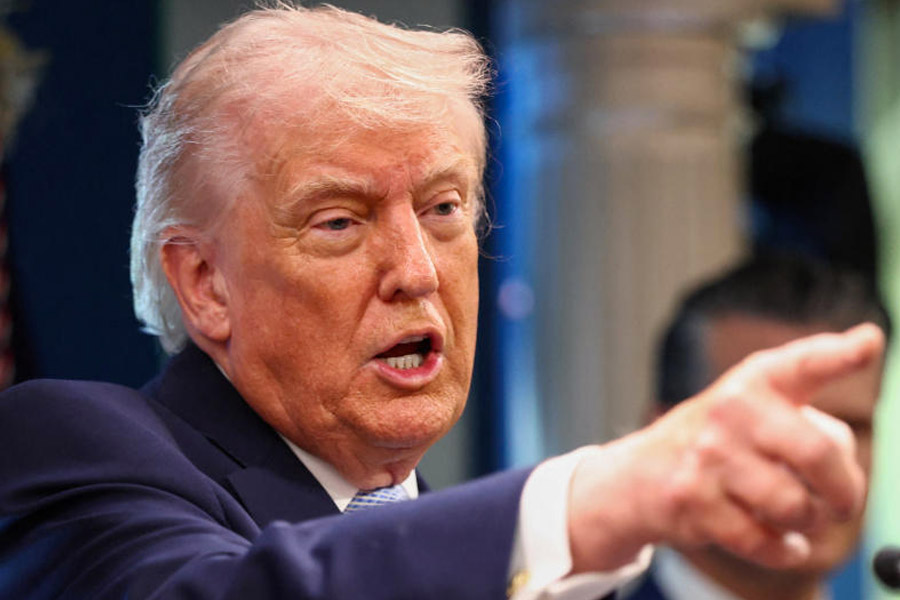
U.S. President Donald Trump said in a social media post late Thursday that Iran was doing a "very poor job" of allowing oil to go through the strait. "That is not the agreement we have!"
In a separate post, he said oil would start flowing again, without saying what actions the U.S. might take. In the first 24 hours of the ceasefire, which Trump announced on Tuesday, just a single oil products tanker and five dry bulk carriers sailed through the strait, which typically carries a fifth of the world's oil and liquefied natural gas flows and 140 ships a day before the war.