I grew up in a middle-class family in Calcutta during the 1950s and the 1960s. Both my parents were associated with the then undivided Communist Party of India. My paternal grandfather was an artist and a close friend of Swami Vivekananda. He had abandoned his family and spent the last six months of his life in a math near Hardwar. My grandmother, with five minor children, was left in financial ruin and with emotional trauma. Though I never met my grandfather, my uncle shared detailed stories of him, and there was a trunkful of his paintings and published articles on art and religion. My own parents, perhaps looking for quality education, put me in a Christian missionary school located in Calcutta. In a way, during my childhood and early youth, I was exposed to all the major strands of Bengal’s social history. Now, as a septuagenarian, I look back and realise that the values I imbibed from my socialist home, my Hindu, religious, extended family, and from my Christian missionary school, were remarkably similar. All these contributed to my understanding of a good person and a liveable society.
In terms of individual ethics, I would say personal liberty was the most important. I was taught that though this was important, it had its boundaries, especially in the way it affected other people. Liberty meant that while I was entitled to my own ideas and actions, I was also obliged to listen to and consider the opinions of other people. I could disagree with them, but not disrespect them. I was taught that other people could be very different compared to me. However, my liberty made it necessary for me to tolerate those differences because it was consistent with respecting the liberty of other people. The acquiring of knowledge through books and the arts, through experience or practice, was a treasured personal resource. Knowledge had instrumental value in terms of choosing a career and livelihood. I was taught that knowledge about the world and other people had intrinsic value too. Reading books for the sake of reading was encouraged at home and in school. Another value that I was made to be conscious of was empathy — trying to put oneself in other people’s shoes before making any judgement. Whenever I was rude or callous, I was told to imagine how the recipient of my bad manners might be feeling. In all these, but with a million shades of differences in outlook, opinion, feeling, behaviour, I was equal to everybody. In school and at home, I was monitored not to show off affluence or material wealth in any way. My school did not have a uniform, but it fostered a concern for the value of functional comfort rather than opulence in outfits. Freedom and equality were blended to represent individual advantage tempered with a concern for all.
When I went to college, I found myself in the hotbed of revolutionary politics. I saw that the freedom to express one’s own views was not tolerated by the activists. Simultaneously, I witnessed the unleashing of State violence on a large number of bright, young citizens, including many friends and acquaintances, who wanted to change the world. Clearly, in the sphere of social living, the idea of equality meant democracy and a nurturing of the freedom of expression for all. If democracy was to tolerate dissent, it would have to have the apparatus to handle it without violence. To me, a society marked by violence, whether perpetrated by the State or by citizens, was much worse than a society where inter-personal violence was limited. Opulence was not considered a social value either. This was reflected in my preference for a low degree of economic inequality. Arrogance in social behaviour was something to be strictly avoided. Similarly, common instances of telling lies, cheating, stealing, or hurting other people were discouraged, even punished by penalties imposed.
A word of caution: all the things described above were not always practised by me or my peers. I have had my own list of frailties and failings. Nor did society adequately exhibit the values described. However, a large majority of people of my generation had been exposed to these values, tutored about their importance, and told how these contributed to the making of a stable and humane social order. We grew up in an imperfect, and sometimes cruel, world but most of us knew what was considered good and right. There was a template, and that was never out of sight.
Somewhere along the last three or four decades, everything appears to have changed, dramatically and decisively. Now, it is normal to be arrogant, show off wealth, use strength and power to realise selfish goals and personal agendas. Greed is good. Empathy is supposed to be the worst trait displayed by human civilisation. Cruelty towards the powerless is acceptable, and freedom is only for the rich and the strong. Personal aggrandisement is considered heroic and clever. Sharply rising economic inequality is taken as a sign of progress and economic development. In many societies, older histories are being suppressed and new tracts written in line with the views of the powerful. There are too many governments in the world that are close to being considered authoritarian to being outright fascist in beliefs and actions. Violence in the home, violence in society, State violence, cross-border violence, international violence are on an explosive growth path. Widespread dishonesty in business, politics, and government is accepted as the new normal. Falsehoods and deceptions are so common and frequent that we no longer distinguish between truth and lies.
Democratic norms and personal liberties are under accelerated assault. The stigma of hunger, poverty and unemployment remains patently evident, while people who rule the world are multibillionaires who care very little about how other people live. Hubris rules supreme. There is unabated growth in the production of new goods and services in what can be considered as a continuous celebration of material consumption by the rich. New lifestyles and new technologies have reduced our ability to read, focus our attention on serious problems, and think critically. As a result of this transformation, major institutions have witnessed an erosion in the social trust they command. No wonder a majority of people have lost their faith in democracy.
It is difficult to find a single cause behind this quick transformation. The values I and many of my generation grew up with were universal. These values were attractive precisely because they were inclusive, tolerant, and fair, contributing to the much-needed qualities of a stable social order. Hence, even if the adoption of these values were uneven, the reference point defining the acceptable was intact. Now, the reference point has faded away. Just observe what is happening in the United States of America and in the Middle East, and the global response to such events. There is much more concern raised about economic costs than about human suffering and misery. The world’s emotional response to genocidal violence is the same as watching a video game. It seems Hitler is alive.
However, to resist, or question things, is a dangerous task. Being silent is the price one pays for staying in the system. As long as stock markets are buoyant and GDP is growing, all is well with the world. It is only a handful of paranoid people who get engulfed in fear and anxiety.
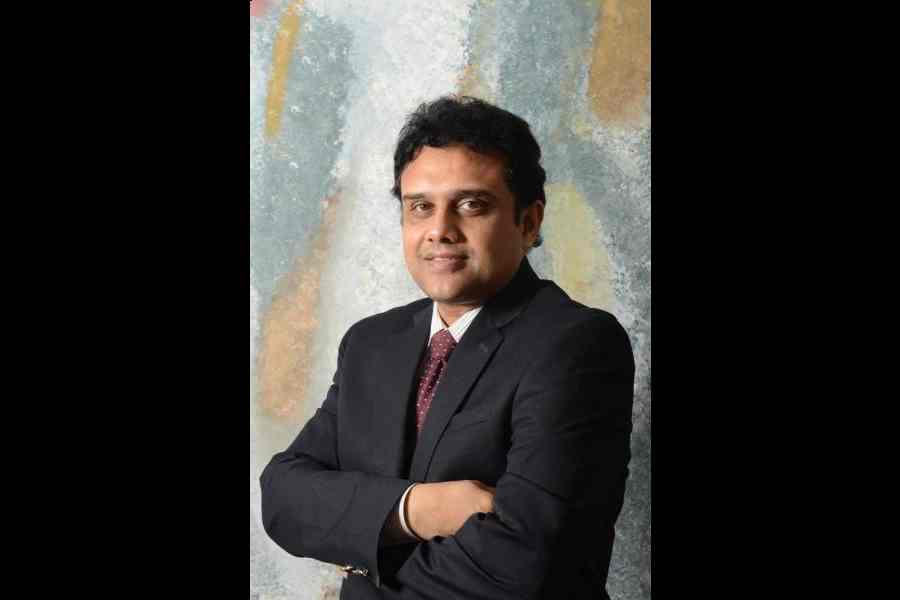
Anup Sinha is former Professor of Economics, IIM Calcutta