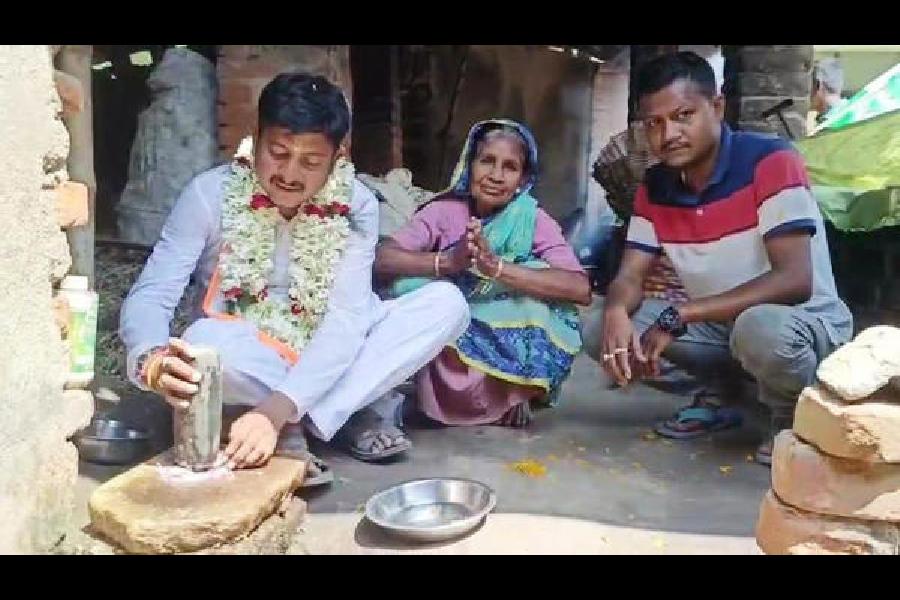
Show begins
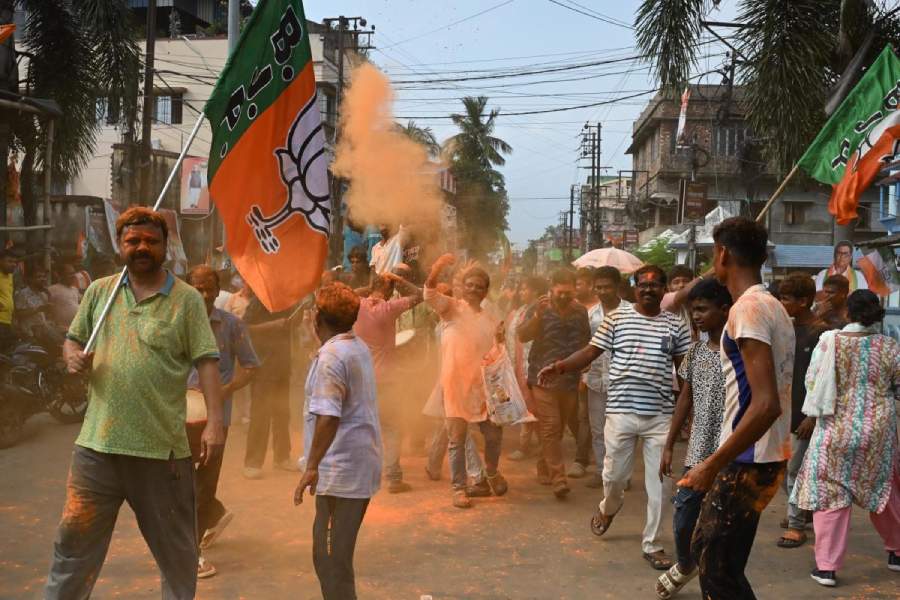
Sir — Bengal’s electoral theatre is witnessing a different act this time. In the run-up to the assembly elections, candidates across parties have turned campaign trails into performative theatre — from ploughing fields, rolling rotis to shaving beards. These acts, designed to project humility and solidarity, end up compressing lived realities into token gestures. Politicians should realise that grassroots connections cannot be made on demand. However, if there is a silver lining, it is that such theatrics are, at the very least, preferable to the routine mudslinging that has become the hallmark of electioneering.
Siddharth Roy,
Calcutta
Kitchen crisis
Sir — The current LPG crisis, driven by geopolitical tensions in West Asia, has exposed India’s dangerous reliance on imports. With the price of a domestic cylinder increasing by about 60 rupees, the economic strain on households is undeniable. A transition to hydrous ethanol, which is a cost-effective biofuel with about 90% purity, is a resilient, homegrown alternative.
By diverting a portion of India’s 1,800 crore litres of ethanol that the country annually produces, millions of kitchens can be secured. The government must integrate bioethanol into the Pradhan Mantri Ujjwala Yojana and subsidise ethanol-compatible stoves. True energy sovereignty lies in converting agricultural waste into a stable future for every Indian home.
Vijaykumar H.K.,
Raichur, Karnataka
Sir — What is preventing the Centre from acknowledging that tensions in West Asia are disrupting India’s energy supply? Instead, it continues to insist that there is no shortage of fuel, dismissing the Opposition’s concerns as falsehood. If these claims are indeed baseless, why are long queues forming outside LPG dealerships? Why were booking intervals extended to 25 days in urban areas and 45 days in rural regions? The consequences are already visible: the shortage of commercial cylinders is forcing several industrial units to scale down or shut operations. For all of the Centre’s boasts of ‘atmanirbhar Bharat’, the country remains tragically dependent on imports.
Jang Bahadur Singh,
Jamshedpur
Sir — Even as thousands of migrant labourers and outstation students are forced into reverse migration amid a severe LPG crisis, the Union home minister, Amit Shah, is prioritising a 15-day stay in Bengal for poll campaigning. At a time when citizens are struggling for cooking fuel, such urgency in political mobilisation stands in stark contrast to the absence of resolve in addressing a national crisis. The government must act swiftly to alleviate public hardship.
Mohammad Arif,
Dhanbad
Trade halt
Sir — Preparations for the upcoming assembly elections in West Bengal have brought business to a near standstill. Extensive barricading and enforced closures to facilitate the filing of nominations by candidates have severely disrupted access for shop owners, small traders, hawkers and workers.
In prioritising administrative convenience, the authorities seem to have overlooked the fact that this business ecosystem sustains lakhs of livelihoods and contributes significantly to the state’s revenue. Repeated appeals have yielded little relief, leaving many effectively cut off from their workplaces. While free and fair elections are essential, they must not come at the cost of crippling economic activity.
Arvind Pandey and Anis Hazrat,
Calcutta
Test glory
Sir — Ramachandra Guha’s article, “Beyond IPL” (April 4), reminds us that while the Indian Premier League dazzles, it is Test cricket that deepens the sport’s soul. The write-up neatly captures how spectacle has outpaced substance, reducing cricket to fleeting highlights.
This is not a call to reject the new, but to rebalance our appetite. Administrators must resist sidelining Test matches. Audiences must rediscover the virtue of patience. Cricket, like good literature, needs both the short story and the epic. In preserving Test, we preserve the game’s nuance.
K. Chidanand Kumar,
Bengaluru
Sir — Test cricket remains the ultimate examination of a cricketer’s skill, endurance and temperament. Memories abound — from Mohinder Amarnath’s courageous innings at Bridgetown in 1983 to Sunil Gavaskar’s valiant 96 in Bangalore in 1987 — as testaments to perseverance under pressure. Beyond skill, Test cricket has long embodied sportsmanship — from Gundappa Viswanath recalling Bob Taylor after a wrong decision, to the warmth shown to Asif Iqbal at the Eden Gardens. These moments affirm that Test cricket is as much about values as it is about the game.
Kajal Chatterjee,
Calcutta
Sir — In an era dominated by the IPL, where short-form thrills often overshadow substance, attention spans are shrinking to fit the demands of instant gratification. Test cricket, by contrast, demands discipline and depth, offering a more meaningful engagement with the sport.
Harsh Pawaria,
Rohtak, Haryana