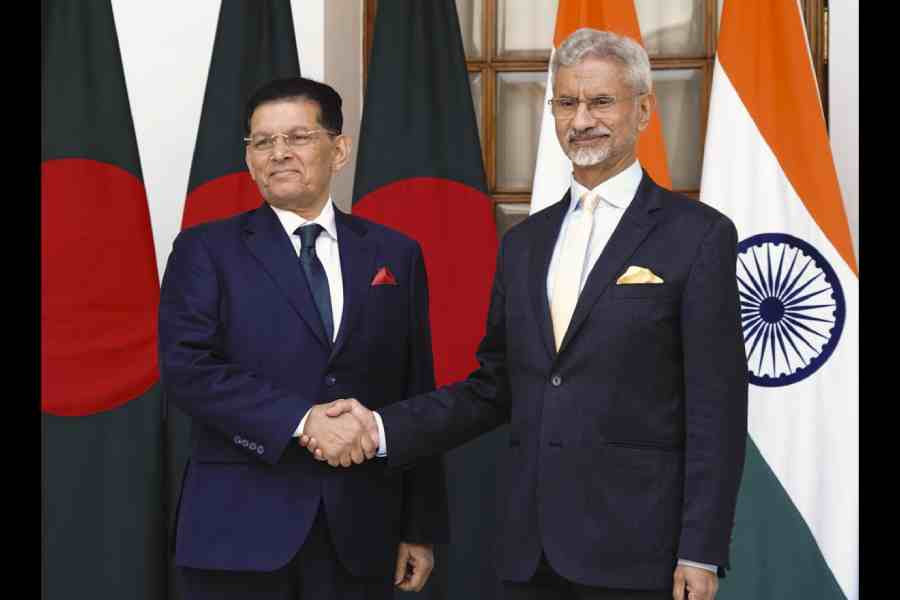
Twenty months after the ouster of the former Bangladeshi prime minister, Sheikh Hasina, sent ties between New Delhi and Dhaka into a downward spiral, relations between the neighbours are finally on the path to normalcy. The three-day visit to New Delhi by Bangladesh’s foreign minister, Khalilur Rahman, is now offering a chance for the two countries to cement that positive trajectory in ties. The newly-elected Bangladeshi government under Prime Minister Tarique Rahman has made it clear, publicly and privately, that it wants to improve relations with India. Ms Hasina's continued stay in exile in India remains a source of friction between the nations. But unlike the interim dispensation under Muhammad Yunus, the new government in Dhaka has, so far, not allowed one sore to take over the entire body of India-Bangladesh relations.
Mr Rahman, who met the external affairs minister, S. Jaishankar, on Thursday is a familiar figure for New Delhi. The veteran diplomat and economist was national security adviser to Mr Yunus but despite the then strain in ties, he had won the respect of his Indian counterparts.
Adding to the significance of the visit is the presence of Humayun Kabir alongside the Bangladeshi foreign minister. Mr Kabir is a trusted adviser to the Bangladesh prime minister. That he is visiting together with the foreign minister underscores how much the new Bangladeshi government wants to strengthen ties. Tarique Rahman has made Bangladesh's economic revival the centrepiece of his governance agenda and appears to recognise that he needs India on good terms. Bangladesh's domestic politics and internal security challenges are also likely to serve as a glue pulling its government closer to India. For Tarique Rahman's Bangladesh Nationalist Party, Ms Hasina's Awami League — banned in Bangladesh with most of its senior leaders in exile — is no longer a political threat. The Jamaat-e-Islami is the BNP's principal challenger and represents a political movement that New Delhi would not want strengthened. If the BNP sees India as an ally in its own political equation, New Delhi should have no objection. While India must stay out of Bangladesh's domestic politics, a strong, stable and rising Bangladesh where all sections of society are respected is in New Delhi's interests.