As Tamil Nadu, West Bengal and Kerala move towards their next assembly elections, welfare commitments have begun to occupy a central place in the political discourse. Cash transfers, subsidised transport, housing assistance and pension enhancements are being announced, expanded or pledged by ruling dispensations and Opposition parties alike. Welfare provisioning is a legitimate and often necessary function of the State and political parties are not misplaced in seeking to respond to material deprivation through electoral programmes. However, the scale, timing and escalation of these commitments raise questions that extend beyond political choice.
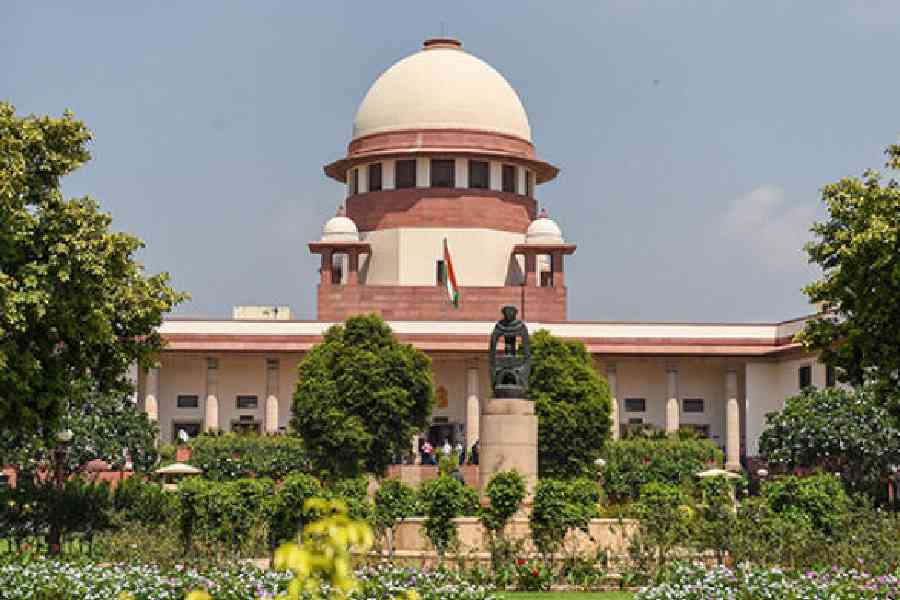
These concerns lie at the heart of S. Subramaniam Balaji versus Govt. of Tamil Nadu, a case pending reconsideration before the Supreme Court of India. In August 2022, the court referred the issue to a larger bench to resolve divergent views on whether certain pre-election welfare promises, funded from public resources, undermine electoral fairness or violate constitutional principles. Since then, the matter has not progressed.
The Supreme Court’s 2013 judgment in Balaji did not question welfare schemes in principle. It acknowledged that social assistance may be essential to address poverty and inequality. The concern was narrower: whether promises of material benefits, announced close to elections and financed from the Consolidated Fund of India, risk distorting electoral equality or approximating the inducements prohibited under Section
123 of The Representation of the People Act, 1951. In the absence of subsequent judicial clarification, this question remains unresolved even as electoral welfare commitments have expanded.
This causes a ‘fiscal illusion’ — the tendency of voters to underestimate the long-term costs when benefits are immediate and visible, particularly in electorally competitive environments, while costs are deferred, diffused or obscured through borrowing. Electoral competition can amplify this tendency. When political actors emphasise short-term transfers without corresponding discussion on financing or trade-offs, voters are encouraged to assess policies based on immediate gain rather than long-term sustainability.
Recent developments in each of the election-bound states reflect this dynamic. In Tamil Nadu, the ruling Dravida Munnetra Kazhagam’s monthly cash assistance to women heads of households has been met with Opposition promises of higher transfers and expanded transport subsidies. In West Bengal, the Trinamool Congress’s ‘Banglar Bari’ housing scheme, with an estimated annual outlay of over Rs 14,000 crore, has prompted competing proposals from rival parties drawing on welfare models implemented in other states. Similarly, in Kerala, pension enhancements under the Left Democratic Front are being mirrored, with variations, by Opposition formations.
Such convergence suggests that welfare commitments increasingly function as electoral instruments rather than as policy interventions adjusted to fiscal capacity. Once implemented, these schemes acquire political and social salience that makes subsequent recalibration difficult, reinforcing the effects of fiscal illusion.
The financial implications of this trend are evident. According to Reserve Bank of India data, aggregate expenditure on subsidies and welfare transfers has risen steadily, with estimates placing such spending at close to 2% of GDP. At the state level, debt-to-GSDP ratios remain elevated — Tamil Nadu’s public debt exceeds 25% of GSDP, Kerala’s has, at its peak, crossed the mid-30% range, and West Bengal’s is around the high-30% mark.
While these figures do not indicate immediate fiscal distress, they constrain future policy choices and reduce the capacity of states to respond to economic shocks. Election-linked commitments, once embedded, further limit fiscal flexibility.
Such fiscal illusion also obscures opportunity costs. Resources allocated to immediate transfers are, by definition, resources unavailable for long-term institutional investment. The justice delivery system illustrates this trade-off clearly. Repeated rounds of litigation in Madras Bar Association versus Union of India (most recently decided in November 2025) have drawn attention to the structural consequences of what is otherwise referred to as ‘tribunalisation of justice’, including persistent vacancies in key adjudicatory bodies such as the National Company Law Tribunal and the Income Tax Appellate Tribunal. In recent years, nearly one-third of the sanctioned positions in several NCLT benches remained vacant. These shortages, contributing to growing backlogs, extended resolution timelines and reduced recovery efficiency under the Insolvency and Bankruptcy Code, 2016.
Delays in insolvency resolution impose tangible economic costs. As of March 2025, average resolution time far exceeded the statutory limit of 330 days, with creditor haircuts still around 60-70%. Data from the Insolvency and Bankruptcy Board of India show that adjudicatory vacancies and procedural bottlenecks further contribute to erosion in asset value in prolonged cases. Correcting these structural weaknesses requires sustained fiscal investment for which budgetary space could otherwise be available if not crowded out by expanding election-linked welfare commitments.
The continued pendency of S. Subramaniam Balaji has consequences for constitutional interpretation rather than for policy preference. In the absence of authoritative guidance, electoral competition operates in a space of normative uncertainty where the boundaries among permissible welfare, electoral inducement and fiscal responsibility remain indistinct.
It is nobody’s case that the Supreme Court must sit in judgment over the wisdom or desirability of welfare measures adopted by elected governments. Nor is the plea that social assistance schemes as such fall foul of constitutional discipline. The limited submission is more modest: that the larger bench clarify the parameters (temporal, fiscal and structural) within which electoral promises funded from public resources may legitimately operate and delineate the respective roles of legislatures, the Election Commission of India and oversight institutions. Such clarification would not constrain democratic choice, but would lend coherence and neutrality of constitutional governance in a federal setup.
Debarshi Chakraborty is Advocate, Delhi High Court