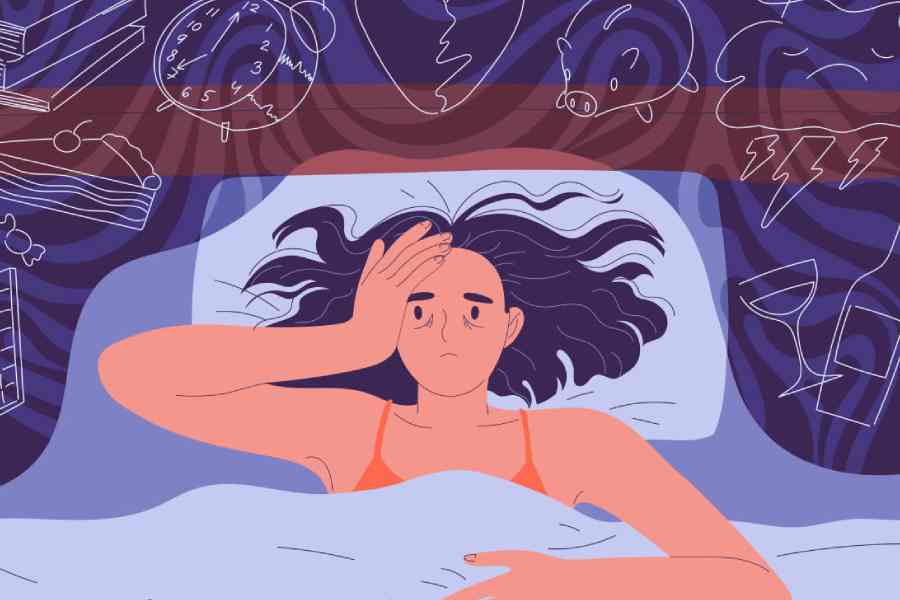
Kolhapur’s Janabai Sonawane was an amicable woman until recently. Now she is always irate. “I... get annoyed quickly and start fighting... over even minor differences,” the 62-year-old confesses in a recent ground report by PARI . What has changed is not her temperament but the temperature. By early April this year, Kolhapur had already seen temperatures soar to 39.6°C. It is a weather during which Sonawane, a landless farmworker, struggles to sleep. After long days of weeding and harvesting, she lies awake under her tin roof, sweating through the night, managing barely three hours of fitful sleep and waking exhausted, irritable, and drained.
Sleeplessness and women have a long history. Psychological journals from the 19th century show that women with ‘hysteria’ — that famed imaginary illness — were more likely to be insomniacs. The suggested cure for this was rest. But rest is what women have seldom had. The gendered burden of care keeps women from getting restful sleep — domestic labour finishes late at night and begins early each morning, children wake up at night and need tending to, as do ageing parents and in-laws. Yet, sleeplessness among women was seen as evidence of fragile femininity rather than overwork and exhaustion. The woman’s own body is not her friend either. Modern research shows that women are significantly more likely than men to experience insomnia, with major spikes during pregnancy, perimenopause, and menopause. Night sweats, hormonal shifts, anxiety, and temperature dysregulation make sleep fragile while social expectations remain heavy.
Climate change is now making this historically gendered sleep deficit more acute.
Heat waves are usually reported through daytime extremes — melting roads, school closures, labourers collapsing in the fields. Less attention is paid to rising night temperatures, though it carries serious health consequences. Sleep is the body’s main period of recovery when stress responses reset, hormones regulate, and muscles repair. When nights remain hot, that recovery is disrupted.
Across India, many regions now experience up to 80 “hot nights”, and a 2025 study shows that this affects women disproportionately. Women in poorer households have fewer ways of escaping the heat. Tin and asbestos roofs trap heat like ovens. Women spend more time indoors because cooking, cleaning, childcare, and elder care keep them there. Heat follows them through the entire day and waits for them at night. The body needs to cool down to fall asleep and remain asleep. Rising night temperatures prevent that drop. Even sleeping outside, the oldest solution to summer heat, is not equally available. Men may move outdoors for relief but women often cannot because of safety concerns.
The consequences of this go beyond fatigue. Poor sleep raises risks of depression, anxiety, high blood pressure, heart disease, workplace accidents, and cognitive decline. But climate change is also affecting women in quieter, less visible ways. Chronic sleep loss affects mood, patience, and emotional resilience. Women who are already carrying the burden of paid work and household labour often find themselves constantly exhausted, easily irritated, and mentally drained. This leads to social alienation, which has long-term consequences. Friendship and community are often informal support systems for women, especially in rural and low-income households where formal mental health care is absent. When exhaustion and irritability push women away from those spaces, stress deepens. Anger strains marriages, family relationships, and friendships, cementing the impression of personal failure in women who do not recognise environmental stress. These changes are often dismissed as ageing, bad temperament, or ‘women’s moods’ instead of being seen as the fallouts of a warming planet.