A week ago, Prime Minister Narendra Modi addressed the nation. For many of us, an address by the prime minister signifies an urgent message from the person occupying the highest political position in our democracy. The president, too, speaks on occasion but those are mere formalities. The prime minister only speaks to citizens when there is a crisis or a major policy decision that may change the lives of every person. Who can forget November 8, 2016 when the prime minister informed us that he would demonetise our currency notes or March 24, 2020 when he announced a countrywide lockdown? Hence, when the prime minister addresses the people, there is a lot of gravitas and it signifies urgency.
But what happened last week was nothing of that sort. With the Indian flag behind him, the prime minister directly accused Opposition parties of having blocked the reservation of seats for women, although it was the passage of the Constitution (131st Amendment) Bill, 2026, which linked the reservation of seats for women legislators with the delimitation exercise, that failed to meet the numbers in the Lok Sabha. Apart from the false positioning of what transpired in Parliament and the government’s own double speak on the matter, Modi’s act of making a political speech as prime minister was egregious. The timing — before two state elections — only made it worse. The Election Commission of India did not take any action on the matter. But, irrespective of its timing, the act violated the decorum of India’s highest-elected public office. No amount of whataboutery can justify that speech.
Beyond the ethics of Modi’s action, the reaction of citizens interests me. Other than a few concerned citizens who wrote to the EC and some amount of anger online, no one has really been bothered by Modi’s overstepping. It would not be false to say that many do not find fault with Modi’s speech. They believe that he merely expressed his view to the public and, since he is the prime minister, he spoke from that position. Citizens will not recognise that Modi’s use of the Prime Minister’s Office as a platform was wrong. What does this say about our engagement with politics? Perhaps the more appropriate question would be about our relationship with power.
Power has an odd effect on people, especially Indians. We are socially trained to be subservient to power. This is internalised even by those who want to ask questions. Questioning itself is curated by power. Depending on the strength of the powerful, we know where the lines are to be drawn, what questions can be asked, and the tone that will be allowed. In other words, questions that are asked should not, and cannot, unsettle the powerful but only further strengthen the power imbalance. Modi’s carefully-curated interviews are a good example of this.
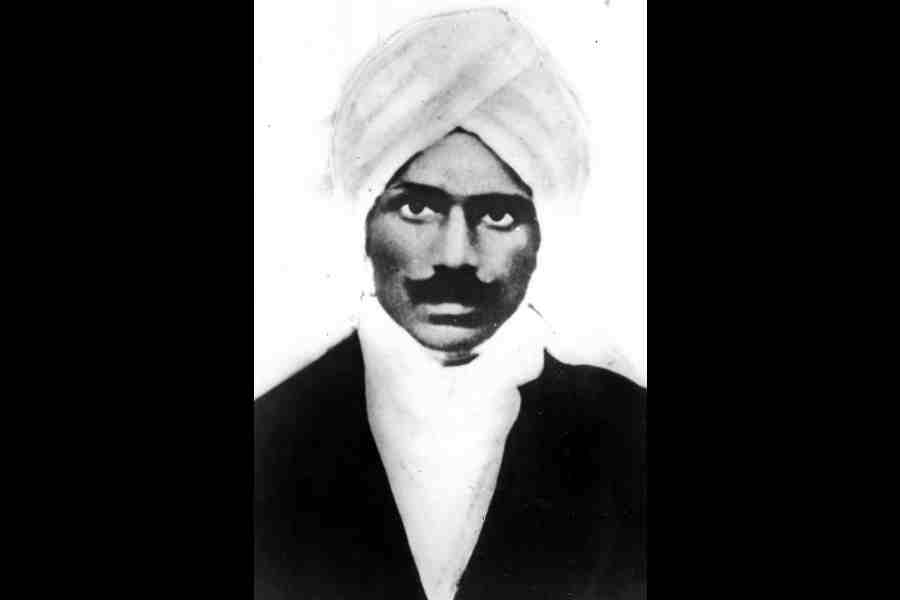
There are many who do not care about questioning. They will not demand answers or see the necessity for others to do so. This, too, is a common feature of our society. A strong belief that being controlled and told what to do is a natural state. The Tamil poet, Subramania Bharati, had described this state in song: “When will we stop yearning to remain enslaved?” Though written in the context of colonialism, the enslaving of the mind he refers to is as true today. Those who cannot find fault with a leader will remain docile out of blind loyalty and those who do not agree are resigned to remaining silent. Over a period of time, this state of resignation becomes pleasurable! As harsh as this might sound, it is not far from the truth. This mindset comes from the normalisation of caste hierarchy, feudalism and patriarchy.
Modi is definitely not the first to throw political decorum to the winds. But he is the first to do so blatantly. In that sense, we must thank Modi for showing us the mirror. When we forfeit our minds to the powerful, niceties become irrelevant. Some will argue that this criticism of Modi and of our polity is a problem of the elite. The common person does not care about political decency. This is a dangerous argument to make because it associates this ability with the so-called educated elite and suggests that the marginalised do not have the capacity to think with nuance and don’t care about political propriety.
Unlike what the middle and upper-middle classes like to think, the poor don’t only worry about work, food, and shelter. They dream of freedom in its most profound sense. They may not articulate it in an English-educated manner but they sense it in ways that we cannot. Also, their drive to secure freedom is much more than those of the middle and upper-middle classes. This is the reason why those in power do all that they can to keep them under their thumb, making it so much harder for them to think beyond a conditioned frame. If there is lack of political power among the oppressed, it is because enforced socio-political norms make it that much harder for them to break the shackles. We should remember that it is the underserved who take to the street.
The failure really lies with those with social privilege. Generations of living in this comfortable category has only made us docile. When we remain fairly comfortable, especially compared to those on the margins and, yet, have social power that far exceeds our economic value, we don’t care about freedom. Freedom is only understood and used in the context of financial progress. This is a serious problem that makes it difficult for this social class to understand what freedom means in a socio-political and creative sense. Being a socially powerful class, we have also established educational models that only serve financial freedom. Everything else we believe will be realised once wealth is acquired. Since we have the power to influence social structures, this model has become aspirational. We also superimpose this limited view of freedom on the marginalised. In this situation, Modi doing something that infringes our minds, skews understanding, influences perception, and is deprived of political morality becomes irrelevant.
It is only when people of multiple social strata come together to ask difficult questions of the government, keep representatives in check, and demand high standards of political behaviour does democracy live. This is yet to happen in India. We the privileged are being told that demonetisation was a masterstroke, that the loss of innumerable lives during Covid was inevitable, and that lying is Chanakya-niti. We have quite willingly embraced this charade.
T.M. Krishna is a leading Indian musician and a prominent public intellectual