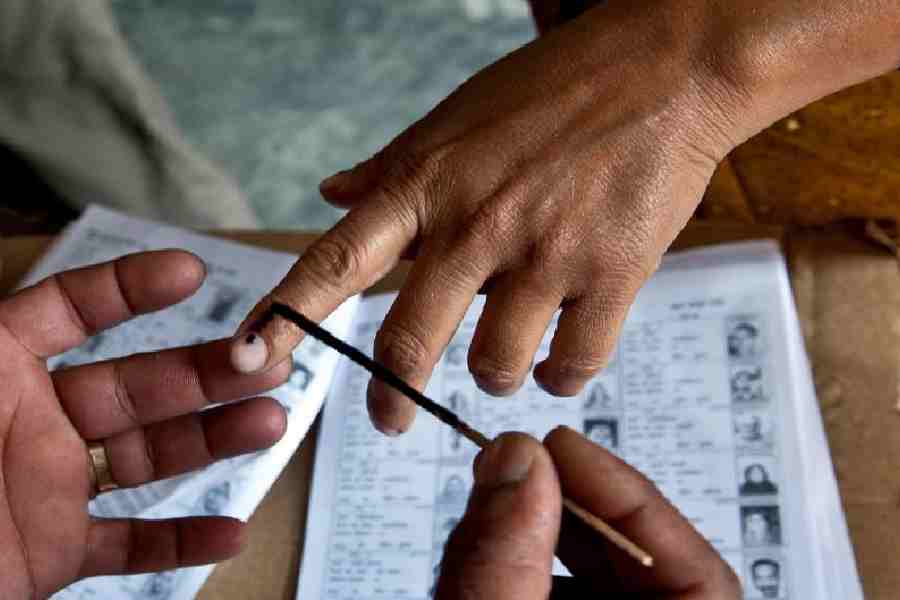
Political pundits and laymen alike have been surprised by the massive voter turnout in the first phase of the Bengal assembly elections. By 5 pm on Thursday evening, the turnout figure had clocked almost 90%. The principal political contenders — the Trinamool Congress and the Bharatiya Janata Party — have, predictably, drawn their own cheerful conclusions about such an unprecedented participation of the people in the polls. What cannot be denied though is that the high turnout was the consequence of public anxiety regarding the exclusionary nature of the Special Intensive Revision of electoral rolls in Bengal. There have been countless reports of the usually laggardly constituencies — for instance, migrant labourers — returning to exercise their franchise so as to forestall the possibility of any encroachment on their right to vote in the future. This, in turn, reveals a peculiar — worrying — aspect of this assembly election in Bengal: the polls bring to light not just the turnout by eligible electors but also the tragic fate of those who were stripped of their right to vote. A nudge from the Supreme Court had permitted voters whose names had been cleared by the appellate tribunals on or before April 21 to vote on April 23. Unfortunately, for those voters and for democracy, the rate of disbursal was abysmal. Only 139 names were cleared for the first round of voting from a voluminous pool of applicants.
Vox populi would hopefully decide the electoral outcome of the Bengal elections. But what has been revealed in the course of the Bengal chapter of the SIR is that the voice of the people, supposedly the decisive element in a democracy, need not always be secure. Institutional insensitivity — the SIR was conducted under the aegis of the Election Commission of India — and mischief-mongering can end up stifling the electoral rights of large segments of voters in the name of cleansing — purging — electoral rolls. The political cycle would continue in Bengal. The end of elections would lead to the formation of yet another government. No matter what its political stripes, it must not leave those threatened with disenfranchisement in the lurch. Bona fide voters must be given back their right to vote. The new dispensation’s commitment to do so would be a test of its pledge to democracy.